

- Hungary
- Ireland
- Italy
- Malta, Republic of
- Portugal
-
Spain
-
Canary Islands
- El Hierro
- La Palma
- La Gomera
- Tenerife
- Gran Canaria
- Lanzarote
- Fuerteventura
- Tarajalejo
- Caleta de Fuste
- Corralejo
- Costa Calma
- Las Palmas de Gran Canaria
- Lobos Island
- Maspalomas
- Caleta de Famara
- Morro Jable
- Costa Teguise
- Jandía
- San Cristóbal de La Laguna
- Playa Blanca
- Playa de las Americas
- Puerto Calero
- Teide National Park
- Playa del Inglés
- Puerto del Carmen
- Los Realejos
- Puerto de Mogán
- Las Galletas
- La Orotava
- Anaga
- San Agustín
- Adeje
- San Bartolomé de Tirajana
- Puerto de la Cruz
- Los Cristianos
- Arrecife
- El Médano
- Orzola
- Masca
- Taurito
- Los Gigantes
- Fañabé
- Santa Cruz de Tenerife
- Santiago del Teide
- Garachico
- Punta del Hidalgo
- La Caleta
- Balearic Islands
-
Barcelona
-
Benalmádena
-
Cádiz
-
Córdoba
-
Jerez de la Frontera
-
Lleida
-
Málaga
-
Santander
-
Seville
-
Toledo
-
Canary Islands
Haría
Overview
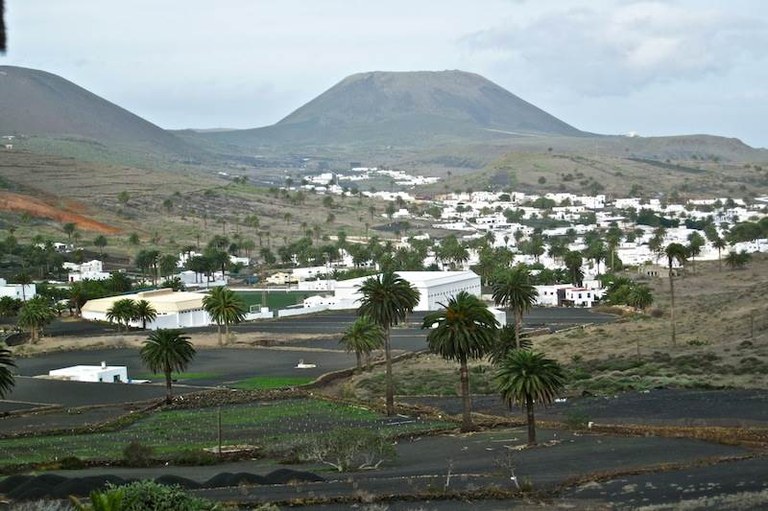
Haría is the name of a municipality and one of the most beautiful villages on the Canary Island Lanzarote. The municipality amounts to the entire northern peak of the island. The village of Haría is located in what is called the "valley of one thousand palm trees". According to a legend, a new palm tree grew every time a baby girl was born.
The following villages are part of the municipality of Haría: Arrieta, Charco del Palo, Guinate, Máguez, Mala, Orzola, Punta de las Mujeres, Tabayesco, Ye and of course Haría itself. About 5,000 people live in the municipality, the village of Haría has about 1,100 inhabitants.
Haría offers the ideal conditions for a quiet and idyllic holiday. There is no mass tourism and no big hotel buildings. Holiday-makers live in guest houses and small holiday apartments. Despite the unspoiled state of the region, or rather due to it, there are many things to see in Haría. Some of the most popular tourist attractions like Jameos del Agua and Cueva de los Verdescan be found within immediate vicinity of the village. Furthermore, Haría is the ideal starting point for hiking trips and other excursions into the nature. For those who do not plan to spend their entire holiday in the village of Haría, a day trip is definitely recommended.
History
How this small village in northern Lanzarote came be known as "Haría" is not fully known. However, it is assumed that the name has its origins in the word "Faria". That is how Lanzarote’s native inhabitants called the place. The natives might have derived the name from the word Chafariz, which means fountain.
In the 16th century Haría was repeatedly the target of pirate attacks. Almost the entire valley of the palm trees burnt down during such an attack in 1586. Today, with the view that awaits Haría's visitors when following down the switchback road into the valley, this is almost impossible to imagine.
In the 1950s during the era of Franco, many of Haría's inhabitants left the village and emigrated to South America. Today, some of the houses that have been abandoned can still be seen, and still empty.
The buildings around Plaza de la Constitución were built in classical style and most date back to the 19th century, the time when the village was under the possession of a constituent assembly.
Economy
The main branch of Haría's economy is agriculture with potatoes, millet, lentils, corn and wine being cultivated on Haría's fertile soils. The climatic conditions here are especially favourable thanks to the location and topography.
Besides, people of Haría also work in the tourism industry, since there are a few housing developments and the fact that Haría possesses some of the most important sights of the island.
Climate and vegetation
Haría stands out as a remarkable exception on an island whose landscape is little vegetated. Lanzarot is the driest of the Canary Islands; nevertheless Haría is aglow in bright green. The climate in the northern part of the island is more humid than in the south and thanks to its location in the upper Famara Mountains, it rains more frequently.
Haría comes into blossom, especially in January and February; after the humid winter the landscape appears in a glorious green and covered with flowers.
How to get there
By Bus:
Haría can be reached from Arrecife with the numbers 07 and 26.
By Car:
From Arrecife, follow LZ-1 northward.
From Teguise, take LZ-10 northward.
If travelling from far south (i.e.: Playa Blanca), take LZ-30 followed by LZ-10.
Sights
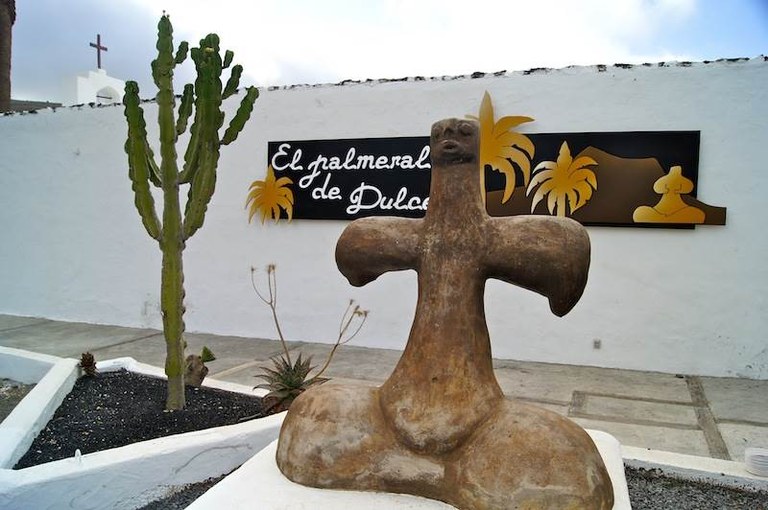
There's a lot to see in and around Haría. The village is delighted with cosy town squares and interesting architectures. The nature, by which it is surrounded, stands out due to the large number of palm trees and the green in which it glows. Furthermore, some of the most impressive tourist attractions are within 15 minutes drive of Haría. Lanzarote’s holiday-makers will not be bored in Haría.
Plaza León y Castillo (square)
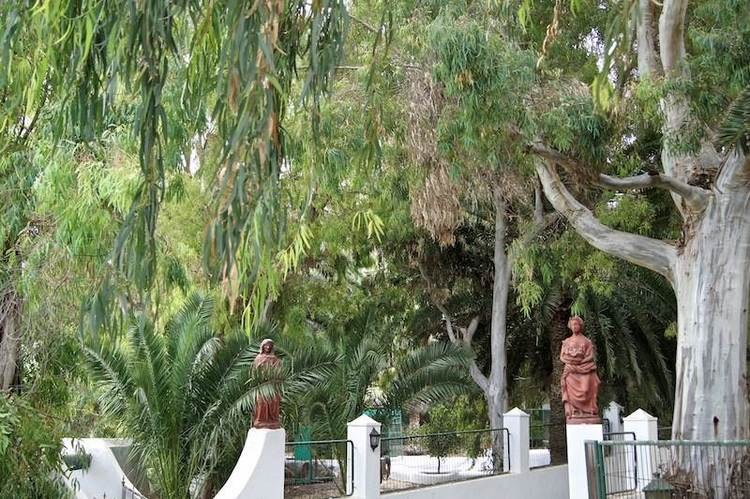
Plaza León y Castillo is the heart of Haría. The original Canarian atmosphere can be absorbed best while sitting underneath the laurel and eucalyptus trees. By the town square there is the church Iglesia de Nuestra Señora de la Encarnación. It was rebuilt in 1956 after being damaged severely during a storm. Today the parish church is renovated in a modern style. The Museum of Sacred Art can be found on the building next to the the church.
Address: Plaza León y Castillo, 35520 Haría, Lanzarote island.
Plaza de la Constitución (square)
Due to its blossom and beautiful surrounding, most of the pictures of Haría are taken of the Plaza de la Constitución square. The city hall built in classical style with high balconies is very much worth seeing. Next to the square you will find the atelier/ craft centre Taller Municipal des Artesanía, where baskets, capes and embroidery are handmade.
Address: Plaza de la Constitución (Corner of Calle de la Longuera & Calle de Palmeral), 35520 Haría, Lanzarote island.
Former residence of César Manrique
In the midst of palm and dragon trees lies the former home of César Manrique. The artist, who was born in the island’s capital Arrecife, spent the last years of his life in Haría. After he had been living in his house in Tahiche for a while, he moved to Haría in 1988 into a farmhouse that he reconstructed. While his house in Tahiche a piece of art in its entirety, the house in Haría was for living, with the typical Canarian architecture. Typical of Manrique, the size, shapes and materials used were adjusted to its surroundings, and the house is embedded into nature.
Manrique died in a car accident in 1992. The beloved artist left his marks on the island’s landscape like nobody else. It was Manriques' goal to maintain the island’s cultural and scenic identity even under mass tourism. Manrique was buried in Harías cemetery.
Mirador de Haría (vantage point)
The vantage point Mirador de Haría is located above the village and offers a beautiful view over the palm tree valley. It can be reached by driving south via LZ-10. From up above, the green that covers the village is shown to its fullest and the terraced fields used for agriculture can be discerned. There is a small café offering refreshment at Mirador de Haría.
Jameos del Agua
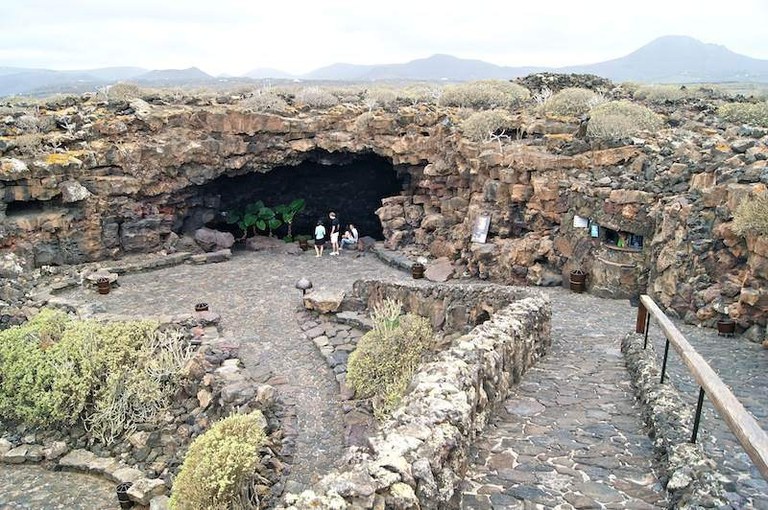
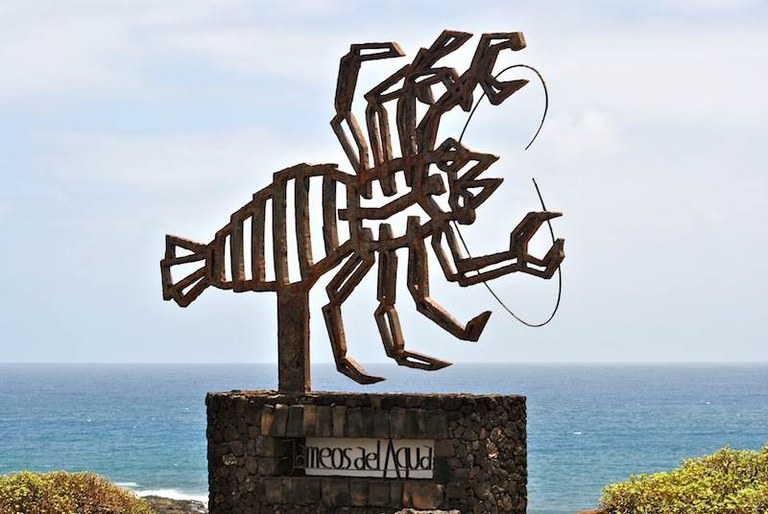
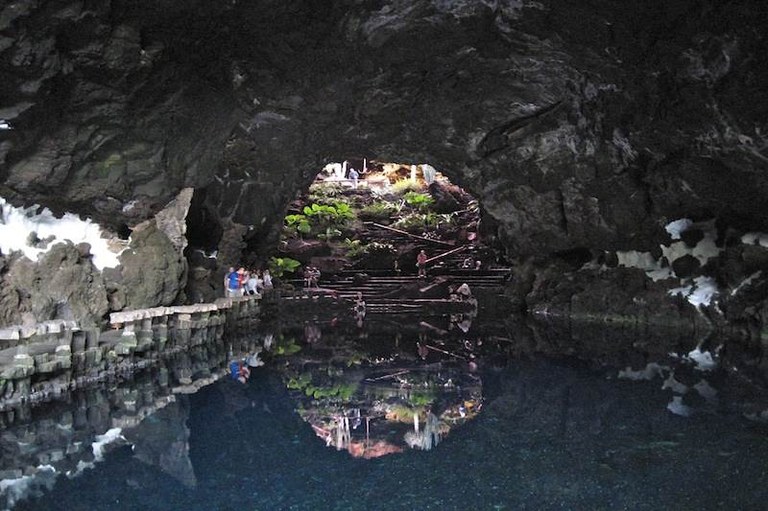
Lanzarote's tourist attraction Jameos del Agua is not situated immediately in the village, but in the municipality of Haría. It is located on the LZ-1 north of Arrieta, about 15 minutes from Haría. Jameos del Agua was designed by César Manrique in 1966 and lies within the lava field of the Corona volcano. It is part of an underground cave system, to which the Cueva de los Verdes belongs as well. The word jameo originates from the vocabulary of the Lanzarzotean native people and means cavity or hollow. The caves have been converted into a centre for art, culture and tourism. There is a restaurant in the grotto adjoined by a small lake. A special species of white crawfish which can only be found in the depth of 2,000 meters below the sea exists here.
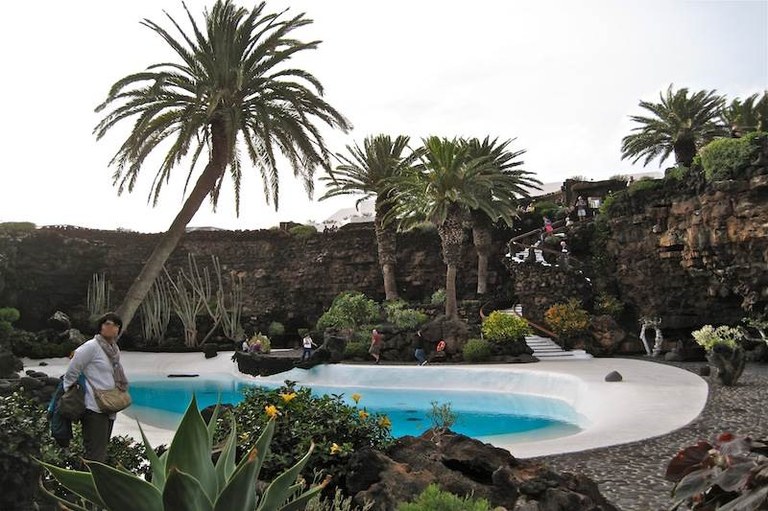
A small flight of staircases lead up to a pool which was once used for swimming. Behind the pool there is another grotto that functions as a concert hall with fantastic acoustic, and an event venue, which consists of two bars and dance floors. Another staircase leads the way up to a different restaurant and the Museum of Geology. Here the volcanic processes on the island are explained in detail.
Address: Calle Quilla, 35520 Haría, Lanzarote island.
(follow LZ-1 northward and turn right for LZ-205)
Telephone: +34 928 848 020
Daytime opening hours: Daily 10:00 - 18:30
Day time restaurant opening hours: Tuesday to Saturday 12:00 to 16:30
Admission fee (day entry): Adults €8, children (7-12 years) €4, Children under up to 6 years - free
Evening opening hours: Tuesday and Saturday from 19:00 to 24:00
Restaurant evening opening hours: Tuesday and Saturday 19:30 to 23:30
Admission fee (night entry): Adults €9, children (7-12 years) €4.50, Children under up to 6 years - free
Cueva de los Verdes
Cueva de los Verdes is an impressive cave with underground lava tunnel which is located north of Arrieta, very close to the tourist attraction Jameos del Agua. About two kilometres of the lava pipe is opened for visitors since 1964. The tour takes about 40 minutes and includes a visit of the concert hall which has the capacity of 300 people. The special lightening of the cave was installed by Jesús Soto, a friend of César Manrique.
The cave was created approximately 4,000 years ago, during the eruption of the Corona volcano. The pipe-like tunnel formed as a result of the lava on the surface cooled off faster than the lava layers underneath, which kept running and left the tunnel. The lava tunnel is seven kilometres long in total, making it one of the largest lava cave systems in the world. The nearby Jameos del Agua also belong to this system where the hollows were created when part of the ceiling of the lava tunnel fell in and the holes in the ground were left. The cave system starts at the volcano Montaña Corona and ends about 50 meters under the sea. In the 17th century, these caves were used as hiding place for the Lanzarote ños from the pirates.
Address: Carretera de Orzola s/n, 35520 Haría, Lanzarote island.
(Cueva de los Verdes can be reached from Haría in 15 minutes via LZ-10 and LZ-201, before turning right into LZ-205)
Telephone: +34 928 848 484
Opening hours: Daily 10:00 to 19:00, last tour departs at 18:00
Admission fee: Adults €8, Children (7-12 years) €4, Children under the age of 6 - free
Museums
The Museum of Sacred Art of Haría can be located at Plaza León y Castillo square, in the building next to the church. Whilst a repurposed cistern located near the Plaza de la Constitución square hosts various temporary exhibitions and events, and is open to the general public.
Museo de Arte Sacro (Museum of Sacred Art)
After being closed for 15 years, this religious art museum finally re-opened its doors to the public in 2008 after the building was remodelled and reconstructed for fear of its collapse. The 'life' journey of this museum was not easy, it was initially housed in the old church of Haría which had to be demolished in 1956 after its roof collapsed. The contents of exhibit had to be stored in warehouses and private homes until 1975 when they found home in the current building. Unfortunately, the building had to be closed in 1993 due to its poor conditions.
The remodelled building managed to recreate (80%) the altar of the ancient church of Haría. Among the valuable pieces on display are: the 'Custodians' from the years of 1600, 1670 and 1700, and ’Cristo yacente’, the reclining Christ from the 18th century.
Address: Plaza León y Castillo, 35520 Haría, Lanzarote island (the building next to the church Iglesia de Nuestra Señora de la Encarnación)
Opening hours: 10:00 to 14:00
El Aljibe de Haría exhibition centre
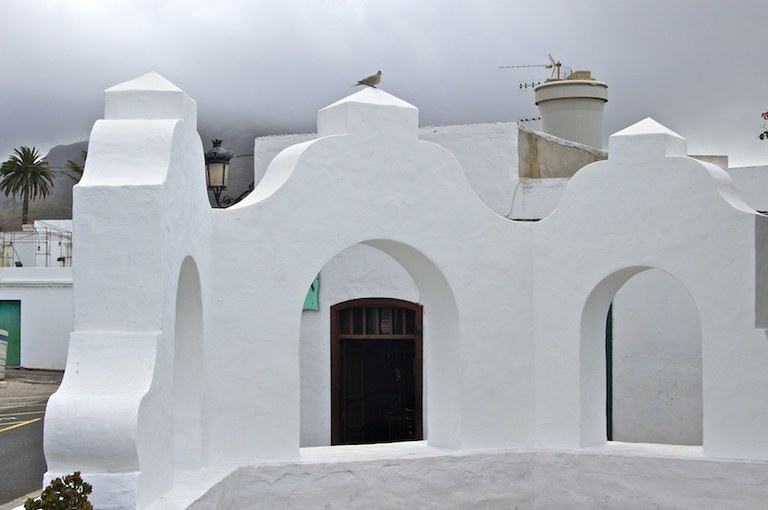
El Aljibe de Haría is located near the Plaza de la Constitución square, it was a cistern originally built due to the lack of water on the island. The constant shortage of water on Lanzarote made it necessary for the farmers to construct different structures (inlcuding the Aljibes cistern) to collect water, with many basins for the optimal use of the valuable liquid can still be seen today. However, with the installation of a drinking water treatment plant, the Aljibe lost its purpose. In 1998, Haría's district council decided to convert the cistern into a conference and exhibition room- a place to hold various events for the locals and visitors alike. The construction work completed two years later and in June 2000, the venue was officially opened to public. The exhibition hall boasts over 200 square metres of art space.
Address: Plaza de la Constitución, 35520 Haría, Lanzarote island.
Activities
Haria's cooler climate and lush landscape makes it an ideal playground for the walkers and hikers alike. Moreover, due to its location in the north of Lanzarote, close to many popular sights, Haría is also the ideal starting point for various excursions. Popular attractions like the Jameos del Agua and the Cueva de los Verdes are only short drives away, while surf spot Caleta de Famara is in the immediate vicinity and definitely worth a visit. If you have more time to spare, head north to Orzola town to sample freshly caught seafood or cross the strait on a ferry to visit the beautiful Isla de la Graciosa.
Hiking
The green surroundings and pleasant climate which surround Haría's elevated position makes it the departure point of some of the most impressive hiking routes on the island. For example, from Haría you can make your way up the mountain of Montaña Ganada (550 metres). The volcano crater of La Quemada and Los Helechos (582 meters) can also be climbed. Hikers can expect a breathtaking view over the small neighbour island Isla de la Graciosa. Furthermore, Haría is just right to start a hike along the Risco de Famara or to cross through the island (horizontally) – from Haría to Arrieta, on the narrowest part of Lanzarote. The island presents itself from its greenest and most beautiful side, especially during spring time.
Beaches
Haría is not situated on the coast, but in a valley in the interior of the country. So Haría does not have its own beaches. However, Arrieta has a nice beach and is only 10 minutes drive away via LZ-10. Buses 07 and 26 also run between Haría and Arrieta.
Festivals
Just like any other villages of Lanzarote, Haría seizes a few opportunities to celebrate each year. Holiday-makers whose stay on the island coincides with a celebration in Haría should not miss out on the event. The fiestas offer typical Canarian music, food, traditional costumes, themed dress-ups as well as a cheerful ambience. The most important celebrations in Haría are:
Carnival
During February and March carnival is celebrated on Lanzarote. The celebration in Haría is one of the biggest on the island. Visitors of carnival dress up and enjoy the parades as well as performances from the dance and singing groups.
The festivities begin in February with the parade in Arrecife. It goes on with the celebrations in the other municipalities. The celebrations in Haría take place last on the island. The parades are always on Saturday.
Fiesta de Nuestra Señora de la Encarnación
Nuestra Señora de la Encarnación, the patroness of Harías, is being honoured on the 25th of March each year. People eat, dance and celebrate happily. The festivity also includes sport events like Lucha Canaria, the traditional Canarian wrestling match.
The palm tree festival is also celebrated on the same weekend. It is called Fiesta de la Palmera which includes the Bajada de la Palmera, a big celebration held on the mountain of Atalaya, at the end of which a palm tree is being carried down into the centre of Haría.
Fiesta de San Juan
The festivity of San Juan, also known as midsummer night in northern Europe, is celebrated on June 24th in all of Spain. Haría organizes an especially large festival to honor the patron saint San Juan. In the village it is part of the tradition to create colourful salt carpets on the street. These carpets are kept until the next day, when the procession of the holy San Juan passes through the streets. The fiesta also includes big campfires that are supposed to drive away winter. As part of the tradition in Haría, a rag doll named Don Facundo is being burnt.
The fiesta of San Juan actually goes on the entire month. During this time different events take place such as concerts, exhibitions and sport events.
Restaurants
Haría is an ideal place for those who would like to dine in a typical Canarian and idyllic ambience. This small village in northern Lanzarote has a few nice restaurants to offer. Here is a selection:
Snack Bar Cafeteria Ney-Ya
This cafe located near Plaza León y Castillo square is ideal for a quick coffee fix or quick bite to eat. It serves reasonably priced tapas.
Address: Corner of Calle de la Cilla & Calle La Hoya, 35500 Haría, Lanzarote island.
Restaurante El Cortijo de Haría
Restaurante El Cortijo is housed in a thoughtfully decorated traditional white-washed stone building. There are outdoor terrace sitting as well as the salón are for bigger group and special functions. Located just behind the Ayuntamiento (town hall), this restaurant specialised in goat, baked suckling pig and grilled meats.
Address: Calle El Palmeral 6, 35520 Haría, Lanzarote island.
Telephone: +34 928 835 686
Opening hours: 10:00 to 17:00
Restaurante Dos Hermanos
Dos Hermanos is conveniently located by the main plaza of Haría. It serves traditional meat and goat dishes, and is known for its excellent deserts.
Address: Plaza León y Castillo, 35520 Haría, Lanzarote island.
Telephone: +34 928 835 409
Opening hours: Daily from 11:00 - 20:00
Restaurant Casa l'Cura
Casa l'Cura is a typical Canarian restaurant.
Address: Calle Nueva 1, 35520 Haría, Lanzarote island.
Telephone: +34 928 835 556
Centro Socio Cultural La Tegala
This eatery is located in the centre of Haría, offering typical Canarian dishes. It is especially busy on Saturdays during the weekend market. The locals enjoy meeting here to catch up on the news of the village.
Address: Plaza León y Castillo, 35520 Haría, Lanzarote island.
Telephone: +34 696 900 652
Opening hours: Daily from 09:00 to 24:00
Restaurant Mesón la Frontera
Restaurant Mesón la Frontera offers its guests typical Canarian dishes and fresh meat on the grill. It is located between Haría and Máguez.
Address: Calle Casas de atrás 4, 35520 Haría, Lanzarote island.
Telephone: +34 928 835 310
Opening hours: Monday to Saturday 12:00 to 21:30, Sunday 12:00 to 17:00
Restaurant Los Cascajos
The restaurant specialised in grilled chicken and meat. It is located on the main street leading from Yé to Haría.
Address: Calle María Ferrer 9, 35520 Haria, Lanzarote island.
Telephone: +34 928 835 471
Opening hours: Daily from 11:00 - 17:00