

- Hungary
- Ireland
- Italy
- Malta, Republic of
- Portugal
-
Spain
-
Canary Islands
- El Hierro
- La Palma
- La Gomera
- Tenerife
- Gran Canaria
- Lanzarote
- Fuerteventura
- Tarajalejo
- Caleta de Fuste
- Corralejo
- Costa Calma
- Las Palmas de Gran Canaria
- Lobos Island
- Maspalomas
- Caleta de Famara
- Morro Jable
- Costa Teguise
- Jandía
- San Cristóbal de La Laguna
- Playa Blanca
- Playa de las Americas
- Puerto Calero
- Teide National Park
- Playa del Inglés
- Puerto del Carmen
- Los Realejos
- Puerto de Mogán
- Las Galletas
- La Orotava
- Anaga
- San Agustín
- Adeje
- San Bartolomé de Tirajana
- Puerto de la Cruz
- Los Cristianos
- Arrecife
- El Médano
- Orzola
- Masca
- Taurito
- Los Gigantes
- Fañabé
- Santa Cruz de Tenerife
- Santiago del Teide
- Garachico
- Punta del Hidalgo
- La Caleta
- Balearic Islands
-
Barcelona
-
Benalmádena
-
Cádiz
-
Córdoba
-
Jerez de la Frontera
-
Lleida
-
Málaga
-
Santander
-
Seville
-
Toledo
-
Canary Islands
Isla de la Graciosa
Overview:
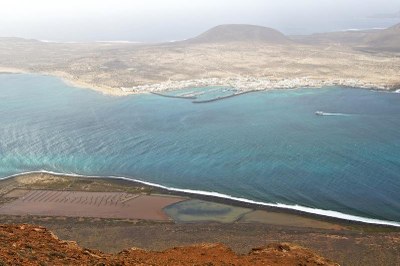 Isla de La Graciosa is truly a tropical paradise. The beautiful turquoise sea laps at the golden sands underneath the stunning volcanic backdrop. It is rare that such a popular tourist spot is able to remain so desolate, especially considering its immense natural beauty. Only 650 people live on this 27km2 island, which is the only one to be populated in the Chinijo archipelago, which lies off the north-eastern tip of Lanzarote. Technically La Graciosa island is still part of the Teguise administrative region of Lanzarote, but some see it as almost an 8th Canary Island. La Graciosa is full of natural riches to discover. Pristine coastlines are overlooked by mountains of red and yellow and the beaches are of gold and white sands; their splendour being rivalled only by the bright blue seas and sky. Also the concrete landscapes of other islands haven’t made it to La Graciosa yet, so there are no high-rise hotels, and no real roads. Therefore, getting around La Graciosa can be difficult, but an adventurous spirit and a little determination will compensate for that. Despite La Graciosa becoming a popular day-trip destination, the natural beauty of La Graciosa has not been compromised. It embraces the very essence of island-hopping.
History:
Rumours have long circulated about whether or not La Graciosa inspired Robert Louis Stevenson’s Treasure Island. Many explorers saw the land as attractive, yet insignificant, and few even stepped foot on it. Pirates did come and go to La Graciosa island, mainly in the 17th century, but by the time tourists began to arrive inhabitants had long settled down.
Culture
La Graciosa island is highly dependent on Lanzarote for imports, financial support and resources, with residents often taking a ferry trip back and forth. This accessibility has taken away the feeling of isolation for the people but it has also meant that a lot of culture is shared. Many remote islands have their own customs and traditions but the relationship between this “8th island” and Lanzarote means that there is less of a culture shock visiting La Graciosa than you might expect.
Economy
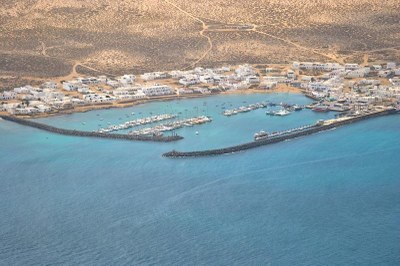
Many of the island’s 650 inhabitants make their living through fishing or tourism. The harbour is integral to La Graciosa, without it tourists would be unable to visit and fishermen would have nowhere to dock. The few businesses that exist are based in the capital, Caleta del Sebo. A small residential district called Pedro Barba can be found in the north-east of the island, but the village is highly dependent on the capital.
How To Get There
By Ferry:
As Isla de La Graciosa is an island the only way to reach it is by ferry. Departing from Orzola, a small fishing town in the northern tip of Lanzarote, you will arrive in less than 20 minutes. Once you step off the ferry you will find yourself in the harbour of Caleta del Sebo, the capital of the island.
You do not need to book the ferry in advance but you should arrive around 10 minutes before departure. Two ferry companies exist and the following schedule shows both timetables.
Departures from:
Orzola La Graciosa
08:00* 07:00*
10:00 08:00
10:30* 09:30*
11:00 10:00
12:00 11:00
13:00* 11:30*
13:30 12:30
16:00 15:00
16:30* 15:30*
17:00 16:00
18:00 17:00
18:30* 17:30*
Times below only in the summer (July 1– October 31)
19:00 18:00
*Biosfera Express
Adult Return - €20, Child Return - €10
Adult Single - €11, Child Single - €7
Líneas Marítimas Romero
Adult Return - €20, Child Return - €11
Adult Single - €11, Child Single - €7
Sights:
Isla de La Graciosa's breathtaking scenery would not be complete without its startling volcanic mountains.
Las Agudas
The only other residential area that exists on the island is called Pedro Barba, and almost 2km south-west of it sits Las Agudas. The mountain's name translates into 'the needles', in reference to its twin peaks. The larger of the two is named Agudas Grandes (the big needles), and is the highest point found on La Graciosa. At 266m, it is one of the most popular attractions. Agudas Chicas (the small needles), offers equally incredible views of the Chinijo archipelago and the rest of the island. Two hiking trails take you to Las Agujas. The north route from the harbour is quicker but tougher, where as the slightly longer walk past the southern side of Agudas Grandes is longer but less difficult.
Montaña del Mojon
The second largest mountain on the island is Montaña del Mojon. Standing 189m high it is the closest of the four volcanic mountains to Caleta del Sebo. With its big sister (Agudas Grandes) towering over from nearby, it is climbed far less. It is still worth a visit however, and if you travel to either Montaña Amarilla or Agudas Grandes you are likely to see it.
Montaña Amarilla
Found beside the Playa de La Concina (beach) at the far south-west of the island, the Montaña Amarilla (Yellow Mountain) is set perfectly against the sparkling blue sea. The yellow tint comes from thousands of years' worth of waves crashing against the surface of this ancient volcano, exposing the rich, almost golden, ochre formations underneath. Hikers can reach the 172m summit by following a footpath. Whether you decide to head north-west or south-west from Caleta del Sebo, the route will take you to Montaña Amarilla roughly halfway. Passing around the coastal side of the mountain can be difficult however as there are various sand dunes and few visible footpaths, making hiking extra strenuous
Montaña Bermeja
Much like its southern counterpart, the Montaña Bermeja (Scarlet Mountain) vibrantly contrasts the Atlantic Ocean which it overlooks. The white sands of Playa de Las Conchas act as a border between blue and red. Although it is the smallest mountain at 152m, it is well worth a visit. The deep scarlet glow originates from lava flows which covered the rock face thousands of years ago. The area around the mountain is as far north as tourists are able to visit, the rest of the land is preserved under the Parque Natural del Archipelago Chinijo restrictions. Hikers are able to reach Montaña Bermeja by taking a northern walking loop. After heading north from Caleta del Sebo for slightly more than 1km, a sandy crossroads will appear. Continuing north will mean you arrive directly at the mountain, going east will first take you to Las Agudas and then eventually to Montaña Bermeja.
Activites :
Isla de La Graciosa is the playground for nature lovers. You can choose from sunbathing, hiking, biking, diving, jeep safari or seeing the beautiful island from the sea on a catamaran. If you can't fit all these in one day, there is always option to camp on the island.
Mountain Bike Hire
One of the best ways to get around this beautiful island is to hire mountain bikes. Several shops can be found in the harbour area of Caleta del Sebo and daily rentals usually cost around €10. It should be noted that as all the roads are sandy, biking is rather tough on the legs at times.
Jeep Taxi Tour
With there being no paved roads on the island, travelling around Isla de La Graciosa can be quite difficult. One solution to this problem comes in the form of a 4x4 Jeep taxi. An hour long tour of the island costs €40 and will take you to all the sights La Graciosa has to offer. Alternatively, you may book the jeep to drop you off at a beach or a mountain and have it pick you up again for €20.
To book call (0034) 606 741 175 or email miguelsafarigraciosero@hotmail.com
Surfing
Some of the waves found around the shores of La Graciosa provide excellent surfing opportunities for those who adventurous enough to try it. Bajo del Corral and Playa Francesa are the best spots and can be found a few hundred metres west of Montaña del Mojon
Scuba Diving
Much of the water that surrounds La Graciosa and the rest of the archipelago is protected, but it is possible to book a guided scuba course or just a one-off dive. Found at the harbour and provided by the Líneas Marítimas Romero, the company who operate some of the ferries, individual dives are priced from €60, and courses can range from €250 to €500. Regulations do apply within the marine reserve and contact with fish is much more controlled than in Lanzarote.
Catamaran Excursions
Provided also by Líneas Marítimas Romero, it is possible to book excursions around the seas which surround La Graciosa. Expeditions can be at day or night. For more information call (0034) 902 401 666.
Camping
As visitors are heavily dependent on catching the last ferry home, it is often difficult to fit all that La Graciosa has to offer into one day - so why not stop for the night? The campsite can be found on the tranquil Playa de El Salado, less than 1km west of Caleta del Sebo. The good news is that access to the campsite is free; however you must obtain a permit beforehand by registering online. Registration is simple and can be done so by visiting http://www.reservasparquesnacionales.es/real/ParquesNac/usu/html/inicio-reserva-oapn.aspx?cen=8&act=%208
It is important to respect the island’s unique local environment when camping. The local authorities remind campers to:
Be extra cautious on the beach as there are no lifeguards or rescue staff situated in the area.
Not start fires on the site so nearby animals and plants are left undisturbed.
Take all waste away with you.
Hiking
La Graciosa is a hiker’s paradise. As there are no concrete roads to worry about, and only a handful of jeeps crossing the sandy tracks, it is largely up to you to decide where to go. Areas which are protected by the Parque Natural del Archipelago Chinijo are cordoned off and clearly marked. The lack of buildings also makes shady spots hard to come by so bare this in mind before setting off. The benefit of visiting an island that is largely untouched by man means that you are free to explore whichever route you feel. Beaten paths do exist and can sometimes be helpful in leading you to a specific landmark or beach, but if you wish to stray from one you will surely find another soon enough.
Kite Surfing (Kite Boarding)
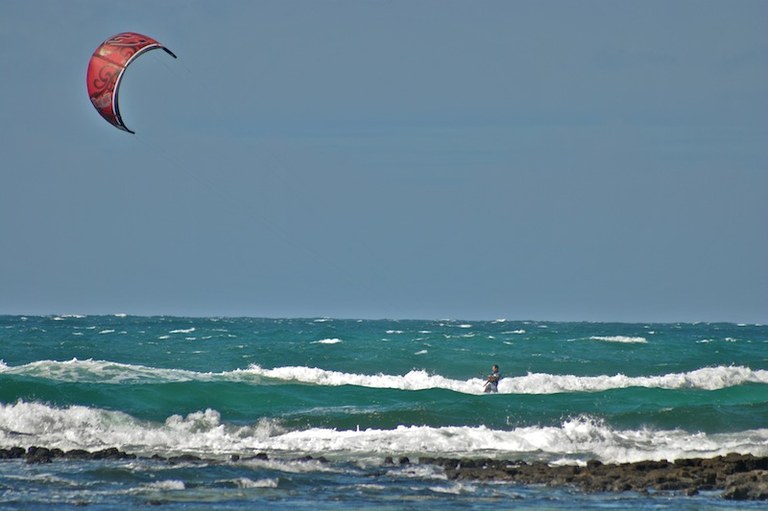
Isla de La Graciosa is also ideal for kitesurfing due to its consistent trade winds especially during summer time when there is almost no rain, low humidity and cool sea breeze. It is a rare opportunity to practise your kitesurfing skill within such beautiful and tranquil surrounding, away from the hustle and bustle of mass tourism.
Contact Graciosa Kite Center (+34) 928 842 165 for more details. They also offer kitesurfing courses at various levels.
Beaches:
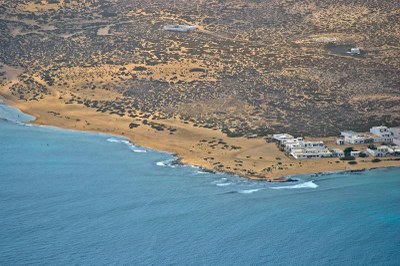 Along with the mountains, the best thing about visiting a small island such as La Graciosa is that there is more than enough coastline to explore. Many of the beaches in the Canary Islands are black from volcanic activity, but here the clear blue seas are framed by sprawling white sands.
Playa de El Salado
The most noticeable beach can be found on the west side of the harbour. Playa de El Salado is the most visited beach thanks to its location, but it has more than convenience going for it. The fine white sands stretch along 2km of coastline and benefit from sparkling waters. It is possible to camp on the beach, although a permit is required (please see Activities). Shower and toilet facilities are also available.
Playa Francesa
You will encounter Playa Francesa south-west from Playa de El Salado, or alternatively a 40-minute walk south-west from Caleta del Sebo will take you to this mainly boating area. The locals often use the calm seas to dock their boats, and being less than 500m long it isn't really a beach to sunbathe on, rather one to enjoy the view of the 178m high Montaña Amarilla.
Playa de La Cocina
If you wish for a closer view of Montaña Amarilla, it is advised that you follow the coast further south-west. After less than a 1km walk from Playa Francesa (in total a 3.6km walk from Caleta del Sebo) you will find Playa de La Cocina. This tiny 100m strip of sand rests at the foot of the Montaña Amarilla. Literally translating to the Yellow Mountain, the colours can be clearly seen from across the island but it is from here that the greatest view can be found. This small beach benefits from calm waters and fine sands, it is perhaps the best area to have a cooling swim. Unfortunately, it can be rather difficult to pass around the coastal-side of the mountain as visible pathways aren’t present and hiking through sand dunes may prove strenuous.
Playa de Las Conchas
The beach furthest from the harbour is perhaps the greatest on the island. Good things come to those who wait, and after an almost 2 hour long walk north you are well rewarded. This often-deserted stretch of sand offers fantastic views of the archipelago. The islands of Montaña Clara, Alegranza and Roque del Oeste are all visible from this beautiful beach, as is the Montaña Bermeja whose red glow sits only a few hundred yards away. This beach is highly recommended!
Playa Lambra
Found on the northern shore, Playa Lambra is one of the most secluded beaches on La Graciosa. Surrounded by restricted land, the beach is famous mostly due to kite-surfers frequenting the area. The strong winds and waves that can be found are ideal conditions for such sports. The sands contain many pebbles, making the beach less than ideal for sunbathing. It should be noted that the only way to arrive at Playa Lambra is by foot or bike as even Jeep taxis are unable to reach this spot.
Festivals:
The religious and traditional festivals found on Isla de La Graciosa usually coincide with those that occur back on mainland Lanzarote, however once in a while the Teguise municipality organises events which see thousands of people come over. Folk music festivals are the most popular with the events taking place around the harbour or further in Caleta del Sebo.
Restaurants:
El Marinero
Fishing provides a large portion of La Graciosa’s income, and here at El Marinero you can eat some of the island’s top produce. All main meals are generously priced, at less than €15, and snacks and tapas are also available. The restaurant also serves wines of Lanzarote wines. from 10:00 every day and closes late.
Address: Calle Garcia Escàmez 14, 35540 Isla de La Graciosa, Lanzarote.
Telephone: +34 928 842 070
Opening hours: daily from 10:00
Meson de La Tierra
An atmospheric restaurant found at the harbour-side. Fish features heavily on the menu but they also serve such favourites as Spanish omelette and pizza. An average main meal will cost no more than €10. Meson de La Tierra is open from 10.30am and closes at 11.00.
Address: (habour front) Avenida de la Virgen del Mar, 35540 Isla de la Graciosa, Lanzarote.
Opening hours: Opens from 10:30
Nightlife:
On an island of 650 people you are not likely to find much activity late at night. Restaurants serve alcoholic drinks but wilder night out can only be found on the main island of Lanzarote, by ferry.