

- Hungary
- Ireland
- Italy
- Malta, Republic of
- Portugal
-
Spain
-
Canary Islands
- El Hierro
- La Palma
- La Gomera
- Tenerife
- Gran Canaria
- Lanzarote
- Fuerteventura
- Tarajalejo
- Caleta de Fuste
- Corralejo
- Costa Calma
- Las Palmas de Gran Canaria
- Lobos Island
- Maspalomas
- Caleta de Famara
- Morro Jable
- Costa Teguise
- Jandía
- San Cristóbal de La Laguna
- Playa Blanca
- Playa de las Americas
- Puerto Calero
- Teide National Park
- Playa del Inglés
- Puerto del Carmen
- Los Realejos
- Puerto de Mogán
- Las Galletas
- La Orotava
- Anaga
- San Agustín
- Adeje
- San Bartolomé de Tirajana
- Puerto de la Cruz
- Los Cristianos
- Arrecife
- El Médano
- Orzola
- Masca
- Taurito
- Los Gigantes
- Fañabé
- Santa Cruz de Tenerife
- Santiago del Teide
- Garachico
- Punta del Hidalgo
- La Caleta
- Balearic Islands
-
Barcelona
-
Benalmádena
-
Cádiz
-
Córdoba
-
Jerez de la Frontera
-
Lleida
-
Málaga
-
Santander
-
Seville
-
Toledo
-
Canary Islands
Santana
Overview:
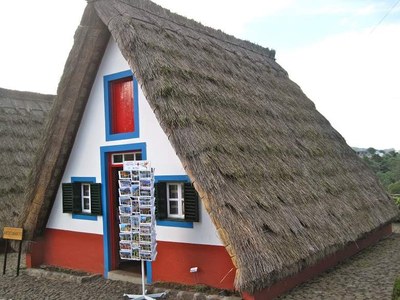
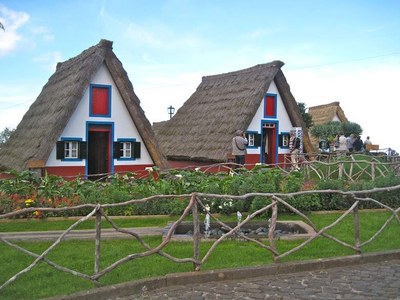
Santana is undoubtedly the most famous village of Madeira. Situated 20 km northwest from Machico and 40 km from Funchal, its main attraction is its A-shaped thatched houses with roofs that go all the way to the ground. Their flamboyant and bright colors add a sharp contrast to its whimsical structure, making these traditional houses a spectacular sight for any first-time traveller.
Santana has a rustic and earthy air to it—the kind that makes you feel right at home straight away. It might not be as busy and active as Funchal; and people who thrive on club hopping and boisterous, adrenaline-filled night parties may leave Santana feeling a bit disappointed. However, the village more than makes up for its mountainous landscapes and spectacular views, making it a perfect getaway for anyone who wants to go on a vacation just to relax and unwind.
Tourists will find that most Santana’s produce are organic; and those who visit the place often recall their time in Santana with gastronomic delight. Make sure you try their famous espetadas, which are large chunks of beef rubbed with garlic and salt and skewered on a bay leaf stick.
History
The Portugese word Santana was taken from Sant'Ana, its patron saint. Founded in the vicinity of a chapel, it includes six major parishes: São Roque do Faial, Arco de São Jorge, Santana (municipal seat), Ilha, and São Jorge. Santana (parish) has the largest population, while Arco de São Jorge has the smallest number of residents in the whole village.
Economy
Santana's economic activities centers mostly in craftwork and agriculture, especially fruits, cereals (corn), vineyards, and sugar cane. Crops are grown without the use of pesticides or fertilisers to deter pests. This makes the appearance of their produce look unsightly; although locals often state that an ugly produce tastes the best. Many tourists attest to this belief as well.
Santana also has a strong tourism industry, thanks to many of its tourist attractions, such as its Palheiros (“A” shaped houses) and the Madeira Theme Park.
Culture
The Santana locals are simple, hardworking, and hospitable. Their culture is both modern and traditional at the same time, with religion playing an important part in the place. The annual 48 hours folk dance festival in July show cases various traditional dance arts and delicacies from different regions; whilst the locals’ passion with agriculture are reflected in its custard apple and lemon festivals.
How to get there
By Car:
Pick the E101 road from Funchal and head towards Santa Cruz eastward. Keep on the ER101 after about 20 km, as you reach Machico. Pass by Porto da Cruz and follow the remaining signs to Santana.
By Bus:
Go to the stop near the cable car terminal on the Avenida do Mar, which is parallel to the seafront promenade. Take Horario Buses with line numbers 56, 103, and 138, which go via Machico or Ribeiro Frio. Most journeys will take around 2 hours to complete.
There are buses that operate inside Funchal; while there are also those that provide long distance services as well (No. 12). However, all of them depart from strands within Avenida do Mar, which goes from the São Lourenço palace to the Monte cable car station. You have to buy a ticket in advance if you want to get on at the Avenida do Mar, but you can buy tickets from bus drivers if you are going elsewhere. Take note that tickets bought at the kiosk are cheaper than the ones bought on the bus.
Sights:
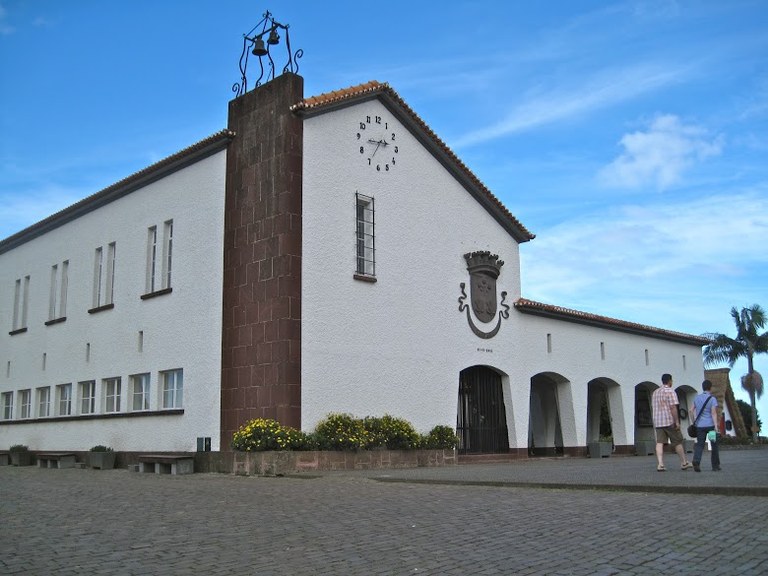 Santana appears like it jumped right out of a travel magazine, especially when you see the Laurissilva Forest, the Palheiros, and Rocha do Navio Nature Reserve.
Palheiros
You can never go to Santana without seeing one of its most popular tourist attractions - the Palheiros. Triangular in shape, these whimsical houses have straw roofs that go all the way to the base of the house. Often, the Palheiros have the traditional red doors, blue-trimmed windows, and white walls for their design.
Now considered as museum villages, these small houses date back all the way from the 16th Century and were used as houses by old rural families. Today, it is more of a tourist attraction than a practical dwelling place.
Rocha do Navio Nature Reserve
Located between Ponta de São Jorge and Ponta do Clérigo this protected natural reserve was created to protect marine fauna. It houses spectacular sceneries, from sea birds like the Cagarra and Garajau, to even the possibility of monk seals roaming its coastal areas.
Where: Northeast coast of the Island in Santana
Laurissilva Forest
This natural, subtropical forest dominates the mountainous landscapes of Santana, and is classified as a 'UNESCO World Heritage Site'. Water can be constantly found within the area, which contributes to the natural balance of the Madeira island. Its name comes from the Latin word, 'silva' or forest; and 'laurus' (laurel), an arboreal species found in the forest.
A tip to travellers: If you want to visit the place, you must book in advance with the Madeira Natural Park
Museums:
There are no museums in Santana, and if you wish to visit one, you can drive an estimated 10 miles to Arco de São Jorge in the Viticulture Field Experiment. This interactive museum showcases the process of wine making from beginning to end.
Activites:
Santana offers travellers a chance to learn more about their culture and history at the Parque Temático da Madeira (Madeira Theme Park). It also offers breathtaking landscapes at the Queimadas Forest Park and Rocha do Navio Cable Car.
Parque Temático da Madeira (Madeira Theme Park)
This 7-acre land is a good place to combine your love of nature with history, culture, and tradition. Set amidst a a beautiful landscape, the park-garden atmosphere will help you to stay in tune with nature at its finest.
Address: Estrada Regional 101, Fonte da Pedra, 9230-116 Santana, Madeira island
Telephone: (+351) 291 570 410
Opening hours: daily 10:00 to 19:00. Closed on Mondays for the following dates: 7th Jan - 12th May, 20th May - 9th June, 9th Sep- 15th Dec
Entrance: Adult €10, Senior (>65 years) and Junior (5-14 years) €8, children under 5 years free
Website: http://www.parquetematicodamadeira.pt
Rocha do Navio Cable Car
Previously built for the convenience of the local farmers, these vehicles include two orange cabins that descend down the coastal plain are now open to tourists. The descent can be an experience in itself; not only will you see a spectacular view of plantations and Rocha do Navio Nature Reserve below, you'll also get to get a bird's eye view of the Ilhéu da Viúva islet, just off the coast.
Where: North coast of Santana
Queimadas Forest Park
The park is set amidst the backdrop of the Laurissilva forest and offers breathtaking vegetation every step of the way. Explore the popular Caldeirão do Inferno, Caldeirão Verde, and Rancho Madeirense areas, and see the traditional house in the park which bears close resemblance to the triangle-shaped house (Palheiros), but much bigger.
From here you have a selection of 30 trails with various difficulty levels to explore the beautiful surrounding areas.
Where: 5km south of Santana
Swimming, tennis, volleyball and walking in the park
For those who are keen for a swim in the sea or some ball games, the nearest place for head for will be towards the beach of Praia do Faial, about 6km towards the coast from city centre of Santana. There you will find a small pebble beach surrounded by a newly built promenade. Tennis and volleyball courts can also be found, along with a recently created beautiful park for leisure activities like jogging, or a picnic.
Karting
En-route to the Praia do Faial beach area on VE1 you will come across the Pista de Karting where you and pals can have a friendly race against each other on the track.
Beaches:
Santana is town is land-locked. The closest beach you will find is about 6km down the coast from. Alternatively, you can head to neighbouring town of Porto da Cruz (about 12km east) for its black sand beach Praia da Lagoa and bathing complex. Alternatively, similar distance west of Santana is São Jorge swimming complex with 3 pools and a restaurant.
Praia do Faial beach
Venturing 6km down the coast on VE1 will take you to this small sheltered rocky bay with calm waters to swim in. The promenade area surrounding the beach has just recently been renovated. There are a few good restaurants here too. A new park is also built nearby for those who keen for a jog, run or just a relaxing walk along its trails. Tennis and volleyball courts can also be found nearby.
Festivals:
One of the best festivals you can go to while you’re at Santana is the Festa dos Compadres and the 48 hours folk dance festival. Fruits are also the main features of some of the festivals in Santana.
Compadres Feast - February
For over half a century, Festa dos Compadres is celebrated around the 3rd week in February, signalling the beginning of the island's big event: the Madeira Carnival. Amongst the fancy activities are parades and pageants.
When: around the 3rd week of February
Where: town center of Santana
Custard Apple Exhibition - May
This is a yearly regional effort in promoting Santana’s most cultivated fruits - the custard apples. The event features the versatility of this most celebrated fruit where you will be able to sample and purchase products made of custard apples: liqueurs, milk shakes, cakes and even ice creams! Various performances and games are also featured in this custard apple fair.
When: May (date varies)
Where: Faial, Santana
Lemon Festival - May
As you can probably tell by now, this region is surely a fertile land. For over a decade, the Lemon Festival has been held in the small parish of Ilha in Santana in the honour of this yellow citrus fruit.
When: May (date varies)
Where: Village of Ilha, Santana
48 Hours Dancing Bailar (Folk Festival) - July
This is a 2 full day of non-stop (yes, 48 hours non-stop) folk festival where various folk dance groups around the island come together to show case their dances and traditions. Come learn about the Madeiran folk dances and cultures while sampling its regional specialty cuisines.
When: July (date varies)
Where: town center of Santana
Restaurants:
Santana is widely known for its Sopa de Trigo, a thick soup made from wheat. One good tip for coffee lovers: some parts of Santana, including other regions of Madeira, use a different terminology for this popular beverage. "Chino" means normal coffee for them, while "Chinesa" means coffee with milk. “Espresso” refers to small-portioned coffee. For a good place to eat, try Quinta do Furão Restaurant.
Quinta do Furão Restaurant
One of the most visited restaurants in Santana, Quinta do Furão is a 43 unit inn that stands on a cliff-top that overlooks the ocean and rugged coastlines. Its rustic atmosphere specializes in Portuguese, international, and Madeiran cuisine, and many travellers swear by its gourmet and deliciously prepared food.
Address: Achada do Gramacho, 9230-082 Santana, Madeira island
Telephone: (+351) 291 570 100
Shopping
Santana offers small souvenir shops; however, Funchal (the capital of Madeira) is the best place to go to if you want some serious shopping.