

- Hungary
- Ireland
- Italy
- Malta, Republic of
- Portugal
-
Spain
-
Canary Islands
- El Hierro
- La Palma
- La Gomera
- Tenerife
- Gran Canaria
- Lanzarote
- Fuerteventura
- Tarajalejo
- Caleta de Fuste
- Corralejo
- Costa Calma
- Las Palmas de Gran Canaria
- Lobos Island
- Maspalomas
- Caleta de Famara
- Morro Jable
- Costa Teguise
- Jandía
- San Cristóbal de La Laguna
- Playa Blanca
- Playa de las Americas
- Puerto Calero
- Teide National Park
- Playa del Inglés
- Puerto del Carmen
- Los Realejos
- Puerto de Mogán
- Las Galletas
- La Orotava
- Anaga
- San Agustín
- Adeje
- San Bartolomé de Tirajana
- Puerto de la Cruz
- Los Cristianos
- Arrecife
- El Médano
- Orzola
- Masca
- Taurito
- Los Gigantes
- Fañabé
- Santa Cruz de Tenerife
- Santiago del Teide
- Garachico
- Punta del Hidalgo
- La Caleta
- Balearic Islands
-
Barcelona
-
Benalmádena
-
Cádiz
-
Córdoba
-
Jerez de la Frontera
-
Lleida
-
Málaga
-
Santander
-
Seville
-
Toledo
-
Canary Islands
Arona
Overview
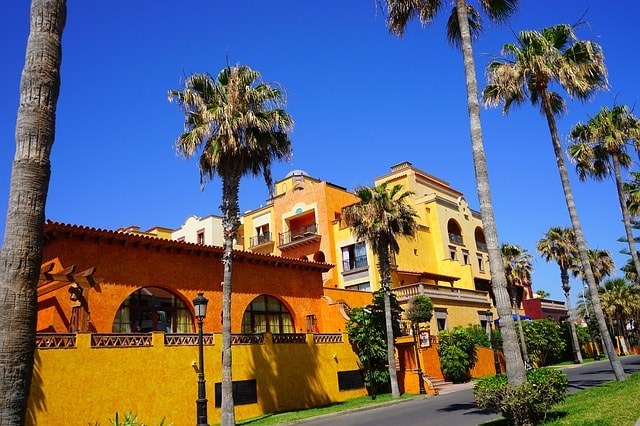
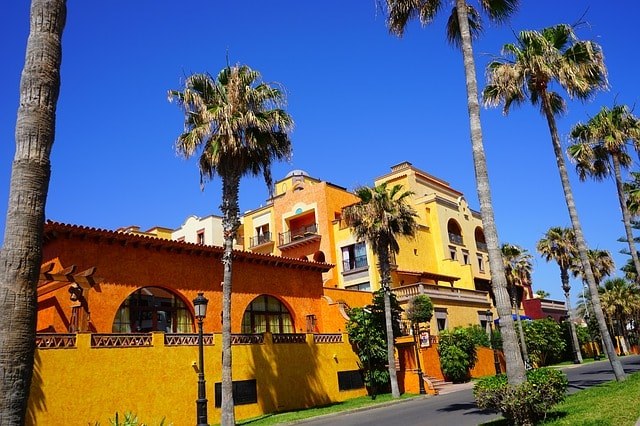
This versatile region on the southern tip of Tenerife lends itself to discovering many aspects of island life. Whether you want to laze in the sun on one of its many golden white or volcanic black beaches, or you want to go recharge your batteries through exploring mountain villages and old churches; here away from the main tourist strips, you won't be disappointed... It's hardly surprising that this is the island's main tourism hot-spot, with its extensive choice of culinary delights (from traditional Canarian to Asian), sporting activities, festivities, shopping havens and amusement parks. It caters to every taste and makes sure everyone has something to do. An impressive array of marine, land-based, airborne flora and fauna provide a sensory experience you won't easily forget. Stunning beaches, pampering hotels, magnetic boutiques, and a refreshing mixture of Canarian and European cultures offer the ideal getaway.
History
Little is known of this municipality's history, which had few inhabitants when the first settlers came to this island. The earliest written records clearly identifying this area were provided by Spanish researcher José de Viera y Clavijo, but it only gained wider recognition with the building of the Saint Antonio Abad temple (later a church, and then a parish church) in the 17th century.
Its most significant period of growth took place throughout the 20th century, when tourism replaced primary sector industries, such as fishing and farming. For example, Los Cristianos was only a small coastal village with a small fishing harbour and a quarry, but has since developed into the island's biggest tourist conglomeration. This is largely due to its busy ferry port, connecting Tenerife to neighbouring islands La Gomera, La Palma, and El Hierro.
Its population has continued to grow, defying harsh conditions, such as a drop in banana prices, a decline in agriculture and the Spanish civil war at beginning of the 20th Century. It has continued to develop some impressive coastal as well as mountain towns, offering a great insight into the many ways of life on Tenerife.
Inhabitants and Location
The 81,100 inhabitants-strong municipality of Arona, located in the southern tip of the island, has become one of the island's wealthiest areas, largely due to revenues generated from the all year- round tourism hot-spots, such as Los Cristianos (whose harbour provides access to the neighbouring islands of La Gomera, La Palma, and El Hierro) and Las Galletas (named after a shipwreck that took place nearby, which had plenty of biscuits, or 'galletas' on board). Its 81.79 km2 wide territory borders with Adeje to the west (separated by the awe-inspiring Barranco del Rey, or 'Canyon of the King'), Vilaflor in the north, San Miguel in the east (both split by the Las Cañadas mountain range), and ends with the southernmost point of the island, Punta Salemas.
At 81.3 km distance from Santa Cruz, the region's sleepy capital village, also called Arona, with just over 1,000 inhabitants, for example, sits high up at approximately 610 meters above sea level, from where it affords splendid views onto the peaks and valleys that surround it – down onto Los Cristianos, and even Tenerife's neighbouring islands (weather permitting), and up to the cacti-clad mountain peaks reaching up towards Mt. Teide.
Culture
Folklore: Deeply rooted in a fusion of Guanche, Andalusian, and Hispano cultures and customs, the many colourful and lively traditional festivities are an excellent manifestation of local traditions. Festivals such as the Fiesta Virgen del Carmen clearly show the strong aboriginal influence on today's way of life. Small, African- and Caribbean-influenced orchestras, with a guitar and a tiple (a treble guitar like a ukulele) leading maracas, wooden flutes, and drums, provide the soundtrack at carnivals and fiestas.
Architecture: There are few conclusive records up until the 17th century, when there was a real boost in architectural development, with the dome-like cupola representing the most important stylistic feature, appearing in the 18th century. Throughout the 19th century and 20th century, Neo-Canarian and Eclectic styles dominated the scene, with Modernism shaping the latter end of the 20th century.
Traditional Art: Local arts and crafts have continued to develop in accordance to local cultural progression – however, there is still a prevailing influence of Guanche styles, most importantly where basket weaving, lacework, and ceramics were used as expressions of art. Traditional earthenware containers and bowls are direct remnants of a not-so-distant tribal past.
Economy
This was once a self-sufficient region thriving off its local fishing and farming industries concentrated largely around the Valley of Saint Lorenzo –keeping cattle, and producing cochineal bananas, tomatoes, potatoes, peppers, and flowers. Their importance, despite mass-exportation to the European mainland, has been overhauled by its ever-expanding tourism sector, which has employed over 60 per cent of Arona’s population since the 1980s. Largely due to the first substantial waves of Northern European, Mainland Spanish, and North American holidaymakers in the 1970s, its population has multiplied nine-fold in the past century – however, the original character of its historic town centres remains unchanged.
How to get there
By Bus:
From Santa Cruz: to Las Galletas and Costa del Silencio - Numbers 112 (twice daily) and 115 (approximately every hour); from Los Cristianos: to Arona - Line 480 (approximately every hour); to Arona and Vilaflor – Number 482 (three times a day).
For more information on the bus network, please visit www.titsa.com.
By Car:
From Santa Cruz, take the motorway Autopista del Sur (TF-1) to the South before turning into TF-21.
Activities
Arona is a municipal with almost half of its territorial being surrounded by ocean. Hence, the majority of its attractions are based around the coastline especially in the Los Cristianos resort area. With its long white sand Playa de las Vista and plenty of water sports activities, boat trips, various excursions being offered, everyone will be keep amused. But don't refrain yourself within one area, there are many nearby resorts which easily accessible by car, taxi or buses. There are also a few theme parks within short distance from Arona and Los Cristianos.
Other popular resorts/ areas nearby:
•Playa de las Américas
•Fañabé
•La Caleta
•Callao Salvaje
•El Médano
Water sports and beach activities
A wide choice of leisure options awaits visitors of Arona's multi-faceted landscape. Its coastal resorts offer a wide range of aquatic sports, such as swimming, scuba-diving, sailing, wind-surfing, jet-skiing, banana-boating, and many more.
Diving and Snorkelling
Diving in the South of Tenerife is diverse, offering anything from wreck dive to deep sea diving among the mysterious marine life. The volcanic coast and the calm (and warm!) water make diving a popular water sport here. There are dives and snorkelling excursions available for people of all capabilities, and diving lessons available to help those wishing to progress with their diving skills.
Hiking
For walkers, Arona (village) is an excellent starting and resting point for a range of hikes throughout its hinterland, the Parque Nacional de las Cañadas del Teide (Teide National Park); it offers refreshments in its various small bars and two major restaurants, the Restaurante Roque de Conde (GRAL TF – 51, No. 67), and the Restaurante Gela (c/Cementerio 15), before, in-between, or after excursions. The two walks directly accessible from here are the Camino Roque del Conde (which leads onto the Camino Barranco del Rey) and the Camino de San Antonio – which all take 2-3 hours to complete.
Whale and dolphin watching
The quieter inlets of the Costa del Silencio offer ample opportuniy for undisturbed relaxation, and you can even enjoy whale watching trips from the Punta de la Rasca in its pristine whale watching reserve (up to 36 species have reportedly been seen in between Tenerife and La Gomera, most commonly pilot whales, beaked whales, and sperm whales).
Others
For those looking for ground-based sports activities, two golf fields, eight football fields (including two with natural lawns), an Olympic-sized pool, an athletics track, and a sports arena, await you.
Sights
Iglesia de San Antonio Abad
Of notable interest in the village of Arona itself are the typical Canary- style Church of Saint Antonio Abad (first built as a temple in 1627, before being re-built as a church in 1796, separating itself from the mother church of Vilaflor), and its adjacent town hall – located on the central Plaza Cristo de la Salud. They are both magnificent, well-preserved examples of the impressive synthesis of colonial and pre- Spanish architecture this area has to boast. It houses images of Cristo de la Salud (the Christ of Health) and the Immaculate Conception, and its high altarpiece, originating from a 17th century cloister in Adeje, is particularly noteworthy.
Address: C/ Duque de la Torre, 29 38640 Arona, Tenerife.
Telephone: (+34) 922 725 809
Parque Las Aguilas (Eagle Park)
The Parque Las Aguilas (Eagle Park), five minutes drive out from Los Cristianos en route to Arona, which is part of the Aguilas Jungle Park, hosts a variety of 'free flight exhibitions' with large birds of prey, such as the majestic American Bald Eagle, Loud-Mouthed Eagle, the meteoritic Falcons, and gently-gliding Andean and Griffon Vultures. This experience allows visitors to experience natural habitats of not only birds of prey, but also crocodiles, monkeys, penguins, and hippos. The bus number 480 goes from Los Cristianos central station to Arona centre every 1-2 hours.
Address: Urbanización Las Águilas del Teide s/n 38640 Arona, Tenerife.
Telephone: (+34) 922 729 010
Museums
There are no listed museums in the municipality of Arona at present.
However, there are five regional cultural centres, which provide insight into local and foreign arts and literature, such as painting exhibitions.
Cultural centers
•Centro Cultural El Fraile (+34 922 777 006)
•Centro Cultural Las Galletas (+34 922 730 446)
•Centro Cultural de Los Cristianos (+34 922 757 006)
•Centro Cultural de Villa Isabel (+34 922 732 304)
•Centro Cultural del Valle de San Lorenzo (+34 922 765 030)
Beaches
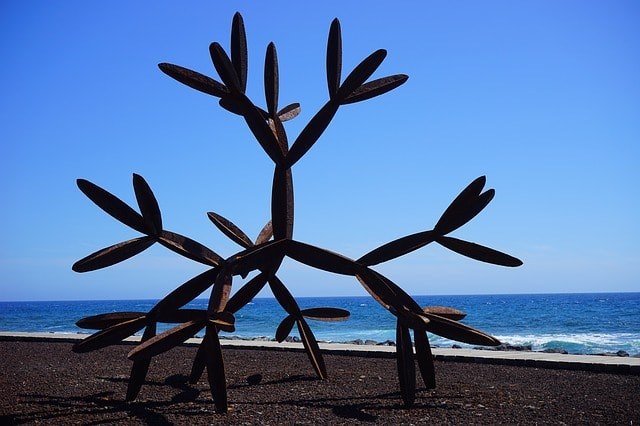
Arona municipal's coastline offers over 15 kilometres of beautiful beaches, so sun-seekers can choose their preferred tanning location from some of the following beaches:
Arenita
120m long, 12m wide, black sand – in Palm Mar, 2km from Los Cristianos, reachable by bus no. 467
Enojados
70m long, 30m wide, white sand – accessible on foot between El Fraile and Las Galletas
Las Galletas
580m long, 30m wide, black sand, manned with a Red Cross lifeguard, accessible by car or bus – by the Las Galletas marina.
Las Vistas
850m long, 127m wide, white sand, manned with a Red Cross lifeguard - Tenerife's longest beach, offering panoramic views onto La Gomera – by Los Cristianos harbour.
Disability access:
Las Vistas beach is fully-accessible for wheelchair users (24 hours a day, 365 days a year), including signposted reserved parking spots, easily accessible routes, entrance ramps (with two-sided handrails at two different heights, sloping at 6%), wooden pathways (2.41m wide – enough for two side-by-side), showers with fold-up seats, amphibious wheelchairs, and added security provided by lifeguards; these are managed under the EURO Key concept, which provide access to 6,700 facilities throughout the world – for more information, please see: http://www.eurokey.ch. In addition, the Spanish Red Cross provides 4 floating wheelchairs, several sets of amphibian crutches, 6 life jackets, and wooden wheelchair-accessible 100 m2 sunbathing surface – all of which can be booked free of charge by tourists and residents (available Monday- Sunday, 11am- 5pm).
Los Cristianos
975m long, 40m wide, white sand, manned with a Red Cross lifegurad - a popular beach with many entertainment facilities, linked to Las Americas through Europe's longest barrier-free promenade!
Festivals
There is a wide range of religious and musical festivals throughout the year, attracting visitors from all over Spain, Europe and beyond. Here is a calendar of events:
Pilgrimage of Saint Antonio Abad (January 17th)
The pilgrimage of Saint Antonio Abad takes place on the Plaza Cristo de la Salud, whereby a mixture of traditional and modern dress is worn.
Carnivals in Los Cristianos (February-March)
The carnival takes place in front of the Los Cristianos Cultural Centre (near the central bus station); Salsa music is used to celebrate a certain personality or country (this changes every year and is announced around January on www.arona.org).
Pilgrimage of the Virgin of Fatima (May 13th -15th)
The pilgrimage of the Virgin of Fatima is held at the main square of Valle San Lorenzo; traditional or other dress is worn to traditional Canarian folkloric music.
Patronage festivities in honour of the Virgin of Peace (July 8th)
This festivity is held at the central Plaza in Buzanada.
Fiesta La Virgen del Carmen (July 16-18th)
Fiesta La Virgen del Carmen is held in Las Galletas; Christians symbolically lift the statue of the Virgin of Carmen onto a boat.
International Folklore Festival International Folklore Festival (last week in July or first week in August)
The International Folklore Festivalis held in Los Cristianos.
Patronage Festivities in honour of the Martyr Saint Lorenzo (August 10th)
Location: Plaza of Valle San Lorenzo.
Saint Casiano (second-last Sunday in August)
The Saint Casiano celebration is held at on the central Plaza of Las Galletas; a modern fiesta with salsa and merengue orchestras, and a miss fiesta contest.
Fiesta del Carmen (first Sunday in September)
Held in Los Cristianos, this modern fiesta with salsa and merengue orchestras, and the election of a beauty queen – 'La Reina de la Fiesta'.
Christ of Health (Cristo de la Salud) and the Lady of the Rosary (first Sunday in October)
This Romería, a procession of cow-drawn carts, with traditional dress and folkloric music, whereby a 'romera' (farm woman) – is elected, in honour of these two saints, takes place on Arona's town hall square,the Plaza Cristo de la Salud, and is Arona's most popular festival.
Restaurants
In the smaller towns you will encounter mainly local cuisine, although the occasional eatery serving international food is also available. In Arona, for example, the traditional Restaurante Roque de Conde (GRAL TF – 51, No. 67) serves pizzas as well as local specialities, such as an exquisite plate of Gofio (a floury paste, usually consisting of beans, bananas, and almonds); however, even at this altitude, the Restaurante La Granja (Carrettera Central TF-51 Arona-Vilaflor, No. 87) serves a wide-ranging menu of fish and seafood in a traditional setting (a few meters from the starting points of the Camino del Topo, and the Camino de Suárez walks).
Nightlife
There is a wide number of eating and drinking venues available throughout the municipality, whether in pedestrianised zones, shopping malls, or along the motorways (in case you need a quick break). In Los Cristianos, there is an eclectic range of British and Dutch-style bars, and European and Asian restaurants, as well as traditional Canarian ones, most of them along the main walkways – you can easily identify them through their names such as 'Churchill's Bar' or the 'Claddagh' Irish bar and plenty of flags and other decorations, if you're looking for a familiar setting.