

- Hungary
- Ireland
- Italy
- Malta, Republic of
- Portugal
-
Spain
-
Canary Islands
- El Hierro
- La Palma
- La Gomera
- Tenerife
- Gran Canaria
- Lanzarote
- Fuerteventura
- Tarajalejo
- Caleta de Fuste
- Corralejo
- Costa Calma
- Las Palmas de Gran Canaria
- Lobos Island
- Maspalomas
- Caleta de Famara
- Morro Jable
- Costa Teguise
- Jandía
- San Cristóbal de La Laguna
- Playa Blanca
- Playa de las Americas
- Puerto Calero
- Teide National Park
- Playa del Inglés
- Puerto del Carmen
- Los Realejos
- Puerto de Mogán
- Las Galletas
- La Orotava
- Anaga
- San Agustín
- Adeje
- San Bartolomé de Tirajana
- Puerto de la Cruz
- Los Cristianos
- Arrecife
- El Médano
- Orzola
- Masca
- Taurito
- Los Gigantes
- Fañabé
- Santa Cruz de Tenerife
- Santiago del Teide
- Garachico
- Punta del Hidalgo
- La Caleta
- Balearic Islands
-
Barcelona
-
Benalmádena
-
Cádiz
-
Córdoba
-
Jerez de la Frontera
-
Lleida
-
Málaga
-
Santander
-
Seville
-
Toledo
-
Canary Islands
La Matanza
Overview
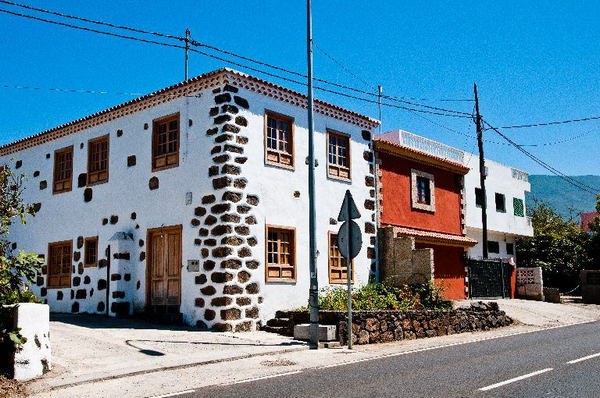
La Matanza is a quaint little town with not much going on but is very peaceful and the locals are friendly. With some beautiful views from the hills and an interesting history, La Matanza is the perfect place to visit for its culture and local agricultural market. La Matanza has a couple of schools, a gymnasium, a few churches and a post office but other than this it is very much a rural area where locals enjoy a peaceful life; with very few tourists pass through this town.
The roads here are steep with the houses built amongst the hills, and the coast is nearly all cliffs. La Victoria is located to the southwest of La Matanza.
History
Alonso Fernández de Lugo led the Castilians against the Guanches under King Mencey Bencomo, in the first battle of Acentejo on May 31st 1494. Bencomo ordered his troops to the mountains to track the enemy until reaching a suitable place for ambush- the Ravine of La Matanza/Acentejo. Of the 2,800 men who fought for Bencomo, 2,000 died there that day in the Barranco de la Matanza. However, the Guanches were successful in protecting their territory. The terrible defeat of the Spaniards led to the town being called ‘The Slaughter.’
Several temples were built after the battles, the one of San Antonio near the place of the historic battle, the one of San Diego next to the sea, and the one of the Road Cross (Cruz del Camino).
Culture
La Matanza, like other municipalities in the area, actively demonstrates its religion and has a beautiful church that has been rebuilt from its original state since destroyed in 1936. The church of El Salvador is perhaps the most noteworthy church in La Matanza. It was originally built in 1695 by Bishop Antonio Carrioneiro. However, it was destroyed by a fire along with all of its valuable archives on June 26th 1936. Being rebuilt after the civil war, it is now a stunning modern building with a small park next to it. The El Salvador music group is another cultural aspect of La Matanza. It was created in 1850 to be an example of work and perseverance in the face of setbacks and has continued through generations.
Economy
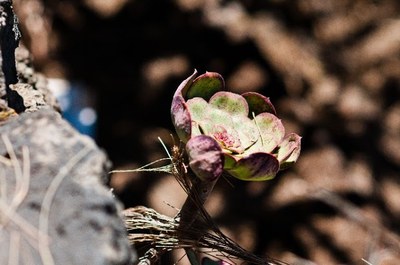
The economic base of this municipality is agricultural, with the harvesting and export of fruits and potatoes as well as grapes. The fertile land and particular climate characteristics have led its vineyards to produce delicious wines, mostly red, recognised for their charismatic flavour. It also produces milk, meat and eggs and also stressed in the agricultural landscape are chestnut and banana crops. Much of the area is made up of farmlands but most of the population has shifted from rural to urban and tourism.
A large farmers market sits on the outskirts of La Matanza on the Carretera General del Norte, motorway TF 217. Open all year on weekends form 9.00 until 15.00 it sells regional products such as fruit, vegetables, cheese, wine and crafts produced in Acentejo thereby ensuring freshness of produce.
How to get there
By Bus:
The TITSA service number 101 runs all the way from Santa Cruz, through La Matanza, to Puerto de la Cruz. TITSA service 062 runs from La Orotava to La Laguna, stopping at La Matanza. The local buses are very reliable coming every half an hour and are rarely late.
By Car:
La Matanza is linked by the TF-5 motorway and the old highway to Icod de los Vinos and Santa Cruz.
Sights
La Iglesia Católica de El Salvador (the Catholic Church of El Salvador)
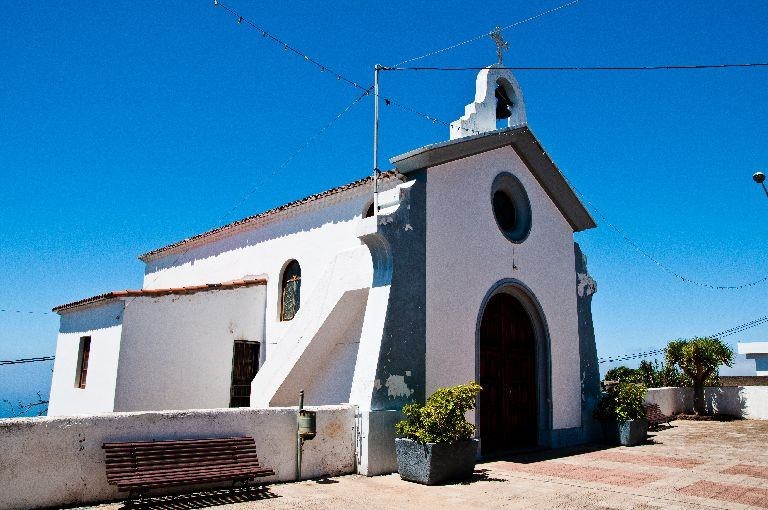
The church of El Salvador is perhaps the most noteworthy church in La Matanza. It was originally built in 1695 by Bishop Antonio Carrioneiro. However, it was destroyed by a fire along with all of its valuable archives on June 26th 1936. Being rebuilt after the civil war, it is now a stunning modern building with a small park next to it. The El Salvador music group is another cultural aspect of La Matanza. It was created in 1850 to be an example of work and perseverance in the face of setbacks and has continued through generations.
Barrio de San Antonio (the Chapel of San Antonio)
The old part of La Matanza is situated in the centre of town where you will find the San Antonio Chapel. It was built by the Spanish conquerer Antón Vallejo shortly after the conquest of La Matanza, as promised to the Patron Saint of Antonius for his victory in the battlefield. Two traditional style houses beside the chapel have recently been restored.
Museums
There are no museums directly in La Matanza but in Puerto de la Cruz, just 15km away, there is the Museo Arqueológico del Puerto de la Cruz, an important archaeological museum with a large archival collection of more than 2,000 pieces from the Guanche era.
Activities
Walking trails
The entire coastal area is a protected area known as Acantilados del Sauzal y Tacoronte. There are three distinct areas with picturesque routes through La Matanza: the coast, the midlands and the summit. The coastal routes are the best way to enjoy the protected landscape whilst the midlands area has cultural routes linking the farms to various properties and finally, the summit area is made up of pines groves and green mountain. Some of the main trails on the coast include Sendero Cabeza Caballo and Sendero Agria.
Sendero Cabeza Caballo (the Horse Head Trail)
Sendero Cabeza Caballo (or the Horse Head Trail) has an overall distance of 1000 meters and a walking time of around 1 hour. This is a dirt path that traces a direct descent to the core of the Caleton.
Sendero Agria (the Bitter Path)
Sendero Agria (or the Bitter Path) is also along the coast with an average walking time of 1 hour and a distance of 780 meters. This trail links the coast with the town of La Matanza and has served an important role in history as fisherman and migrants walked here, taking advantage of the natural shelter offered by the route. Caution should be taken when taking this path as it is in a poor state.
Beaches
La Matanza’s coast is called Acantilados del Sauzal y Tacoronte, it features mostly cliffs hence access to the beach is difficult. You won’t find a long stretch of beaches here but there are some small swimming coves (‘Charcos’ in Spanish) worth checking out. Towards Costa de Acentejo you can swim at Punta de Sol or at the bays of La Negra and El Bao. The next larger beaches are in Puerto de la Cruz, 15 minutes drive away.
Festivals
Fiesta en honor de San Antonio Abad
On January 17th the festival in honour of San Antonio Abad takes place. Here there is a typical Spanish procession and various activities.
Fiestas Patronales en honor de El Salvador y Nuestra Señora del Rosario
The fiesta in honour of El Salvador and the Virgin of the Rosary is held on both May 31st and August 6th and take place in the church of La Matanza.
El Baile del Niño
At the end of December is the ‘Dance of the Child.’ Since 1816, this has been celebrated at Christmas in the church of La Matanza. It is akin to a Christmas concert with various instruments being played and dancers performing.
Restaurants
Restaurante Casa Juan de Los Ahumados
A great seafood restaurant with good selection of desserts.
Address: Calle Acentejo, 77, 38370 La Matanza, Tenerife.
Telephone: 922 577 012
Opening hours: Tuesday to Saturday, 12:30-15.30 and 18:30-22:30, Sundays until midday, close Sunday evening and Mondays.
Restaurante Limera
Address: Calle Limeras, 40, 38370 La Matanza, Tenerife.
Telephone: 922 577 564
Opening times: Daily 13.00-17.00, 20:00-24:00
Average meal costs between €15- €20
Nightlife
There is little nightlife in La Matanza and so if you are looking for a lively night out, Puerto de la Cruz is full of pubs and clubs, as is Santa Cruz just a short taxi or bus ride away. The buses run until late, around midnight and start again at around 05:30 in the morning for those looking for a slightly longer night!
Shopping
A large farmers market sits on the outskirts of La Matanza on the Carretera General del Norte, motorway TF 217. Open all year on weekends from 09:00 until 15:00 it sells regional products such as fruit, vegetables, cheese, wine and crafts produced in Acentejo thereby ensuring freshness of produce.
La Matanza has all the basic necessities for locals such as supermarkets, grocers, a bakery and an electronic shop. However, there is not much in the way of souvenir and duty free shops for tourists and Puerto de la Cruz, 15km away, or Santa Cruz, 25km away, are a much better idea.