

- Hungary
- Ireland
- Italy
- Malta, Republic of
- Portugal
-
Spain
-
Canary Islands
- El Hierro
- La Palma
- La Gomera
- Tenerife
- Gran Canaria
- Lanzarote
- Fuerteventura
- Tarajalejo
- Caleta de Fuste
- Corralejo
- Costa Calma
- Las Palmas de Gran Canaria
- Lobos Island
- Maspalomas
- Caleta de Famara
- Morro Jable
- Costa Teguise
- Jandía
- San Cristóbal de La Laguna
- Playa Blanca
- Playa de las Americas
- Puerto Calero
- Teide National Park
- Playa del Inglés
- Puerto del Carmen
- Los Realejos
- Puerto de Mogán
- Las Galletas
- La Orotava
- Anaga
- San Agustín
- Adeje
- San Bartolomé de Tirajana
- Puerto de la Cruz
- Los Cristianos
- Arrecife
- El Médano
- Orzola
- Masca
- Taurito
- Los Gigantes
- Fañabé
- Santa Cruz de Tenerife
- Santiago del Teide
- Garachico
- Punta del Hidalgo
- La Caleta
- Balearic Islands
-
Barcelona
-
Benalmádena
-
Cádiz
-
Córdoba
-
Jerez de la Frontera
-
Lleida
-
Málaga
-
Santander
-
Seville
-
Toledo
-
Canary Islands
Overview of Parque Nacional del Teide
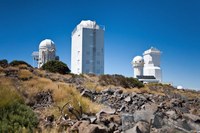
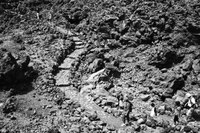
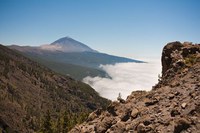
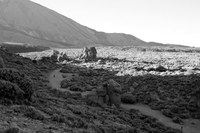
Stretching across a whopping 189.9 sq. km, Parque Nacional del Teide, which also includes the highest mountain in Spain (standing majestically at 3718m), is sure to make you feel infinitesimal in the shadow of its looming rock formations, valleys and gorges.
Situated in the heart of the island, this otherworldly expanse was declared a national park in 1954 and recently named a World Heritage Site by UNESCO in 2007. Each year, four million visitors follow in the footsteps of the island’s ancient aboriginal tribe, the Guanches (who considered El Teide to be sacred), by paying homage to its monolithic and domineering volcano.
It’s not just tourists that remain fascinated by the allure of Teide; for over a century, geologists and volcanologists have been fervently studying the Teide-Pico Viejo stratovolcano and the surrounding crater’s endless variety of volcanic pipes, cones, lava flows and caves.
Aside from the often snow-capped peak of El Teide, there are over 20 hiking tracks which wind through scrubland containing 12 plants, found nowhere else in the world, and gravity-defying rock formations such as the Roques de Garcia. It is easy for the imagination to wander as looking out across the badlands, you could quite easily be in a cross between a John Wayne western and sci-fi epic. However, for all these comparisons, Teide remains positively and unmistakably unique.
Geology
Classified as a stratovolcano, Teide’s formation began over 300,000 years ago. Its landscape is composed of a number of escarpments known as Las Cañadas which are found around the walls of the caldera. Over the centuries, they have grown in height with the accumulation of various lava flows and pyroclasts spewed out of the volcano from erstwhile eruptions. Other materials expelled from the volcano include basalts, basanite, trachy-basalt, phonolites and trachytes.
Flora
One of the most miraculous features of the park is its abundance of plants, which have managed to colonise the landscape through extraordinary feats of adaption. Despite the soil being almost non-existent, the remnants of previous lava flows contain enough nutrients and minerals to sustain 168 species of plant life, 12 of which are exclusively endemic to the park alone and, incredibly, cannot be found anywhere else in the world.
Make sure to look out for the Teide white broom (Spartocytisus supranubius) which has a white and pink flower; the Teide Bugloss (Echium wildpretii), with its red flowers shaped in an upwards pyramid shape; and the Teide Violet (Viola cheirantifolia), found solely at the summit of Teide and one of the highest flowering plants in the world.
As you ascend further up the escarpments of Mount Teide, you will also come across formations of the Canary Island Pine (Pinus canariensis), found at roughly 1000-2100m, and the Canary Island Cedar (Juniperus cedrus) which are sustained through the shelter of the surrounding Las Cañadas caldera.
Fauna
Unlike the park’s vascular flora, vertebrate fauna are few in numbers. Currently, there are 30 species in the park, including the blue chaffinch (Fringilla teydea teydea), whose song can sometimes be heard reverberating though its deep gorges. Also found are three reptiles endemic to the archipelago: the Canary Island lizard (Gallotia galloti galloti), wall gecko (Tarentola delalandii) and skink (Chalcides viridanus), plus a rare smattering of mammals such as bats, feral cats and rabbits.
However, there is a significant range of indigenous invertebrate species such as spiders, beetles, dipterans and hemipterans.
Teide Visitor Centres
El Portillo Visitor Centre
Situated in the northeast of the park, this centre contains a four-hectare botanical garden exhibiting and sustaining Teide’s native flora such as the Teide violet. It also stocks maps, hiking information leaflets and guidebooks. Entrance is free.
Address: Carretera La Orotava - Granadilla, km 32100. 38300 El Portillo, La Orotava, Tenerife.
Telephone: +34 922 356 000
Opening hours: 09:00-16:00
Cañada Blanca Visitor Centre
Forming part of the parador, it runs informative 15-minute video presentations concerning the park’s history and ecosystem. Similarly to El Portillo, the centre contains maps and information.
Address: Carretera La Orotava - Granadilla, km 46,400; Parador de Turismo de las Cañadas del Teide 38300 La Orotava, Tenerife.
Telephone: +34 922 373 391
Opening hours: 09:00-16:00
General advice
On the whole, Teide proves to be nothing short of mind-blowing for the masses that make the pilgrimage to its dusty crater each year. However, it is worth heeding the advice emblazoned on the park’s numerous signs- namely, make sure to wear comfortable walking boots; always wear sun lotion, even when it feels chilly at ground level (also bring layers); never forget to carry a bottle of water when hiking so as to keep yourself hydrated; and whatever you do, don’t deviate from the marked trails- aside from the obvious perils of getting lost, trampling on endangered species of plant life won’t make you any friends amongst the park’s patrons.
It’s also worth checking the weather forecast prior to visiting in case of any adverse conditions such as rain and mist.
How to get there
By Bus:
Despite being the undoubted star attraction of the island, there are only two daily public bus services that run to the park’s parador: the 348 from Puerto de la Cruz (€5.20) and 342 from Playa de las Américas (€4.70) both depart at 9.15am. Returning, the 343 leaves at 3.15, the 348 at 4.00pm; both buses leave promptly so make sure not to be late, otherwise, the alternative is a wallet-stripping taxi ride.
By Car:
Due to the limitations of using public transport, the best option is to hire a car and make a day of it. If coming from La Laguna, take the TF-24, whilst the TF-21 also runs from La Orotava and Puerto de la Cruz, continuing all the way through the park, passing the parador, cable car and visitor centres en route; both are particularly pleasant routes with picturesque views.
If driving from the south, the park can be accessed by the TF-21 which runs from Vilaflor.