

- Hungary
- Ireland
- Italy
- Malta, Republic of
- Portugal
-
Spain
-
Canary Islands
- El Hierro
- La Palma
- La Gomera
- Tenerife
- Gran Canaria
- Lanzarote
- Fuerteventura
- Tarajalejo
- Caleta de Fuste
- Corralejo
- Costa Calma
- Las Palmas de Gran Canaria
- Lobos Island
- Maspalomas
- Caleta de Famara
- Morro Jable
- Costa Teguise
- Jandía
- San Cristóbal de La Laguna
- Playa Blanca
- Playa de las Americas
- Puerto Calero
- Teide National Park
- Playa del Inglés
- Puerto del Carmen
- Los Realejos
- Puerto de Mogán
- Las Galletas
- La Orotava
- Anaga
- San Agustín
- Adeje
- San Bartolomé de Tirajana
- Puerto de la Cruz
- Los Cristianos
- Arrecife
- El Médano
- Orzola
- Masca
- Taurito
- Los Gigantes
- Fañabé
- Santa Cruz de Tenerife
- Santiago del Teide
- Garachico
- Punta del Hidalgo
- La Caleta
- Balearic Islands
-
Barcelona
-
Benalmádena
-
Cádiz
-
Córdoba
-
Jerez de la Frontera
-
Lleida
-
Málaga
-
Santander
-
Seville
-
Toledo
-
Canary Islands
Sights and attraction is Porto Santo island
Vila Baleira
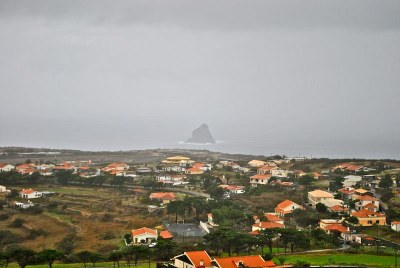 The little town of Vila Baleira is Porto Santo’s urban area. Its beautiful cobbled streets and relaxed pace of life are perfect for getting away from it all and unwinding in a traditional setting. The recent discovery of Porto Santo as a tourist destination means that the town is dotted with amenities such as restaurants, bars, cafes and shopping areas. Although, it has not changed a great deal or become overbuilt and heavily modernised to accommodate the masses. This little town of shady plazas and green parks does begin to get going in summer evenings, with many trendy nightclubs and palm-shaded beach bars drawing in the hip young kids from Madeira.
Largo do Pelourinho
At the heart of Vila Baleira is the old quarter of Largo do Pelourinho. This picturesque area is the town’s main focus of activity. Filled with white stone churches, date palms and peaceful cafes, there are many pleasant corners to explore. All of the island’s original architecture is still standing. Buildings such as the church of El Nossa Senhora da Piedade, the regional government building and the church of El Capela de Misericórdia are cut from Porto Santo stone and have survived the countless years etched onto their surfaces. Visitors can also see several Dragos trees (Dragon trees) dotting the area, whose bizarrely shaped topleaves and blood-red sap was often used as medicine on account of its supposed magical properties.
Jardim do Infante (garden)
The town of Vila Baleria is very small, as is the entire island of Porto Santo. Five minutes south of Largo do Pelourinho are the tiny Infante Gardens. A peaceful green square with a children’s playground and several sculptures - one of Christopher Columbus and others to commemorate the sailors of Porto Santo, who, over the years, have ferried people through all weathers between Madiera and the island. The fountain at the Infante Gardens was built in the 19th century and (as with all the other water sources on the island) is rich in calcium and very good for the body.
Rua João Gonçalves Zarco (street)
This is the island’s oldest street and it’s packed full of things to do. On Rua João Gonçalves Zarco there are a host of shops and old cafes which are very popular with the islanders. Here you can shop for local independent or designer goods, drink coffee or simply people-watch.
Fonte da Areia (north)
The North side of Porto Santo plays host to the island’s jagged coastline. The area is extremely isolated and unreachable by road. It is also very strict about maintaining its heritage, and the building of new structures has been banned by local authorities. There are many beautiful sights to be seen in this rocky and rural area as well the opportunity to really escape. Why not hire a scooter and explore the rugged landscape
Fonte da Areia
Just past the village of Camacha are the soft sandstone cliffs of Fonte de Areia. Thousands of years of wind erosion have turned the cliffs into a sweeping set of curves and surreal bends. This is an absolute must for photographers. Here, you can also take a path down through the palm groves to the drinking fountain (currently unused) and a beautiful little stony beach at the foot of the cliffs.
You can catch a bus to Camacha village and walk for about a mile to Fonte de Areia. Follow the road of Sitio de Camacha towards the airport then turn right on Estr. da Fonte da Areia. Do explore with care should you decided to head down to the beach. This area can get quite windy and the sea can get rough at times.
Ilhéu da Fonte da Areia
Just off the coast from Fonte da Areia is an iconic landmark of Porto Santo - the islet of the same name, which resembles the head of a gorilla. This 12.5km2 area with highest point of 79 metres boasts interesting Macronesia flora species and forms part of madeira’s Natural network.
The Serras and the northeast coast
Porto Santo’s eastern coast is the island’s most spectacular landscape. Its volcanic rock formations, sandstone rocks, basalt cliffs and secluded swimming coves are not easy to get to, but are definitely worth the trip. On the way visitors can see traditional farmhouses scattered about the landscape – some ruined and decayed, some still in use. Continue on the trail and eventually all traces of industry, agriculture and inhabitants will disappear. The Serras can be reached from Vila Baleira, along a beautiful path which rises high above sea level and skirts El Pico Branco. Also at Terra Chã (which is near the end of the path) there is a small shelter for any intrepid adventurers wanting to spend a night out under the stars. The walk along the path to Terra Chã will take roughly around 2hrs. It’s important that anyone wishing to use it brings plenty of water and food as there are no facilities available on the way and it can get very hot!
Pico Castelo and viewpoint
This 437 metre high peak is a tough ramble although it is possible to drive much of the way, arriving at a beautiful viewpoint on which to see the mountain’s conifer covered slopes and views over Porto Santo. There is also a picnic spot and a terrace here where visitors can eat their food and admire the scenery.
Miradouro da Portela viewpoint and windmills
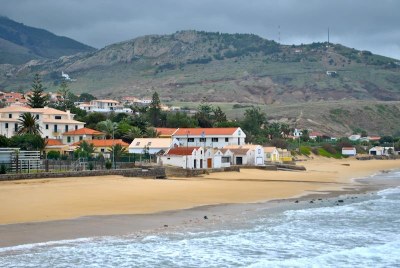
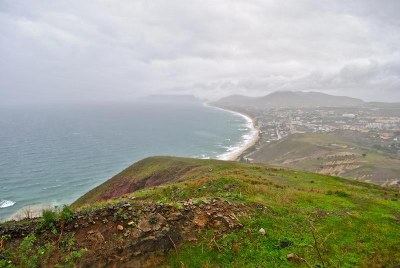
Driving northeast from Vila Baleira on Road 233/Estrada Regional 111, you will reach Miradouro da Portela viewpoint. This 163 metres high spot offers sweeping views of the ferry port on the east and the 9 kilometres stretch of golden sand beaches on the west of the island. Grabbing your attention just before you arrive at the viewpoint are three traditional windmills lining on the left of the road. Like many others which can be found dotted Porto Santo’s landscape, these windmills were once built to used to grind grain into flour.
West of the island
Apart from Vila Baleira, the west of the island has many to see and do. Visitors can set out on their own and hike the trails of Pico de Ana Ferreira or Cabeço das Flores which both have stunning views over the entire island. Likewise, areas such as the working vineyard at Adega das Levadas and the lush green oasis at Quinta das Palmeiras has lots of beautiful flora and fauna as well as providing a shady retreat from the sun. But if that’s not for you, the western part of Porto Santo also offers a lot of leisure activities such as horse riding and golf.
Pico de Ana Ferreira
Pico de Ana Ferreira is one of the highest points on west Porto Santo. Sitting 283 metres above sea level it is a surprisingly easy walk to the peak, given its height. At the bottom of the peak there are several interesting rock formations caused by the island’s volcanic activity, and the top also has fantastic views over the nearby beaches.
Cabeço das Flores, Cabeço do Zimbralinho and viewpoint
This impressive row of cliffs rise over 130 metres and 180 metres rspectively above sea level. The Miradouro das Flores viewpoint located on the southernmost point of island (Ponta da Calheta) offers walkers, nature lovers and photographers undisrupted view of the Ilhéu da Cal and the nearby Ilhéu de Ferro. Directly below, the turquoise sea, the unspoilt beaches and their golden sands stretch for mile after mile to the east. To the southwest, the evening lights of Madeira island twinkle from afar.
Museums:
For culture and history lovers, there are a couple of museums worth visiting on Porto Santo island.
Casa Museu Cristóvão Colombo (Christopher Columbus Museum)
The explorer Christopher Columbus lived for a while on the island of Porto Santo. He married and had his child Diego Columbus and spent many years travelling back and fourth to Genoa and Lisbon to trade goods. It was in fact the discovery of ancient artefacts which washed up regularly on the beaches of Porto Santo that prompted Christopher Columbus to set sail to discover the New World. The Casa Museu Cristóvão Colombo houses important historical artefacts, diaries and records which the explorer kept meticulously during his lifetime.
Where: Travessa da Sacristia, n.º 2 e 4, 9400-176 Porto Santo island.
Telephone: +351 291 983 405
Entrance fee: €1.50
Opening hours: Tuesday to Saturday: 10:00 - 12:30 noon and 14:00 - 17:30, Sunday: 10:00 - 13:00. Closed on Mondays and holidays.
Summer hours (July, August and September): Tuesday to Saturday: 10:00 - 12:30 noon and 14:00 - 19:00, Sunday: 10:00 - 13:00.
Museu Cardina
This is an important and curious attraction that visitors have been coming to see since it was first built. The Cardina Museum, constructed by José Cardina, is a tribute to the curious artefacts which have been manufactured on Porto Santo ever since its development as a municipal island. Not only did Cardina collect items such as furniture, baskets, farm tools and metalwork, but he also began to make small scale replicas of them, thus preserving an antique way of life that has nearly vanished.
Where: Estrada Domingos de Ornelas Estrade, Sítio da Camacha, 9400-101 Porto Santo island.
Opening hours: Wednesday 14:30 - 18:30, Thursday to Saturday 10:30 - 12:30 and 14:30 - 18:30. Closed on Sunday, Tuesday and public holidays.