

- Hungary
- Ireland
- Italy
- Malta, Republic of
- Portugal
-
Spain
-
Canary Islands
- El Hierro
- La Palma
- La Gomera
- Tenerife
- Gran Canaria
- Lanzarote
- Fuerteventura
- Tarajalejo
- Caleta de Fuste
- Corralejo
- Costa Calma
- Las Palmas de Gran Canaria
- Lobos Island
- Maspalomas
- Caleta de Famara
- Morro Jable
- Costa Teguise
- Jandía
- San Cristóbal de La Laguna
- Playa Blanca
- Playa de las Americas
- Puerto Calero
- Teide National Park
- Playa del Inglés
- Puerto del Carmen
- Los Realejos
- Puerto de Mogán
- Las Galletas
- La Orotava
- Anaga
- San Agustín
- Adeje
- San Bartolomé de Tirajana
- Puerto de la Cruz
- Los Cristianos
- Arrecife
- El Médano
- Orzola
- Masca
- Taurito
- Los Gigantes
- Fañabé
- Santa Cruz de Tenerife
- Santiago del Teide
- Garachico
- Punta del Hidalgo
- La Caleta
- Balearic Islands
-
Barcelona
-
Benalmádena
-
Cádiz
-
Córdoba
-
Jerez de la Frontera
-
Lleida
-
Málaga
-
Santander
-
Seville
-
Toledo
-
Canary Islands
Teguise
Overview:
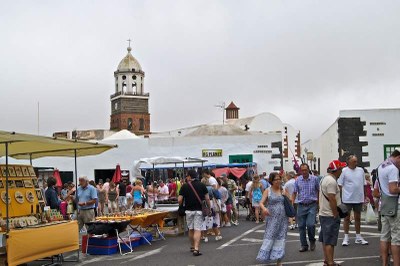
When people visit Teguise they are astounded by how much significance is packed into such a small area. Around every corner lies a glimmer of Lanzarote's storied past. Whether you wish to see 500 year old churches, art galleries, monuments, museums, or even a palace, you will not be disappointed in this former capital of Lanzarote. Often referred to as Villa Teguise, this charming village is a perfect break from the comparatively chaotic Costa Teguise to its south (except on Sundays). Many visitors come here for the history, culture and architecture, while some (well, quite many) flock here for the biggest Sunday morning market on Lanzarote island. Whatever your reason for visiting, the heritage and atmosphere found in Villa de Teguise is unparalleled.
History
Very few places have as much history as Villa de Teguise. The town's origins date back to 1418 when the boundaries were first drawn up, making it the oldest urbanised area in the Canary Islands. Unlike today’s coastal towns which flourish through proximity to the coast, the prosperity of the Villa de Teguise came from its central location. Having no shores meant having no pirates, and many sought refuge at this inland town. The Guanapay mountain was used as a watchtower to alert the population of invader sightings, and eventually the Castillo de Santa Bárbara was constructed to overlook the safety of the town. The success of Villa de Teguise was unprecedented and it quickly became the capital of Lanzarote. It remained this way until 1852 when the island's office was moved to Arrecife.
Culture
Villa de Teguise served not only as the island's political capital, but also its cultural capital. The festivals which took place more than 500 years ago are still present today. The most famous of all is named the Danza de los Diabletes, or the Dance of the Little Devils. The costumes and celebrations have become synonymous with Teguise’s culture. The town is also known as being the birthplace of the traditional Canarian instrument – the Timple, a form of miniature guitar. Ceramic craftwork is also particularly popular here. The Sunday market is also the biggest on the island offering exquisite handmade and homemade products.
Economy
The town is now heavily reliant on curious tourists travelling from the Costa Teguise resort. The calm atmosphere combined with the rich heritage have helped to make the town an ideal day-trip destination, with tourists helping to support the local economy.
How to get there
By Bus:
Villa de Teguise is relatively easy to catch a bus to. With Arrecife buses 07, 09, 10, 26, 52 and 53 all departing from Arrecife you won’t be waiting much longer than half an hour for one. Between 06:30 and 20:40 there are 20 journeys, each costing €1.20 or €0.84 with the pre-paid Bono card.
Arrecife bus 13 also takes you from nearby Costa Teguise to Villa de Teguise, with the journey running 8 times a day (7 times on weekends). The cost is €1.30 or €0.91 with a Bono card.
By Car;
To travel to Villa de Teguise from popular destinations such as Costa Teguise or Arrecife, the LZ-10 road will lead you into the town in under 20 minutes. Alternatively, if you are driving from the southern resort areas then the LZ-30 will get you there in under 50 minutes. Rental cars are affordable and can easily be hired from the airport or major cities of Lanzarote.
Sights:
 Villa Teguise is one of the best places to visit if you are interested in Canarian history, culture and architecture. The old church, buildings and monuments give you a glimpse to the glorious past of this former capital of Lanzarote.
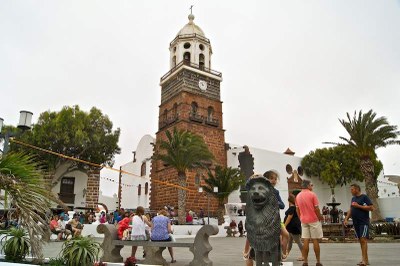
Plaza de la Constitución, the heart of Villa de Teguise, is the perfect spot to start and/ or end your visit.
Iglesia de Nuestra Señora de Guadalupe (church)
The construction of this church began almost immediately after the boundaries for the town were drawn up more than 500 years ago. The style is similar to that of many churches found on the Canary Islands. Large wooden doors are surrounded by white-washed brick walls, with a brown bell tower attached - the architecture is typical in this respect. However, what stands there has survived more than old age. The great fire of 1909, which tragically destroyed all the detailed parish archives, did not even destroy the building. Some documented history of Teguise may have been lost forever but this church has stood the test of time.
Address: Plaza de la Constitución, 35530 Villa de Teguise, Lanzarote island.
Callejon de la Sangre (Alley of Blood)
Behind the Iglesia de Nuestra Señora de Guadalupe lies a street named after a massacre in 1586. “The alley of blood” is a reminder to locals and tourists of the atrocities that occurred during pirate raids where hundreds of men, women and children were slaughtered.
Address: Calle de la Sangre, 35530 Villa de Teguise, Lanzarote island.
Palacio Spínola (palace)
This grand house was built in the days of Teguise's prosperity. Businessmen and politicians frequented the area and work began on the palace in 1730. Unfortunately disaster was just around the corner and within the same year the devastating volcano of Timanfaya erupted. With the island's economy in ruins the project was postponed – for 50 years.
The completed building was first known as the Inquisitors House, with the Holy Inquisition making it their headquarters. After more than a hundred years the premises fell into the wealthy hands of the Spínola family, and so the name stuck. Despite having only 11 rooms (relatively small for a palace!) the building is fascinating to visit. A large kitchen, viewing gallery, two saloons, 32-guest dining room, and private chapel show-off the elegant side to Lanzarote. The luxury is still enjoyed by the Governor of the Canary Islands when visiting the island, sometimes during open hours!
Address: (opposite Plaza de la Constitución) Calle León y Castillo, 35530 Villa de Teguise, Lanzarote island.
Opening times: Summer - 09:00 - 15:00 Daily (Saturday close), Winter - 09:00 - 16:00 Daily (Saturday close)
Admission fees: Adults €3, under 12s free
Convento de Santo Domingo
One of two former convents that can be found in Villa de Teguise, Convento de Santo Domingo showcases itself inside and out. Upon approaching the building it is clear that the intentions for it were religious. The symbols of the Dominican convent, which was established in 1698, are proudly displayed over the entrance, and the architecture is rather similar to the Iglesia de Nuestra Señora de Guadalupe. Once you pass through the large wooden doors it is still possible to imagine religious clergymen gathering, despite the rooms being filled with art today. Contemporary pieces and modern sculptures now make this formerly religious accommodation their home. Entrance is free too.
Address: Calle Santo Domingo, 35530 Villa de Teguise, Lanzarote island.
Telephone: (+34) 928 845 001
Opening Hours: 10:00 - 15:00 Monday to Friday, 10:00 - 14:00 on Sundays, closed on Saturdays
Admission: free
Castillo de Santa Bárbara (castle)
Originally built in 1586 to oversee the protection of Teguise, Castillo de Santa Bárbara is a beautifully conserved monument which helped to protect the town from invasions over several centuries. It served the Spanish well in their bid to protect the islands, and it is still a valuable sight to visit today. This 16th century used to house the Emigration Museum for a long time before being replaced by the Pirate Museum (see Museum). The castle offers an excellent scenery of landscapes and village below. The castle can be found off the LZ-10, 200 metres past the roundabout outside Teguise. If you are coming from Tahiche or Arrecife, it is on your right.
Address: Castillo de Santa Bárbara, Lugar Montaña de Guanapay s/n, 35530 , Villa de Teguise, Teguise, Lanzarote island.
Telephone: +34 928 845 001
Opening hours (winter): Monday to Friday 09:00 - 16:00, Sunday and holiday 09:30 - 15:00, closed on Saturday.
Opening hours (summer): Monday to Friday 09:00 - 15:00, Sunday and holiday 09:30 - 15:00, closed on Saturday.
Admission: Adults €3, Children €1.50
Convento de San Francisco
Built much earlier than the Dominican convent, the Franciscan convent was founded in 1590. With only the church remains today, it consists of two naves, separated by a series of round arches. The altars are of baroque style and a stone chapel can be located inside. This convent is now the Museum of Sacred Art (see Museum).
Address: Plaza de San Francisco, 35530 Villa de Teguise, Lanzarote island.
Opening hours: Monday (except Tuesdays) to Friday - 09:00 to 15:00
Saturdays and Sundays - 09:30 to 14:00
Admission: free
Museums:
Most museums and art galleries in Villa Teguise are attached to its ex-convents, palace and castle. Visitors should take the opportunity to visit them when exploring the sights of Villa Teguise.
Museo de la Piratería (Piracy Museum)
Within the historic grounds of Castillo de Santa Bárbara castle now lies the Pirate Museum. This castle, which was once built to secure the safety of the island from the pirates, now acts as monument to its past. The exhibitions within tell the history of piracy in Lanzarote. Ancient weapons and a replica of Villa de Teguise (as it looked then) are also on display.
Address: Castillo de Santa Bárbara, Lugar Montaña de Guanapay s/n, 35530 , Villa de Teguise, Teguise, Lanzarote island.
(The castle can be found off the LZ-10, 200 metres past the roundabout outside Teguise. If you are coming from Tahiche or Arrecife, it is on your right)
Telephone: +34 928 845 001
Opening hours (winter): Monday to Friday 09:00 - 16:00, Sunday and holiday 09:30 - 15:00, closed on Saturday, Christmas day, and 1st & 6th January.
Opening hours (summer): Monday to Friday 09:00 - 15:00, Sunday and holiday 09:30 - 14:00, closed on:Saturday
Admission: Adults €3, Children €1.50
Museum of Sacred Art (ex-Convento de San Francisco)
The Museum of Sacred Art is housed in the Franciscan convent which was founded in 1590. It is free to enter and contains a good selection of more precious artefacts than its cousin, the Centro de Arte Convento de Santo Domingo.
Address: Plaza de San Francisco, 35530 Villa de Teguise, Lanzarote island.
Opening hours: Monday (except Tuesdays) to Friday - 09:00 to 15:00, Saturdays and Sundays - 09:30 to 14:00, closed on Saturdays.
Admission: free
Centro de Arte Convento de Santo Domingo
Upon passing through the large wooden doors of this 17th century Santo Domingo convent, it is still possible to imagine religious clergymen gathering, despite the rooms being filled with art today. Contemporary pieces and modern sculptures now make this formerly religious accommodation their home. Entrance is free.
Address: Calle Santo Domingo, 35530 Villa de Teguise, Lanzarote island.
Telephone: (+34) 928 845 001
Opening Hours: 10:00 - 15:00 Monday to Sunday, 10:00 - 14:00 Sunday, closed on Saturdays.
Timple Museum
Within the Palacio Spínola is a small museum of Timple, a miniature guitar. The exhibitions detail the history, development and creation of this typical musical instrument of Canary Islands.
Address: Palacio Spínola (opposite Plaza de la Constitución), Calle León y Castillo, 35530 Villa deTeguise,Lanzaroteisland.
Opening times (summer): Mondays to Fridays 09:00 - 15:00, Sundays and holidays 09:30 - 14:00, closed on:Saturday
Opening times (winter): Mondays to Fridays 09:00 - 16:00, Sundays and holidays 09:30 - 15:00, closed on Saturdays, Christmas day and 1st & 6th January
Admission fees: Adults €3, under 12s free (included as part of entry to the Palacio)
Beaches:
What kept Villa de Teguise safe for hundreds of years was its landlocked geography. Today however, you may be interested in visiting the coast. The beautiful beaches of Costa Teguise are only a 20 minute drive away via LZ-10. Alternatively, if it is the surfers beach that you seek, head to the west coast for Caleta de Famara, although swimming is not encouraged due to strong currents.
Festivals:
Being the oldest urbanised area in Canary Islands, no wonder there are no lack of cultural festivities in this former capital of Lanzarote. Danza de los Diabletes (Dance of the Little Devils) is one of oldest and symbolic tradition in Villa de Teguise.
Danza de los Diablete (Carnival)
The “Dance of the Little Devils” celebrations which occurs at the end of February or beginning of March dates back more than 500 hundred years. These days the festival coincide with the Carnival celebration and consists of parades, music, market stalls, fireworks and floats. The customary “little devils” also play a part, but to a much lesser extent than they traditionally would. The origins are tied closely to the hybrid of native and Christian culture. In days when Lanzarote was undergoing a massive social shift, farmers from inland were brought to Teguise and enslaved. On the day of the dance these very slaves were forced to wear devil costumes and dance for the noblemen of the town. Thankfully the intentions are far more pleasant today as the festival is seen as a time to relax and party.
When: end of February/early March
Day of the Cross
Día de la Cruz is one of the most beautiful celebrations takes place at the beginning of May when all the town's crosses are covered in flowers. It is one of the oldest traditions, dating back to when Teguise was first formed. Originally 14 crucifixes were found in the town, but over time they began to deteriorate. Since 2001 however all 14 crucifixes have been fully restored.
When: May 3rd
Misa del Gallo (Christmas Eve)
At midnight on Christmas Eve every year the “Ranchos de Pascua” perform songs and dance in front of a depiction of the baby Jesus. The custom has been celebrated proudly since 1580 and marks the start of Christmas.
When: December 24th
Other festivals:
Día de Canario (Canary Week) – second half of May
Corpus Christi Procession - June (date varies)
Fiesta de Nuestra Señora del Carmen – July 16th
Festivities of San Felipe y Santiago – July 25th
Festivities of the Virgin of Las Nieves – August 5th
Activites:
Whilst Villa de Teguise is full of beautiful buildings and museums, you may wish to get a bit more involved in your trip to Lanzarote. If so a short trip to the seaside resort of Costa Teguise or surfing hot spot of Caleta de Famara will provide you with more physically demanding activities.
Restaurants:
Whether you are after typical Canarian dishes, vegetarian or Mediterranean, Villa Teguise has just about the right mix of cafes and restaurants to offer. If you are visiting the Sunday morning market, there are small stalls offering mouthwatering snacks and dishes. For even more selection of restaurants, a 20 minutes drive down to Costa Teguise should fill your appetite.
 La Cantina
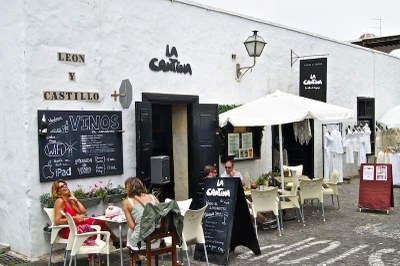
The restaurant is in a perfect location for when hunger sets in after a packed day of sight-seeing. Whether you choose to eat within the traditional Canarian building or outside along the patio, the selection of food to choose from will spoil even the most picky customer. Whether it be Thai fish cakes or Vietnamese rolls for starters, tapas or fillet steak for main, or the famous chocolate brownies for pudding, both your wallet and your pocket will be satisfied.
Address: Corner of Leon y Castillo 8, 35530 Villa de Teguise, Lanzarote.
Telephone: (+34) 928 845 536
Casa Leon
If you are a vegetarian, vegan, wheat intolerant or simply want to eat healthy, Casa Leon is a must try. Attached to a shop selling natural and organic products, this small eateries with warm decor offers various organic and vegetarian dishes, as well as tea, coffee, beer and wine.
Address: Calle Leon y Castillo s/n, 35530 Teguise, Lanzarote island.
Opening time: daily except on Sundays.
LagOmar
The setting which the small restaurant of Lagomar can be found could easily be on a postcard. A quiet and peaceful location for a spot of lunch, and a slightly livelier atmosphere at night for dinner. The menu consists of Mediterranean food that is priced between €12 and €20.
This bar, restaurant, guesthouse cum museum is accessible from the LZ-10 road south of Villa Teguise, turn left onto Calle del Milano and then turn left again onto Calle Los Loros.
Address: Calle Los Loros, 35530 Teguise, Lanzarote island.
Telephone: +34 928 845 665
Opening hours: Tuesday to Sunday 10:00 - 23:00, closed on Monday
Nightlife:
There are bars and restaurants serving drinks (some with live music). Other than that, nightlife in Teguise is pretty chilled. If you are after a big night out, resort towns of Costa Teguise and Puerto del Carmen have a selection of bars, pubs and clubs waiting to take your order.