

- Hungary
- Ireland
- Italy
- Malta, Republic of
- Portugal
-
Spain
-
Canary Islands
- El Hierro
- La Palma
- La Gomera
- Tenerife
- Gran Canaria
- Lanzarote
- Fuerteventura
- Tarajalejo
- Caleta de Fuste
- Corralejo
- Costa Calma
- Las Palmas de Gran Canaria
- Lobos Island
- Maspalomas
- Caleta de Famara
- Morro Jable
- Costa Teguise
- Jandía
- San Cristóbal de La Laguna
- Playa Blanca
- Playa de las Americas
- Puerto Calero
- Teide National Park
- Playa del Inglés
- Puerto del Carmen
- Los Realejos
- Puerto de Mogán
- Las Galletas
- La Orotava
- Anaga
- San Agustín
- Adeje
- San Bartolomé de Tirajana
- Puerto de la Cruz
- Los Cristianos
- Arrecife
- El Médano
- Orzola
- Masca
- Taurito
- Los Gigantes
- Fañabé
- Santa Cruz de Tenerife
- Santiago del Teide
- Garachico
- Punta del Hidalgo
- La Caleta
- Balearic Islands
-
Barcelona
-
Benalmádena
-
Cádiz
-
Córdoba
-
Jerez de la Frontera
-
Lleida
-
Málaga
-
Santander
-
Seville
-
Toledo
-
Canary Islands
Vilaflor
Overview
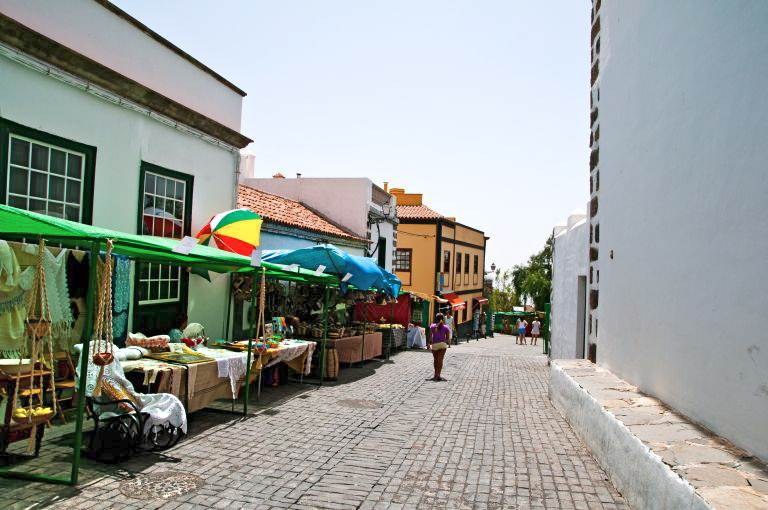
Vilaflor is a small municipality in the mid-south of Tenerife, with approximately 1900 inhabitants. A village of the same name is found within it and holds the title as being the highest village in all of Spain, with the population living at 1,400m above sea level. Many visitors stumble across Vilaflor whilst ascending or descending from the 3,718m high Mount Teide, and although some tourists do wander through, its main industry is agriculture.
In recent years developments have been made to increase the potential of the location attracting 'eco-tourists'. Trails have been upgraded to allow hikers and cyclists to take advantage of the unique landscapes that can be found in this region. With Vilaflor originally meaning 'Village of Flowers', it is no wonder that what mainly entices people to come visit is the prospect of seeing some of the most beautiful scenes in all of Tenerife.
History
Vilaflor is historically best known as the birthplace of San Pedro. On July 30th 2002, Pope John Paul II officially declared him the first saint of the Canary Islands, along with being the first saint of the country which he died in – Guatemala.
The area that surrounds the village of Vilaflor has belonged to numerous aboriginal regions throughout history. After the Spanish invasion of Tenerife, several wealthy land owners attempted to claim parts of today's Vilaflor territory as their own. With water flowing through the area it was geographically important to control such an environment. As ownership disputes were sorted out through hundreds of years of royal decrees and eventually the unification of Tenerife, a separate interest arose in the Vilaflor area.
Many scientists over the centuries have visited the highest village in Spain attempting to discover potential heath benefits with having such a high altitude, good climate, and tranquil surroundings. Patients and doctors would relocate here in the hopes of curing diseases. Along with the medical world, artists also became fascinated with the heavenly landscapes. The mystique of the area invited physicists, botanists, and archaeologists to come and explore too.
Culture
The population of Vilaflor has struggled to grow for centuries now, having stayed just short of 2000 people. Today approximately 1900 people live in the municipality. Due to its relatively remote location and lack of beaches it is not a prime area for tourists to visit, and as a result the lifestyle of those living here is very Canarian. Livelihoods often depend on agriculture, and time honoured customs are upheld such as the various fiestas that occur throughout the year.
Economy
Agriculture is the main economic activity in Vilaflor with potatoes, honey, figs, almonds and grapes being particularly popular crops. Livestock are on the farms too, goats being the most frequently kept. Vilaflor is also home to the Fuente Alta water bottling plant. With an abundance of natural springs, the Canarian owned company distributes Vilaflor's water all over the island.
Over the years, as tourists have wandered through the area from the Mount Teide, Vilaflor has started to make alterations to become more appealing to those wishing to stay a few nights. The term 'eco-tourism' is being used a lot, with an emphasis on attracting visitors to embrace the nature that Vilaflor has to offer. Hostels and cottages have been created in the closer proximity to the mountain, along with improvements to the hiking and cycling routes that take explorers up and around the Mount Teide.
How to get there
By Bus:
The TITSA bus company run routes which to Vilaflor.
From Los Cristianos the 482 bus will take you to Vilaflor three times a day, with the journey lasting roughly an hour.
The 342 route runs once a day each way departing from Playa de las Américas towards El Portillo at 09:15. The return bus leaves El Portillo at 15:15.
It is also possible to reach Vilaflor from Granadilla by taking the 474 bus. Running 4 times daily, the journey takes approximately fifty minutes.
Changes to departure times do occur due to fiestas so it is advisable to double check.
By Car:
If arriving to Vilaflor by car the TF-21 runs straight through the municipality, and provides to best route to get there.
Sights
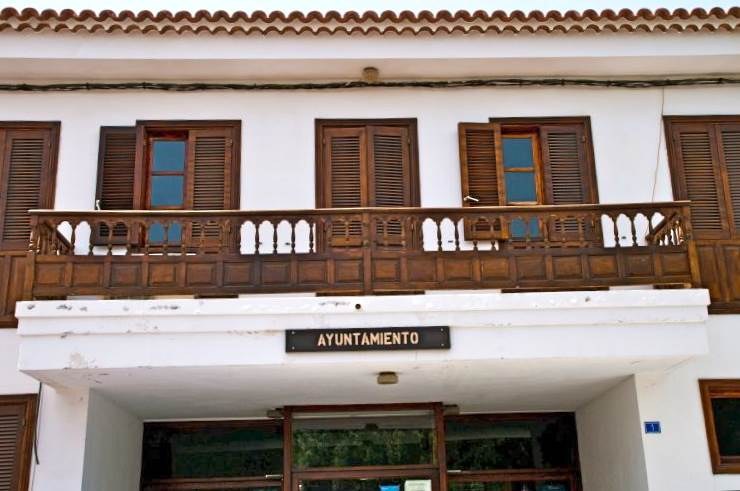
Parroquia de San Pedro Apóstol
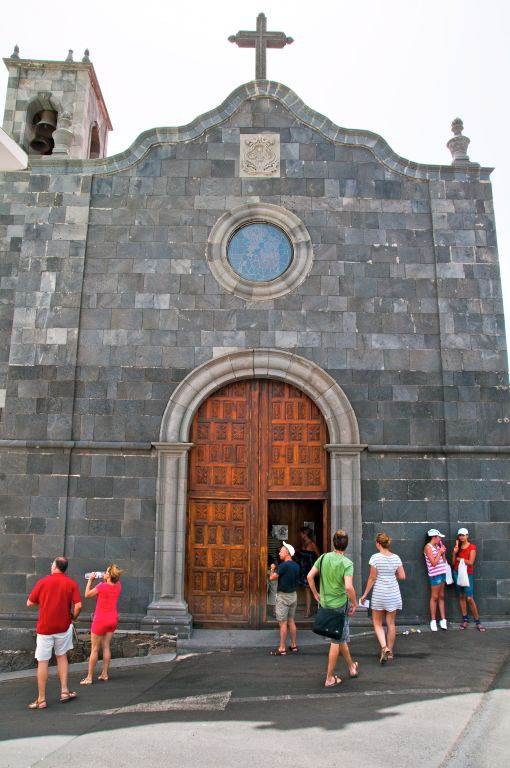
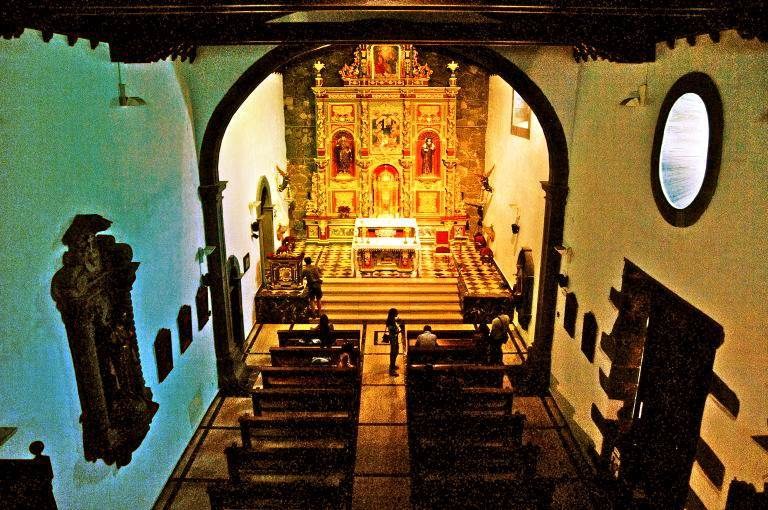
This church was built in the sixteenth century by the wealthy Soler family who owned much of the land. Being one of the oldest, it has been reconstructed several times in numerous centuries, but despite this is has continued to be the religious centrepiece of the town. Found inside is a large sculpture of San Pedro, a gold cup donated by an Italian bishop, and a wood carving of Saint John. The area surrounding the church is called Plaza Doctor Pérez Cáceres and sits in the centre of the village near a water mill.
Address: Plaza Doctor Pérez Cáceres, 6 38613 Vilaflor, Tenerife.
La casa de los Soler
The most extravagant house in the village was formerly owned by the same family who built the church. Situated in front of Parroquia de San Pedro Apóstol, it is a perfect example of traditional Canarian architecture. The mansion has been reconstructed to resemble its original form as it was destroyed by protesters against the Soler family's influence. One of the area's many wineries can be found in the back of the building too.
Paisaje Lunar
One of the more interesting experiences in Vilaflor is a trip to what translates into 'Lunar Landscape'. Rock formations created over millions of years have formed what appears to be a moon-textured surface. Getting to the location is a little difficult by car but it is possible. Outside of the town is a road called 'Lomo Blanco', following this for half an hour will lead you to a signpost for 'Paisaje Lunar'. An area nearby is available to park your car as the only way to reach this sight is by following the marked path for a further 40 minutes by foot. As you approach the site you become engulfed by the rocks, resulting in landscape shots that are truly from another world.
Activities
Vilaflor is not just famous amongst nature lovers for its proximity to Teide National Park but is also where the intriguing Paisaje de Lunar (Moon Landscape hiking route starts). For those craving for action-packed activities can hop on a thrilling tandem paragliding offering marvellous views of this Island of Eternal Spring. Alternatively, head to the bustling southern regions such as Playa de las Américas and Los Cristianos for stretches of clean fine beaches and plenty of water and land-base activities to keep you busy.
Festivals
As with many fiestas in other municipalities, Vilaflor comes alive at several different events throughout the year. Along with the celebration of the famous Santa Cruz carnival, Vilaflor also hosts its own fiesta in August. Religious ceremonies, food stalls, fireworks and live entertainment are all key ingredients to what make a traditional Vilaflor fiesta.
February - Vilaflor carnival
Late May/Early June - Corpus Christi
June 23rd - La festividad de San Juan
Last week of June - La Romería de Ifonche
Late August - La Romería de San Agustín y San Roque
Shopping
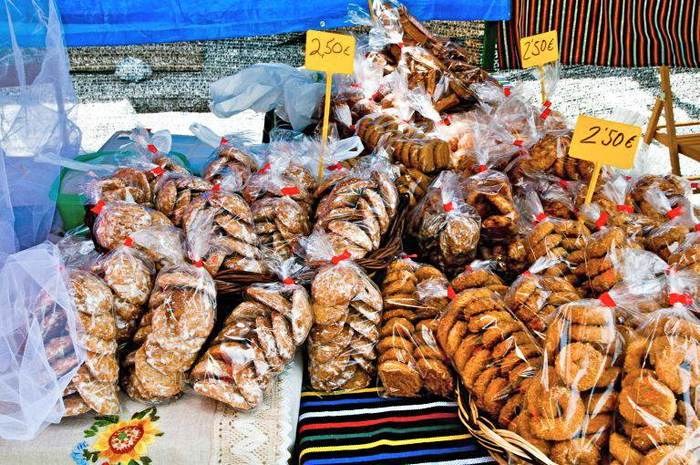
With some areas being situated at over 1000m high and not even 2000 people living here, the shopping opportunities are minimal. A common trend with the smaller, more isolated towns is that whilst there may not be typical tourist outlets there are high-quality locally made products. Whether you are looking for an hand-made souvenir or you want to taste freshly made honey and wine, Vilaflor provides visitors with a smaller but more unique shopping experience compared to the larger towns.