

- Hungary
- Ireland
- Italy
- Malta, Republic of
- Portugal
-
Spain
-
Canary Islands
- El Hierro
- La Palma
- La Gomera
- Tenerife
- Gran Canaria
- Lanzarote
- Fuerteventura
- Tarajalejo
- Caleta de Fuste
- Corralejo
- Costa Calma
- Las Palmas de Gran Canaria
- Lobos Island
- Maspalomas
- Caleta de Famara
- Morro Jable
- Costa Teguise
- Jandía
- San Cristóbal de La Laguna
- Playa Blanca
- Playa de las Americas
- Puerto Calero
- Teide National Park
- Playa del Inglés
- Puerto del Carmen
- Los Realejos
- Puerto de Mogán
- Las Galletas
- La Orotava
- Anaga
- San Agustín
- Adeje
- San Bartolomé de Tirajana
- Puerto de la Cruz
- Los Cristianos
- Arrecife
- El Médano
- Orzola
- Masca
- Taurito
- Los Gigantes
- Fañabé
- Santa Cruz de Tenerife
- Santiago del Teide
- Garachico
- Punta del Hidalgo
- La Caleta
- Balearic Islands
-
Barcelona
-
Benalmádena
-
Cádiz
-
Córdoba
-
Jerez de la Frontera
-
Lleida
-
Málaga
-
Santander
-
Seville
-
Toledo
-
Canary Islands
Icod de los Vinos
Overview
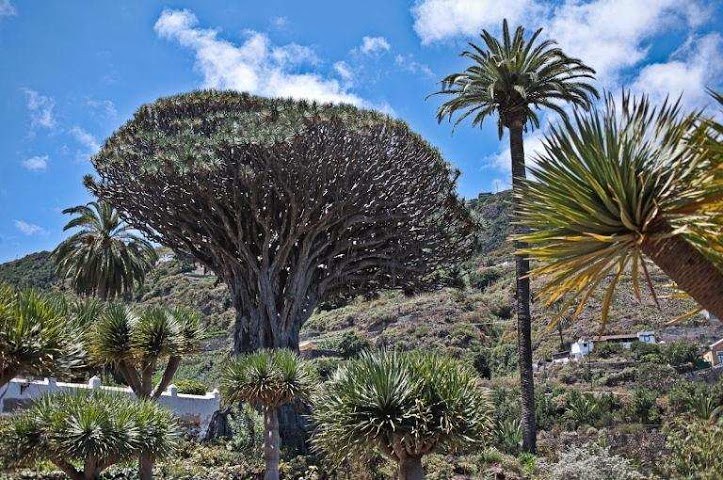
The town of Icod de los Vinos, meaning ‘the local wine,’ is cut deep into the hills of Mount Teide in the province of Santa Cruz de Tenerife. Situated at around 230 metres above sea level, Icod has almost 10km of shoreline running along the northern coast of Tenerife and is surrounded by a lush and fertile valley responsible for producing many of the islands crops.
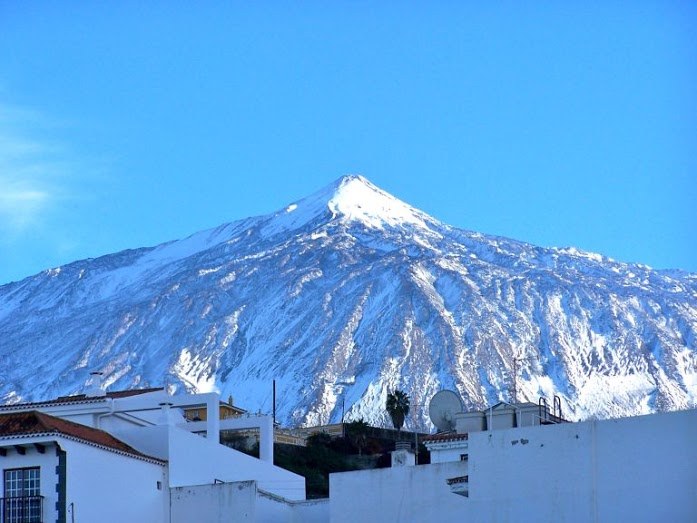
A small yet bustling town, Icod is more a one day stop destination for tourists to explore and enjoy on foot rather than spend a longer period of time at. Idyllic cobble stone streets pave the way for an old town rich in Canarian tradition, offering sweeping views of the impressive Mount Teide and its evergreen canopy that envelopes the top half of Icod.
Icod’s main tourist attraction is the Drago Milenario or the Dragon Tree as it is known. Apparently dating back over one thousand years, the impressive tree has defied the logic of many astute botanists and is a major draw for visitors wanting to see first hand one of the islands oldest mysteries.
The town boasts a mixed and somewhat unique climate, with the lower regions enjoying more natural sunlight whilst the higher altitude areas are swathed in grey clouds and produce more rainfall, each complimenting each other to form an almost perfect atmosphere for fertile land teeming with ripe crops.
Today, Icod de los Vinos enjoys a rich produce of banana plantations and a variety of orchards and vine yards, all helping to add to the town’s thriving economy as well as distinct natural beauty. A number of fascinating churches and convent buildings, each respectfully well preserved, are dotted throughout the town, helping to showcase the area’s traditional religious beliefs and solid Canarian architecture.
Icod de los Vinos is located about 80 km west of the capital, Santa Cruz de Tenerife, north of Los Cristianos and Playa de las Américas and north west of Tenerife South Airport.

History
The town of Icod de los Vinos was founded in around 1501 by the former Menceyato (Kingdom) of Icode. The Kingdom was governed at the time of the Spanish conquest by Pelicar, the son of Chincanayro who were known as the Menceyes (kings) of the Kingdom. During this time, the island of Tenerife was made up of nine Menceyatos which were: Taoro, Güimar, Abona, Anaga, Tegueste, Tacoronte, Icode, Daute and Adeje as well as two independent Kingdoms lying within the Anaga.
When, in 1493, Alonso Fernández de Lugo was granted permission from the King of Spain to lead an invasion on Tenerife, the Menceyatos decided to form two groups; the side of peace, known as Bando de Paz and the side of war, known as Bando de Guerra. The Kingdom of Icode fell into the latter group and although along with Tegueste, Tacoronte, and Daute fought bravely against the forces of de Lugo, were eventually defeated in December of 1494 when they surrendered to the Crown of Castile.
Within the ensuing years, many of the island’s natives were enslaved, especially those on the side of war and what followed was colonisation on a mass scale with a number of Menceyatos dissolving and immigrants coming to the island from the vastly growing Spanish Empire.
Today, the province of Icod is made up of Icod de los Vinos, San Juan de la Rambla, La Guancha and Garachico.
Culture
Icod de los Vinos’ laid back lifestyle provides its residents and those visiting with a slower and more relaxed pace of life than compared with other towns that lie within the northern half of the island. Traditional religious beliefs and values that are still upheld vehemently to this day are ever present in the well preserved convents and beautiful churches that adorn the cobbled streets of the old town.
Icod has a thriving arts culture with a number of permanent and temporary exhibitions at venues such as the Casa de los Cáceres and the San Francisco Convent along with a burgeoning world theatre and performance art scene.
Permanent exhibitions held at Casa de los Cáceres feature the life and work of Canarian artist Guillermo Sureda Arbelo and painter and philosopher Tono Camara. Both exhibitions are open Monday to Friday from 10.00am to 1.00pm and 3.00pm to 8.00pm. A permanent exhibition of the house of Emeterio Gutiérrez Albelo, a famous Canarian writer, features at the San Francisco Covent and is open Monday to Friday from 10.00am to 1.00pm and 4.00pm to 8.00pm.
The Icod de los Vinos local library at the San Francisco Convent is of cultural significance to the town and contains many volumes on philosophy history, art and literature. It is open Monday to Friday. Two music schools are situated in Icod along with local folklore school teaching traditional Canarian myths and legends.
Economy
Icod de los Vinos enjoys a rich and fertile land and the Spanish colonisation was quick to capitalise on the areas blossoming wine and sugarcane trade that reached towards mainland Europe in places such as England and the royal courts of Flanders.
Today, Icod’s main economic trade stems from the banana plantations and its vine yards producing a delicious variety of wines. The produce of potatoes and cereals are also enjoyed throughout the area, with the services sector employing a vast amount of people into this thriving segment of the regions economy.
With up to 10km of shoreline, Icod de los Vinos also reels in the benefit of the fishing trade, with a number of working fishermen and crews in the area bringing back profitable hauls of crab, swordfish, sardines and prawns as well as all forms of sea bass and hake, all of which are served in restaurants around the island.
How to get there
By Bus:
Santa Cruz - Bus 106 (express) and 108 depart every 1-2 hours
Puerto de la Cruz - Bus 354 runs every hour. Bus 363 runs every hour (and every half an hour from 13:00 to 17:00).
Playas de las America - Bus 460 departs 8 times daily
Other TITSA buses that goes to Icod de los Vinos:
358 Santa Bárbara, 360 and 392 Puerto de Erjos, 362 Playa de San Marcos and 368 Buenavista (via Garachico). and 392 Erjos - San José. Buses 107, 325 and 363 also pass by and stop at Icod.
By Car:
From Santa Cruz de Tenerife or Puerto de la Cruz, take motorway TF-5.
From the South (Playa de las América and Los Cristianos), TF-82 is the fastest route.
Sights
Drago Milenario
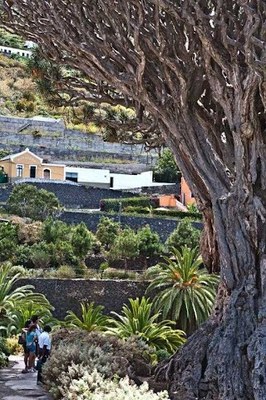
The grand, majestic yet controversial ‘Dracaena Drago’ is the iconic centre piece of the town. Native to the Canary Islands, Icod’s Dragon Tree is the largest and oldest example of the endangered species to be found in the area. Local folk law claims that the tree is over 2000 years old, a fact that is often disputed by professionals who suggest that the age of the tree is more likely to be around 500 to 600 years old. However, no-one can take away the fact that the tree has an almost majestic aurora, with its branches reaching seventeen metres into the sky and the unique vertically knotted tree trunk that creates the illusion of a giant puzzle. The best way to appreciate the Drago is up close and visitors can pay €4 to enjoy the garden that has been created around the landmark. There are plenty of great locations to grab a glance of the tree. The best would be from the Parque Andrés Lorenzo Cáceres across the street, where many tourists lean over the balconies to grab a few classic holiday photos.
Parque del Drago
Situated in the grounds of the infamous Drago Tree, this quaint courtyard is probably the best place in town for visitors to stock up on souvenirs and try out local delicacies. The atmosphere about the place is fresh and tranquil, as people sit in the natural shade given by the palm trees that cover the square, whilst the gushing of the water features relaxes the mind. Situated around the square are a range of different shops and a little cafe, all of them selling fine local wines, cheeses and sauces (mojos) that are renowned within the island. Visitors are encouraged to try out these delicacies and it is hard to say no, as these are not the tacky, over expensive tat that is stereotypically associated with tourist attractions but the kind of goods that you would see the average Canarian take home for their family cooking. However, beware of the pet parrot that spends most of his days relaxing in the centre of the square, as friendly as he seems he packs a nasty bite!
Address: Plaza de la Constitución, 1, 38430 Icod de los Vinos, Tenerife.
Opening hour: Monday to Sunday from 09:30 to 18:30
Telephones: 922 814 510 (ticket office) 922 812 226 (reservation head office)
Website: www.parquedeldrago.es
Parque Andrés Lorenzo Cáceres
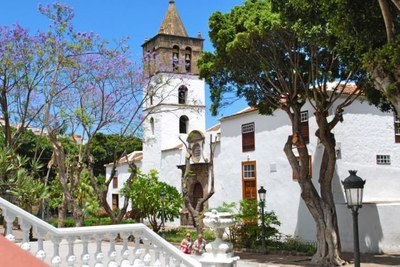
This beautiful park is well worth a visit to, with it being a very popular place to break and relax for locals and tourists combined. When visiting in Spring the park/square is awash with blossoms from the trees that cover it, combine this with the blue skies and the historic church of San Marcos that sits in the middle, the result is truly breathtaking scenery and a vibrant atmosphere. The park is right at the centre of the town, with there being amazing viewpoints from all angles. To the North are the pebble-dashed streets that lead off into the Old Town, whilst to the East of the park are the famous ‘Dragon Tree’- an ideal viewing location of the tree set against the mountainous landscape behind the town. However, debatably the best views are from the South of the park which looks out over the ocean in amazing style.
Address: Plaza de Lorenzo Cáceres, 38430 Icod de los Vinos, Tenerife.
Iglesia de San Marcos
The church of San Marco sits pride of place in the middle of the Parque Andres Lorenzo Cáceres, partially concealed by the surrounding trees. Built in the 15thcentury, it is one the older churches in the area and has a lot more to offer visitors other than its face value. Inside baroque styles combine with the old Spanish Empire to create a warm yet lavish atmosphere, most notably in the form of the stunning centre piece alter and the magnificent solid silver Cuban cross that was brought over from the Americas in the 18th century. Also in the church is a fine timber ceiling demonstrating Canarian woodwork and architecture at its finest. Tourists can also explore the Museum of Sacred Art, located inside the church, which houses rare artefacts and works of art from Spain’s treasured history. Admission to the museum costs just €0.60.
Address: Plaza de Lorenzo Cáceres, 38430 Icod de los Vinos, Tenerife.
Telephone: +34 922 810 695
Visiting times: During church services.
Museum of Religious Art: 09:00 to 13.30 and 16:00 to 18:30.
Casa de Lorenzo Cáceres
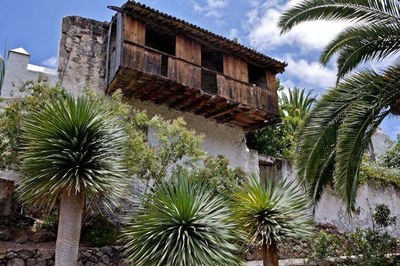
Take five minutes out to walk through the house of Lorenzo Cáceres. Built in the early 19th century, the mansion is now open to the public and is a great example of neo-classical architecture not normally found on the island. The building has three floors built around a central courtyard with stone facades and symmetrically placed windows. Inside everything is carved out of wood, with ornate stair cases and rustic beams emphasising the grandeur of the house. On the left side of the building is an exhibition on the town’s agricultural trade. Icod de los Vinos is renowned on the island for the locally produced wines and cheeses that come from the surrounding farms and vineyards, with this small exhibition being the place which highlights their quality and giving a brief history on how the trades have progressed throughout time. Other things that can be viewed are the abstract sculptures that are on display here, with art being a common sight around town as it is an important part of the culture.
Address: Calle San Sebastián, 38430 Icod de los Vinos, Tenerife.
Plaza Luis de León (Town Hall and Church of San Agustín)
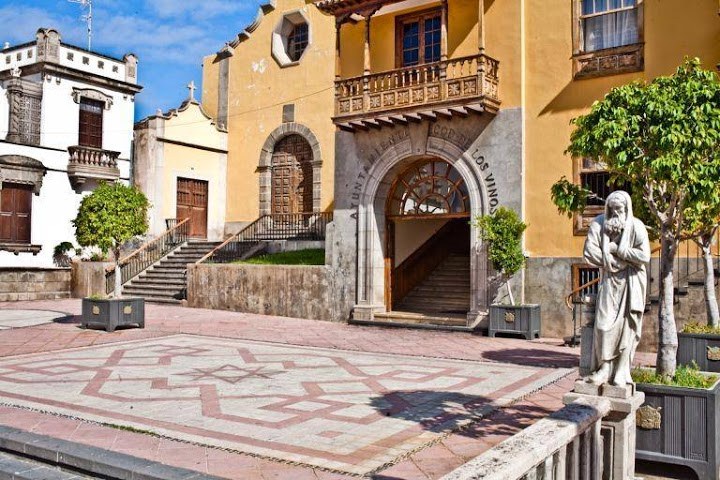
From Casa de Lorenzo Cáceres, venturing eastward via Calle San Sebastián Canarias will lead you to Plaza Luis de León where the Town Hall (Ayuntamiento) proudly stood. Built on an old 16th century convent of San Sebastián, many of the features are still evident. The Church of San Agustín which houses the Virgin of Grace (Virgen de Gracia), is one of them.
Address: PLaza Luis de León, Calle Buen Suceso, 38430 Icod de los Vinos, Tenerife.
Convento de San Francisco (and the Municipal Library)
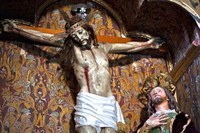
Also known as ‘El Spiritu Santo’, this convent was built in the 1640’s by Francisco Alonso de la Raya. As one of the few convents which managed to escape fire or destruction, it is a monument of great traditional architecture importance. The Convent consists of the San Francisco church which houses the adored El Cristo de las Aguas, a sculpture believed to have brought rain when it was found. Also forming part of the convent is the 18th century Chapel of Nuestra Señora de los Dolores adorned in Portuguese Rococo style. The Municipal Library can also be found here.
Address: Plaza de Domínguez Alfonso s/n, Calle San Francisco, 38430 Icod de los Vinos, Tenerife.
El Mariposario del Drago (Butterfly House)
The butterfly centre is located just down the hill from the church of San Marcos and is a great attraction for all ages. The place is pretty much a giant greenhouse, filled with tropical plants and ponds that are just as attractive and beautiful as the butterflies that live here. Costing €8 to get in, the air is filled with shards of colour as multiple species of butterflies and moth freely fly around the place, landing wherever and on whoever they choose to! The butterfly centre is not only entertaining but educational, with the place having a room dedicated to cocoons and caterpillars to show the stages of metamorphosis, along with a cinema that gives an entertaining yet informative insight to the world of the butterfly.
Address: Avenida Canarias, 2, 38430 Icod de los Vinos, Tenerife.
Telephone: +34 922 815 167
Opening hours: Daily 10:00am to 19:00pm
Entrance fee: Adult €8.50, Child (3-12 years) €5.00
Web: www.mariposario.com
Museums
Casa Museo Emeterio Gutiérrez Albelo
This house museum is dedicated to the beloved author - Gutiérrez Albelo. This is where he was born, grew up and many of his works have been conceived. With donation of personal library and archives from Gutiérrez Albelo’s successors and funding support from the Ayuntamiento of Icod, this house museum was established in 1992. Also on display are the daily life objects and items of the author and his other legacies the likes of letters, photos, and scribbles.
Address: Calle San Francisco, 19, 38430 Icod de los Vinos, Tenerife.
Telephone: +34 922 815 625.
Opening hours: Tuesday- Friday 09:00 to 13:00
Activities
Cueva del Viento
The caves underneath Icod offer something a bit different to the classic tourist sites and scenes of culture and architecture dotted around the island. Away from the scorching sun and sangrias are the underground grids of volcanic lava tubes left over from Tenerife’s explosive past. Now open to the general public, these giant tunnels are the largest of their kind in Europe and an awe-inspiring example of the destructive power of mother nature. Tours only run three times a day: 10am, 12noon and 2pm. Visitors are required to wear suitable shoes and clothing (i.e.: no bikinis and flip-flops). For these reasons visitors should set aside a day for this excursion that costs €15 for adults and €5 for children. The tour is led by a professional guide, who drives the fourteen-strong group up out of town to the cave entrance where they spend the next two hours taking in the best of the various chasms, terraces and fossils the 17km network has to offer.
Telephone: 922 815 339
Web: www.cuevadelviento.net
Opening hours: From Tuesday to Saturday Visitors Centre: from 9:00am to 4:00pm
Cave tour: 10:00am, 12noon and 2:00pm (RESERVATION IN ADVANCE IS REQUIRED on +34 922 815 339), €15 for adults and €5 for children.
Other info: Trekking footwear is required, preferably boots. Medium Difficulty. Total distance on foot: 1,200 metres. Duration: 1h 50m , travel in the vehicle from Visitor Centre included. Driving from Icod town centre: Approximately 7km (15 minutes) on road TF-366.
Festivals
Three Holy Kings - 5th January
Carnival - Feb/ March
Holy week - the week leading up to Easter
San Marcos Evangelist - around 25th of April
Los Hachitos on Midsummer night - around 3rd week of June
Pilgrimage of Our Lady of Al Amparo - 1st week of August.
Festival of Santa Bárbara- last Sunday of August
Santísimo Cristo del Calvario - last Sunday of September
San Andrés Apóstol - end of November
Restaurants
Local cuisine: Slightly set back from Casa del Drago sit the quiet streets of Icod around Plaza de Constitución, where many tempting cheese and wine shops are situated. As you stroll past, you are beckoned in by those that work there to sample some of the delicious traditional cheeses and Canarian liqueurs made from rum and honey. Crusty breads with a selection of mojos, Canarian style sauce that compliments meat and fish, are also available to sample for free in a friendly and inviting atmosphere. Restaurants in Icod benefit from its local produce and close proximity to the sea. Ranging from homemade to international cuisines, you will never lack of choice!
Akepikas
Serving breakfasts, German cuisine, tapas, various tasty mains, homemade lasagna and cakes, this restaurant with multilingual staff will keep your tummy (at least very happy).This restaurant with outdoor sitting also has a small yet well-stocked bar.
Address: C/San Sebastián, 14, Icod de los Vinos, Tenerife.
Telephone +34 646 539 889/ 619 378 520
Carmen Restaurante
This rustic restaurant serves a selection of tasty and reasonably- priced Canarian cuisine. Try Puchero Canario, the local meat and vegetable stew.
Address: Calle Hércules, 2, Icod de los Vinos
Telephone +34 922 122 432/ 922 810 631
Average price €12.00
Nightlife
Nightlife in Icod de los Vinos is understandably limited due to the fact that it is a small town whose main tourist attractions are the churches and Drago Milenario. Most cafés and restaurants double up into bars that stay open till late and serve a wide range of well priced local and imported beers and wines as well as a good selection of spirits.
Bar La Parada, Bar Gloria and Bar Teidrago situated around the centre of town are all competitively priced and serve well prepared food and snacks.
Shopping
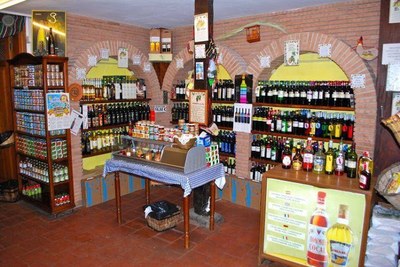
Shopping in Icod de los Vinos has two sides to its coin. There is the newer, more built up part of the town providing contemporary fashion, drugstores, furniture and antique shops, hardware stores selling household items and electrical appliances as well as grocery stores that provide a varied range of food and fresh produce.
The old quarter of the town has a more touristy feel to its shopping outlets, with trinket shops selling traditional woodwork and tapestries hand made by skilled local craftsmen and women. Small shops selling locally produced breads, cheeses and of course wine blend into the community to enhance Icod’s old world ambience. Casa del Drago is worth a visit, if only to sample some of the delicious free wines, Canarian style liqueurs and traditional mojo, a Canarian sauce, used to accompany meat and fish dishes.
A charming small shop called the ‘Soap Box’ on Calle San Sebastian selling unique models carved by hand from soap is one of the shopping highlights of Icod and is recommended for those that want to admire some true Canarian handy work at its finest. Clothes store United Colours of Benetton sits at the bottom of Calle San Sebastian, providing the latest fashion trends for men and women.
Typical of most local towns and villages within the island, stores close for a siesta during the middle of the afternoon so be sure to get your shopping done either in the morning or late afternoon/ early evening time.