

- Hungary
- Ireland
- Italy
- Malta, Republic of
- Portugal
-
Spain
-
Canary Islands
- El Hierro
- La Palma
- La Gomera
- Tenerife
- Gran Canaria
- Lanzarote
- Fuerteventura
- Tarajalejo
- Caleta de Fuste
- Corralejo
- Costa Calma
- Las Palmas de Gran Canaria
- Lobos Island
- Maspalomas
- Caleta de Famara
- Morro Jable
- Costa Teguise
- Jandía
- San Cristóbal de La Laguna
- Playa Blanca
- Playa de las Americas
- Puerto Calero
- Teide National Park
- Playa del Inglés
- Puerto del Carmen
- Los Realejos
- Puerto de Mogán
- Las Galletas
- La Orotava
- Anaga
- San Agustín
- Adeje
- San Bartolomé de Tirajana
- Puerto de la Cruz
- Los Cristianos
- Arrecife
- El Médano
- Orzola
- Masca
- Taurito
- Los Gigantes
- Fañabé
- Santa Cruz de Tenerife
- Santiago del Teide
- Garachico
- Punta del Hidalgo
- La Caleta
- Balearic Islands
-
Barcelona
-
Benalmádena
-
Cádiz
-
Córdoba
-
Jerez de la Frontera
-
Lleida
-
Málaga
-
Santander
-
Seville
-
Toledo
-
Canary Islands
Candelaria
Overview
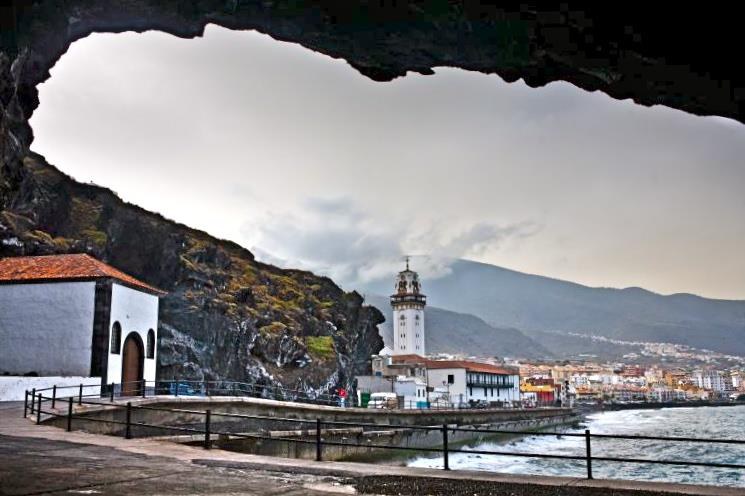
Candelaria is a lovely, seaside town with a rich and interesting history that draws visitors of all kinds to it every year. The old village has been home to the patron saint of all the Canary Islands, Virgen de Candelaria, since the 1300’s. Its spiritual importance has led to Candelaria becoming a place of annual pilgrimage for thousands of religious travelers. Also, as patron saint of the entire archipelago, people from all islands flock here for the annual Fiesta de Nuestra Señora de la Candelaria, held on the 14th and 15th of August.
The religious and cultural story of the Virgen de Candelaria and its mysterious disappearance during a rough sea storm in 1826 are firmly rooted in this town. Aspects of their rich heritage are apparent on every corner; from traditional architecture to museums.
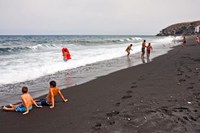
A long, black sand and pebble beach fronts the town, where large rocks hold back the powerful Atlantic waves creating lagoon areas; perfect for a relaxing swim. The beach is lined with a wide promenade, which links the larger town of Candelaria with the smaller, tourist town of Las Caletillas.
Las Caletillas is predominately made up of hotel and apartment complexes. There are a number restaurants and bars in the small town, leading down to a secluded beach. This area is popular amongst tourists who are looking for a more relaxed and traditional Canarian holiday than can be found at the larger resorts. However, its great position on the south-east coast where year round sunshine is almost guaranteed and the close link to the capital of the Island, Santa Cruz, draws tourists back again and again.
History
The history of this town is based on the ancient story of the discovery of the figure of the Virgen de Candelaria. So it is told, shepherds were grazing their animals on the land that is now the town of Candelaria when they came across the figure, washed up on the shore. The area of Candelaria was then called Güimar and ruled over by a Guanche Mencey, or King. The figure was taken to the King’s Palace, Chinguaro’s Cave. It was later moved back to the shores of Candelaria, to Cueva de Achbinico, which is now part of the Ermita de San Blas. The Guanches worshipped the figure as one of their goddesses, Chaxiraxi, the mother of the gods. It wasn’t until the Spanish conquest of the island that the Spanish Catholics explained that it was actually the Virgin Mary.
Unfortunately, the original figure was lost when a storm hit the town in 1826
However, a replica now resides in the Basílica de Nuestra Señora de Candelaria. Before the Virgen de Candelaria was moved to the area and the chapels were built, the area was open space used for grazing animals. It was only after people started to settle around the chapel that the village started to take place. This is now the old part of the village, Santa Ana.
Culture
It was after the Spanish conquest that the region’s name was changed from Güímar (aboriginal menceyato) to Candelaria. The village, due to its roots, is very religious and proud of its heritage. This is shown in the number of fiestas honouring the Virgen de Candelaria and other saints and also the work that is put in to preserving ancient relics and crafts, such as pottery.
Economy
Tourism is the main industry in this area, particularly in Las Caletillas, which is predominantly hotel and apartment complexes. Previous to this the village was a thriving fishing port and you can still see the small, now mainly leisure, harbours that divide the long beach.
How to get there
By Bus:
From Santa Cruz buses number 120, 122 and 124 all run to Candelaria and Las Caletillas. The 120 is the most practical and runs every hour from 05:30 until 19:50 with a late bus at 21:15, the journey taking half an hour.
By Car:
If you are driving from Puerto de la Cruz take the Autopista del Norte/TF-5 towards Santa Cruz and on to Autopista TF-2 towards Santa María del Mar. From here take the exit on to Autopista del Sur/TF-1 towards Los Cristianos. Take exit 12 for the TF-283 towards Candelaria/Arya. Follow signs for Camino del Cementerio and then for Calle Santa Ana.
Sights
Plaza de la Patrona de Canarias and Conjunto Esculórico de los Menceyes
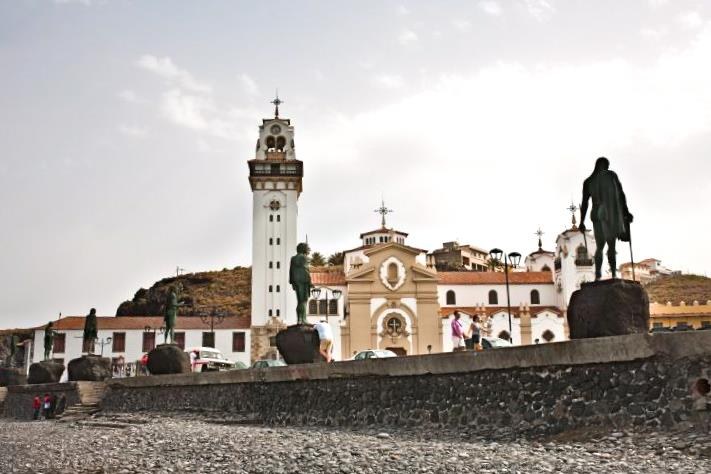
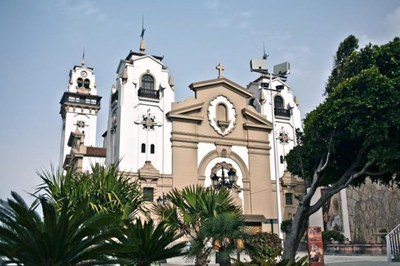
This square is situated at the westernmost end of the Playa de la Arena. It is the centre of the town where you will find the imposing Basílica de Nuestra Señora de Candelaria. Along the sea front edge of this plaza stand nine statues of the Guanche menceys. Their tall, muscular physic depicts the build of the ancient inhabitants of the Island and also illustrate the power these nine men who were once kings of the ancient kingdoms. The statues are a fairly modern installment, built in 1993 by José Abad. Behind them the waves of the Atlantic soar up on to the fine black sand and pebble beach of Playa de la Arena. The plaza is also lined with cafes and children’s play areas. In one corner you will find the ‘Fountain of the Pilgrims’ built by Alfredo Reyes Darias. The pool with a central bowl fountain has a backdrop depicting the famous story of the Guanches discovering the Virgen de la Candelaria in beautiful mosaics.
Address: Plaza de la Patrona de Canarias, 38530 Candelaria, Tenerife.
Cueva de Achbinico y Ermita de San Blas
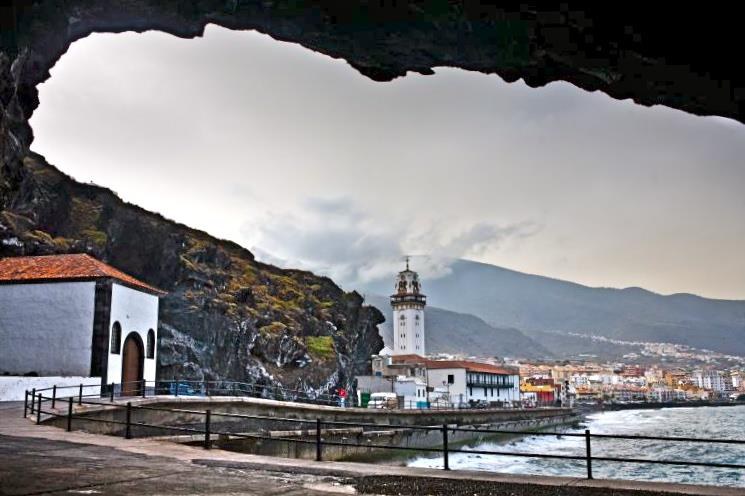
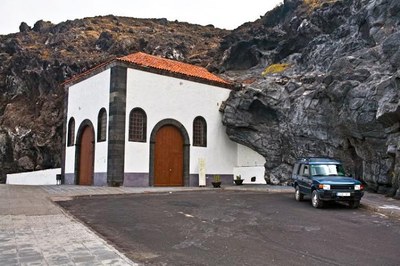
This chapel is built out of the rock face and the inside is actually a cave, the ‘Cueva de Achbinico’. The cave was where the figure of the Virgen de Candelaria was first housed when it was moved from Güímar, under the watchful eye of Guanche King Acaymo. It was moved here due to the ideal conditions of the cave and the importance of the area for the ancient dwellers. Achbinico actually means “place of shearing and milking”. This led to the chapel being named after San Blas, the protector of shepherds.
After the conquest of Tenerife in the 15th Century, the cave was declared a church, despite being a place of worship of centuries. The figure of the Virgen de Candelaria remained at Ermita de San Blas until 1526, when she was moved to the town church which was on the site of the current Basilica.
In 1789, a devastating fire in the town church meant that the figure was moved back to the San Blas cave chapel. It was returned to the restored Basilica in 1803, when the building front of the cave was built. It was thought that this would be useful in housing the large number of religious visitors who take the pilgrimage to Candelaria during the fiestas of the Virgen de Candelaria.
Address: Paseo San Blas, 38530 Candelaria, Tenerife.
Cueva de los Camellos
This cave is situated next to the Ermita San Blas. The hollowed rock face opens on to the roaring Atlantic ocean and is a great spot for photographs.
Address: Paseo San Blas, 38530 Candelaria, Tenerife.
Basílica de Nuestra Señora de Candelaria
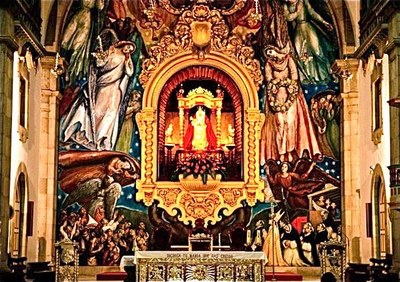
This beautiful Church dominates Plaza de la Patrona de Canarias. It was designed by José Enrique Marrero Regalado and completed in 1959. The Basilica can hold up to 5,000 people, which is necessary considering thousands of people descend on the town for pilgrimage every year, on the 14th and 15th of August and the 2nd of February. Other than the figure of the Virgin Mary, which stands above the impressive alter, you can see delightful mural paintings framing the alter. These mainly depict angels amongst Canarian saints, showing their devotion to the Virgen de Candelaria. The site of the basilica is that of the ancient temple, which once housed the original figure of the Virgen de Candelaria, which burnt down in 1789.
Address: Plaza de la Patrona de Canarias, 38530 Candelaria, Tenerife.
Opening hours: Weekdays 07:30 to 13:00 and 15:00 to 19:30; Saturday, Sunday and holiday 07:30 to 19:30.
Casa Cabildo Antiguo Ayuntamiento
This old town hall is in the old part of the village and is situated above the fountain of the pilgrims in the Plaza de la Patrona de Canarias. It shows the traditional Canarian architecture and is regularly a venue for various temporary exhibitions. Follow the stairs next to the fountain to get there.
Address:Calle Antón Guanche, 38530 Candelaria, Tenerife.
Opening hour: Tuesdays to Sundays: 11:00 to 13:00, 15:00 to 20:00
Iglesia de Santa Ana
This small church is in the old part of the town, on the hills above Plaza de la Patrona de Canarias. It is small and beautifully preserved. The church is surrounded by a large courtyard with plenty of benches, which are well used by the inhabitants of the town or weary tourists. The church courtyard also provides panoramic vistas across the open sea.
Address: Calle Isla de La Gomera 38530 Candelaria, Tenerife.
Museums
Centro Aldarero de Candelaria “Casa las Miquelas”
This museum is dedicated to keeping the ancient pottery craft of Candelaria alive. The buildings have been recently developed into the museum and contain the original ovens used to fire the clay. There is also a workshop where you can see the young people of today practicing the old techniques that have been handed down to them by their ancestors. Here you can purchase, not only traditional pieces made in the workshops but also contemporary jewelry and ornaments. All proceeds go back into developing the museum and keeping the ancient tradition going.
Address: Calle Isla de La Gomera n°17, 38530 Candelaria, Tenerife.
Telephone: (+34) 922 505 216
Opening hours: Tuesday to Saturday: 09:00 to 14:00, 15:00 to 17:30
Entrance: free
Beaches
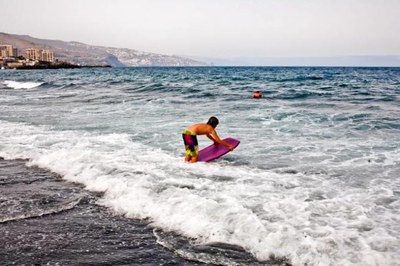
Despite the small size of the town there the coastline offers various beaches and swimming options.
Playa de la Arena
Playa de la Arena runs from in front of the Plaza de la Patrona de Canarias and along until it reaches the centre of the town. This is 800m long, black sand and pebble beach where a lagoon area has been constructed so those who prefer stiller waters can swim peacefully. Head for the end of the beach away from the square where there is less rocks and a larger stretch of sand.
Playa del Alcalde
Further along the promenade you come across the smaller beach of Playa del Alcalde. This beach is also black sand and is popular amongst the locals. From the shore you can seen many of the local fishing boats going about their daily business.
Playa de Pozo
Next is the even smaller bay of Playa de Pozo. This beach is in the busier harbour area and is good if you just want a quick dip in the sea but not the best for a relaxing beach day.
A many smaller bays follow the coast, a number of which have no sand but just paved areas which are a playground for swimmers and youngsters who like jumping off the piers and steps.
Playa de Punta Larga
At the other end of Candelaria is Playa de Punta Larga. This beach leads all the way to Las Caletillas and is bordered by a wooden promenade. The beach has black sand and many showers at various points along the way.
Playa de las Caletillas
The town of Las Caletillas leads down to a tiny beach. This beautiful, secluded spot tends not to be littered with sunbathers, who remain at the spacious hotel pools but is a great spot for a evening swim or an ice cream.
Swimming Pool
If you don’t feel like the beach you can always head to the local seafront swimming pool. The pool is open everyday and sun beds and parasols surround the lagoon type area.
Address: Calle la Piscina, 38530 Candelaria, Tenerife.
Telephone: (+34) 922 956 000
Entrance fee: Adult €2.10, Children: Age 5-13 €1.20, free for children under the age of 4.
Festivals
Fiesta de Nuestra Señora de la Candelaria
The festival of ‘Our Lady’ on the 14th and 15th of August includes a procession with the figure of the Madonna and a lot of activities throughout the pedestrian streets and plaza. Due to the Virgen de Candelaria being the patron saint of all the Canary Islands this event attracts visitors of all kinds, from all over the archipelago.
The fiesta on the 2nd of February is one of more historical purpose as it celebrates the discovery of the Virgen de Candelaria and her religious significance.
Fiesta de Candelaria
Having held for 15 years now, this ‘Superstar’ annual singing competition is held at the Plaza de Santa Ana from June to August (subject to change from the organiser). This is where over 500 participants from all of Spain flock in to battle for the 12,000 euros prize. In recent years, the judging has been extended to songwriters, meaning the singers will either write their own songs or work with a songwriter. This competition has seen several winners registering success following competitions in the Latin America.
Restaurants
Most of the restaurants are centered in Las Caletillas serving a number of international dishes. Due to the seafront position the village offers delicious seafood at reasonable prices.
El Archete
A favorite of the area is El Archete, serving a number of traditional Canarian dishes.
Address: Calle Arola, 2 Cruce de Candelaria, 38530 Candelaria, Tenerife.
Telephone: (+34) 922 500 115
It is closed on Sundays.
Nightlife
There are a number of bars to be found in Candelaria, particularly in the Las Caletillas area. Quiet in the day serving ice creams and snacks, the bars come to life at night, serving cocktails in a relaxed atmosphere. However, if you are looking for something a little more lively then head to Santa Cruz, by bus or taxi.
Shopping
Calle Obispo Pérez Cáceres is the main shopping street in Candelaria. This pedestrian street is lined with shops selling items from souvenirs, arts and crafts to daily essentials such as clothes, shoes, beach goods and confectionary. However, if it is some real retail therapy you are after, head to Santa Cruz where there are lots of fantastic shops.
Groceries
For groceries, head to supermarket (Mercadona) situated opposite the large parking by the beach or in ‘Hiperdino’ in the Punta Larga Commercial Centre.
Mercado del Agricultor de Candelaria
If you would rather buy directly from the farmers, Mercado del Agricultor de Candelaria (at Plaza del Centro Comercial) is the place to be. Here you will find fresh local produce and crafts at bargain price.
Opening hours: Wednesdays: markets starts from 15:00; Saturdays and Sundays: 09:00 to 14:00.