

- Hungary
- Ireland
- Italy
- Malta, Republic of
- Portugal
-
Spain
-
Canary Islands
- El Hierro
- La Palma
- La Gomera
- Tenerife
- Gran Canaria
- Lanzarote
- Fuerteventura
- Tarajalejo
- Caleta de Fuste
- Corralejo
- Costa Calma
- Las Palmas de Gran Canaria
- Lobos Island
- Maspalomas
- Caleta de Famara
- Morro Jable
- Costa Teguise
- Jandía
- San Cristóbal de La Laguna
- Playa Blanca
- Playa de las Americas
- Puerto Calero
- Teide National Park
- Playa del Inglés
- Puerto del Carmen
- Los Realejos
- Puerto de Mogán
- Las Galletas
- La Orotava
- Anaga
- San Agustín
- Adeje
- San Bartolomé de Tirajana
- Puerto de la Cruz
- Los Cristianos
- Arrecife
- El Médano
- Orzola
- Masca
- Taurito
- Los Gigantes
- Fañabé
- Santa Cruz de Tenerife
- Santiago del Teide
- Garachico
- Punta del Hidalgo
- La Caleta
- Balearic Islands
-
Barcelona
-
Benalmádena
-
Cádiz
-
Córdoba
-
Jerez de la Frontera
-
Lleida
-
Málaga
-
Santander
-
Seville
-
Toledo
-
Canary Islands
Overview of Los Cristianos
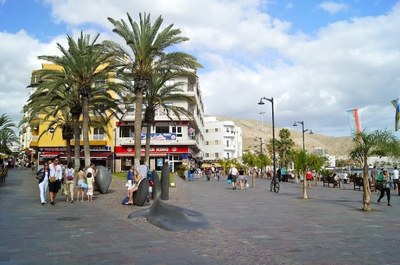
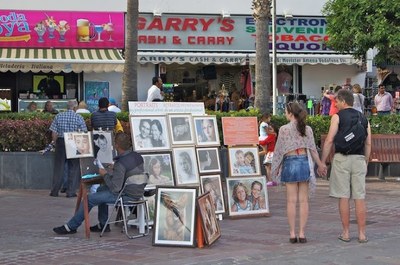
At first, the rapidly expanding Los Cristianos will seem like a typical mass tourism resort, with its vast white sand beaches packed with sun beds and its long line of bars and restaurants at the harbour front which hardly differ from those in the tourists' home country. The resort is lined with an extensive choice of car rentals, estate agents, clothing boutiques and jewelers. But behind its façade, there are still remnants of its past as a cosy fishing village – the harbour area, traditional architecture, and historical churches.
A little quieter and more mature than its adjacent Playa de las Américas, this world-class seaside paradise offers a world of wonders for everyone. With sunshine all year round – whether you´re bringing a family with young children looking for a calm beach, or a bunch of party-loving lads in search of a serious pub crawl and a water park to cool down in, this town really has it all! It is the first port of call for ferries from La Gomera, El Hierro, and La Palma, but this doesn't mean it's overrun by traffic – quite the opposite, this lends the harbour-side an air of liveliness.
There is a wide selection of accommodation facilities available to match all budgets – whether you're looking for a backpacking hostel or self-catering apart-hotel, or want to immerse yourself in a sensuous spa resort, you won't be left wanting. And with a seemingly never-ending choice of distractions, such as shopping malls, bars (many with live music), nightclubs, watersports, whale watching tours, party cruises, as well as golf and hiking on offer, you won't be left to tan on the beach for too long.
History
Its population experienced a real boost with the turn of the century through increased industry and trade, positioning this town as a central import-export hub. Its first quay was built in 1909, the “Puerto Viejo“ (Old Quay), which started shipping locally distilled liquors, and later the produce of a resin factory, salt mines, and a fish salting factory. It was only in 1914, when Teofílo Bello Rodríguez was granted the right to run an irrigation pipe from his property in Vilaflor to his father's land in Los Cristianos, that local output was expanded to tomato and banana plantations, providing new employment opportunities.
A rapidly growing population led to the construction of the town's first house of worship, the Chapel of Our Lady of Mount Carmel in 1924, which was replaced by a larger parish church in 1987. In similar fashion, the first mayor port expansion took place in 1934 in the bay of Los Cristianos, making it accessible for larger cargo ships and industrial fishing vessels. The second port expansion was built on the same ground in 1975, which led to the first ferry service between Tenerife and its neighbouring La Gomera.
The seed for today's booming tourism industry was sown by a Swede, Bengt Rylander (known locally as Don Benito), whose multiple sclerosis drove him in 1956 to seek this town's mild climate and fresh air. Its positive effects rapidly became known throughout Sweden and the whole of Europe, attracting large numbers of tourists from the 1960s onwards, and leading to the construction of the first big hotels. Tourism experienced a real boost with the inauguration of the International Airport South Tenerife Reina Sofia in 1978, which triggered a massive wave of British emigration to this wonderfully sun-soaked setting.
Culture
Its nearly 400 year-old roots have, at least in part, been maintained, which is more than can be said of its noisier neighbour along the west of the promenade. The traditional Canarian architecture of some its domestic houses and its central church, as well as the old woodwork in various tapas restaurants, is reminiscent of times gone by. In order to witness these, you will need to explore the town's back streets on foot, but if this is what you mainly want to see, other places of historic interest, such as La Orotava, are well worth a visit specifically for this purpose.
The various fiestas ensure that religious and folkloric customs are upheld, and modernised events such as the Carnival, are evidence that its cultural heritage is being transformed even today. Guanche, Andalusian, and Hispanic roots are mixed together with an Afro-Caribbean flair, most enjoyably experienced through local orchestras, led by a guitar and a ukulele-like timple, and accompanied by maracas, castanets, wooden flutes, and drums, which invite you to dance the night (or day) away.
Los Cristianos’ Centro Cultural, which acts as a library, a town hall, as well as its country courts, have meant that Los Cristianos is undoubtedly taking over Arona's central administrative and cultural position of power.
Economy
The once thriving agricultural and fishing sectors were quickly replaced by mass-tourism, whose transport requirements led to the creation of the busy ferry port connecting, and improving trade and communications between Tenerife and its neighbouring islands. Today the hundreds of thousands of yearly visitors ensure the town's (and the island's) primary sector for employment.
This dominance of travel-related income is reflected in the appearance of its streets, which are characterised by an expansive selection of international bars and restaurants – this competitive culinary environment has lowered the average meal price, hence eating out has become customary. And there are also ample shopping opportunities, with a row of major shopping centres, a bustling high street, and major supermarkets.
Location
Situated at the foot of the Valle San Lorenzo (between the mountains of Chayofita and Guaza) and just 15 kilometres west of the Tenerife South airport, Los Cristianos is easily accessible by private or public transport. It is a great starting point for day trips to the surrounding tourism mecca- Playa de las Américas, as well as the mountain and seaside towns of Adeje, Arona, Buzanada, Vilaflor, Playa las Galletas, and Costa del Silencio.
Its far-south location, with the massive dormant volcano Mt. Teide as a backdrop, ensures a mild climate reigns over this coastal town. Together with the breezes of the Passat winds, this provides a soothing and refreshing environment for beach and walking holidays all year round.
How to get there
By Bus:
From Airport:
TITSA Bus 111 from Santa Cruz passes the South Airport every half an hour between 06:20 and 22:20, 23:30, 00:20, 01:20, 03:20 and 05:20.
From Santa Cruz:
TITSA Bus 110 (express) departs Santa Cruz every half an hour between 05:45 and 19:15, last bus at 20:15. Buses run 6 times daily in weekends and holidays.
TITSA Bus 111 (via airport) departs Santa Cruz every half an hour between 05:30 and 21:30, it runs every 1-2 hour between 22:30 and 04:30.
From Puerto de la Cruz:
TITSA Bus 343 (express) departs Puerto de la Cruz for Los Cristianos, via South Airport, 12 times daily between 06:30 and 21:25.
From Los Gigantes:
TITSA Bus 477 runs every hour from Los Gigantes between 07:00 and 19:00.
There are many buses connecting nearby resorts and town to Los Cristianos. Be sure to get a copy of the latest TITSA bus timetable from the bus station.
By Car:
Los Cristianos is exceptionally well-connected by road and by sea: the capital Santa Cruz is only 50 minutes drive away via the TF-1 motorway, and 20 minutes from the Airport South Tenerife Reina Sofia. Other scenic towns, such as Arona, Las Galletas, and Icod de los Vinos, or even the peak of Teide, are also easily accessible from here via the island's high quality motorway, which allow exploration of the entire island, with a single drive rarely taking more than 1 hour to complete.