

- Hungary
- Ireland
- Italy
- Malta, Republic of
- Portugal
-
Spain
-
Canary Islands
- El Hierro
- La Palma
- La Gomera
- Tenerife
- Gran Canaria
- Lanzarote
- Fuerteventura
- Tarajalejo
- Caleta de Fuste
- Corralejo
- Costa Calma
- Las Palmas de Gran Canaria
- Lobos Island
- Maspalomas
- Caleta de Famara
- Morro Jable
- Costa Teguise
- Jandía
- San Cristóbal de La Laguna
- Playa Blanca
- Playa de las Americas
- Puerto Calero
- Teide National Park
- Playa del Inglés
- Puerto del Carmen
- Los Realejos
- Puerto de Mogán
- Las Galletas
- La Orotava
- Anaga
- San Agustín
- Adeje
- San Bartolomé de Tirajana
- Puerto de la Cruz
- Los Cristianos
- Arrecife
- El Médano
- Orzola
- Masca
- Taurito
- Los Gigantes
- Fañabé
- Santa Cruz de Tenerife
- Santiago del Teide
- Garachico
- Punta del Hidalgo
- La Caleta
- Balearic Islands
-
Barcelona
-
Benalmádena
-
Cádiz
-
Córdoba
-
Jerez de la Frontera
-
Lleida
-
Málaga
-
Santander
-
Seville
-
Toledo
-
Canary Islands
Moya
Overview
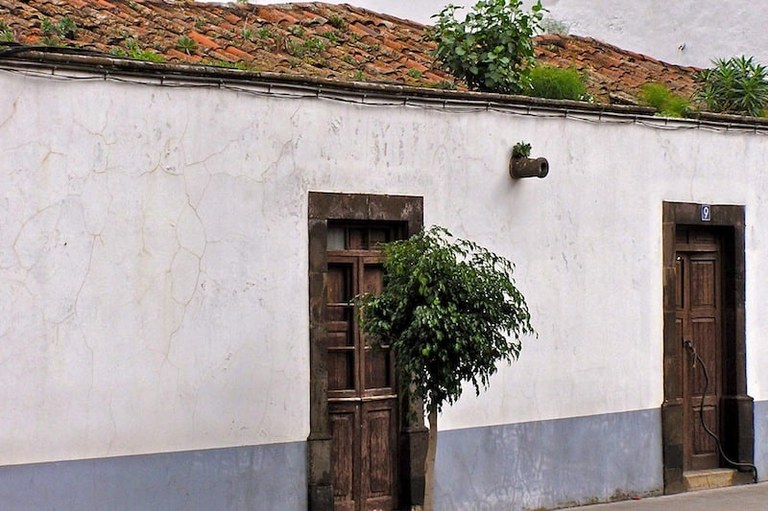
Enclosed by volcanoes and the Doramas Park, and also a short drive away from the beach, Moya is graced with a natural beauty that is rivalled by only a few towns on the island.
There are wondrous walks through its lush countryside peppered with forests and ravines, whilst the small historic town centre contains many charming examples of traditional Canarian architecture, wooden balconies and terraces aplenty.
Yet, for all its beauty, perhaps Moya’s most charming characteristic is its unassuming nature—traditions are still yet to be usurped by mass industry.
History
Moya’s history can be traced back to the late 15th century. In the wake of the Spanish conquest, a small urban settlement began to arise, formatively built on sugar cane production. Due to the area’s fertile soils, farming and stockbreeding began to soar during the 19th century. An inexorable rise in the town’s population also carried adverse consequences such as the deforestation of the Bosque de Doramas.
Culture
Moya is often described as unpretentious. Whilst other towns in Gran Canaria have been engorged by modern consumerism, it has clung doggedly to its traditions. Indigenous crafts such as carpentry and embroidery are still practised in its various craft shops where locals continue to employ the ancient artisan techniques of their forbears.
Economy
Gloriously eschewing tertiary industries such as construction and mass tourism, Moya—as it has been for centuries— is still a prevalent stockbreeding and farming region. Close to the coast, it has over 60 hectares of land dedicated to banana plantations, which remain its foremost export. Bananas are also rivalled by potato production and other cereals.
In recent years, the region has also begun to focus its attention on cheese production. There are currently 24 dairies producing a variety of cheeses.
How to get there
Buses 116 (eight daily from 07:45- 22:00) and 117 (eight daily from 06:45- 21:00) run from/to Las Palmas; both journeys take approximately 50 minutes and cost €2.85.
If driving, follow the GC-2 motorway from Las Palmas de Gran Canaria along the northern coast. Moya is approximately 25km away.
Sights

Iglesia de Nuestra Señora de la Candelaria (Church)
Hanging dramatically over a cliff, the Barranco de Moya below, this church was opened in 1957. Its highlights include a rose window on the main facade, whilst within, it is divided into three naves.
Where: Plaza Simón Milián, Calle Padre Juanito 9, 35420 Moya, Gran Canaria island.
Heredad de Aguas (Water Board)
A fine example of Canarian architecture, this two-story building is built entirely from basalt. Other noteworthy features include its central bell tower and the six neo-classic columns on its exterior.
Where: Calle León y Castillo 5, 35420 Moya, Gran Canaria island.
Beyond the town
A short venture out of the town will take you into glorious countryside—65% of the municipality is classed as a Protected Natural Area. Here, there is also the chance to observe a number of examples of rural Canarian architecture, including small houses with terraces for growing crops, and a number of irrigation channels, canals and mills.
Integral Nature Reserve of Barranco Oscuro
This short stretch of ravine is most notable for its abundance of woodland containing the Gran Canaria laurel tree.
Special Nature Reserve of Azuaje
Found within Parque Rural de Doramas (Doramas Park) flora-spotters are spoilt for choice. Look out for the laurel and thermophile forests, and a heavy smattering of dragon tree formations.
Special Nature Reserve of Los Tiles de Moya
Found within Doramas Park, species include a magnificent laurel forest. There is also a visitors’ centre, situated at the entrance to the reserve, which provides information on endemic flora and more pertinently, preservation.
Museums

Casa Museo Tomás Morales (House Museum)
Situated opposite the church, this resplendent building was once the home of the namesake Canarian poet. The converted museum houses an extensive collection of material about the bard, including manuscripts and photos. Its other highlights include a music-room which still contains a 170-year-old clavichord.
Where: Plaza de Tomas Morales s/n, 35420 Moya, Gran Canaria island.
Telephone: (+34) 928 620 217/ 928 612 401 Opening hours: 10:00 to 20:00
Activities

Hiking
Don’t forget your walking boots as the surrounding hinterland makes for some excellent, and not too taxing, hiking trails. Here are some of the best routes:
Fontanales – Valsendero
Starting within the Doramas Park by the sign for El Montañon Negro, this short 2,900-metre walk contains some lovely scenery, including a quaint old chapel, and runs alongside La Virgen Ravine.
Caldera de los Pinos – Fontanales
Descending through pine trees along Pavon Ravine, the route ends at a small bridge.
Barranco. de Laurel – Los Tilos – Moya
Unchanged since the region’s erstwhile feudal days, the 3km route follows a small road.
Trujillo – La Costa
Starting close to the track bordering La Montaña, much of the route continues by the main road (GC-75) via Los Dragos, ending on the coast.
Beaches
Playa Charco de San Lorenzo (beach)
This beach is fine for a dip and bathe due to its clear waters.
Playa de La Caleta (beach)
If looking for something a little more lively, head to this larger beach, which is particularly popular with surfers due to the ocean’s favourable breaks.
Festivals
Romería en Honor a San Antonio- June
Fiesta de la Virgen de Candelaria- February 2nd
Fiestas en Honor a San Bartolomé the Apostle- August 24th
Restaurants
For a small municipality, Moya’s local cuisine is remarkably diverse. In Fontanales, most restaurants serve piping stews, consisting predominantly of yam, whilst grilled meats such as goat and pork are also popular. If this doesn’t tickle your taste buds, you can always make the short journey to the coast to sample some grilled fresh fish.
However, a trait all local restaurants share within the region is a predilection for desserts. If you have a sweet tooth, make sure to try truchas (not to be confused for trout, as it is most commonly translated!), a type of pastry loaded with a delicious sweet pumpkin filling.