

- Hungary
- Ireland
- Italy
- Malta, Republic of
- Portugal
-
Spain
-
Canary Islands
- El Hierro
- La Palma
- La Gomera
- Tenerife
- Gran Canaria
- Lanzarote
- Fuerteventura
- Tarajalejo
- Caleta de Fuste
- Corralejo
- Costa Calma
- Las Palmas de Gran Canaria
- Lobos Island
- Maspalomas
- Caleta de Famara
- Morro Jable
- Costa Teguise
- Jandía
- San Cristóbal de La Laguna
- Playa Blanca
- Playa de las Americas
- Puerto Calero
- Teide National Park
- Playa del Inglés
- Puerto del Carmen
- Los Realejos
- Puerto de Mogán
- Las Galletas
- La Orotava
- Anaga
- San Agustín
- Adeje
- San Bartolomé de Tirajana
- Puerto de la Cruz
- Los Cristianos
- Arrecife
- El Médano
- Orzola
- Masca
- Taurito
- Los Gigantes
- Fañabé
- Santa Cruz de Tenerife
- Santiago del Teide
- Garachico
- Punta del Hidalgo
- La Caleta
- Balearic Islands
-
Barcelona
-
Benalmádena
-
Cádiz
-
Córdoba
-
Jerez de la Frontera
-
Lleida
-
Málaga
-
Santander
-
Seville
-
Toledo
-
Canary Islands
Betancuria
Overview
In the heart of Fuerteventura lies the pretty and lush town of Betancuria. This former capital of Fuerteventura was declared Parque Natural de Betancuria (Betancuria Natural Park) due to its fascinating landscapes, biodiversity as well as its historical significance. A visit to this oldest town of the island is a must, especially if you would like to see the former Fuerteventura that existed before the advent of tourism and five star hotels. Fascinating architecture lines the windy cobbled streets; perhaps most interesting is the ruin of the first Franciscan convent of the Canary Islands. The various old buildings and museums give a great insight into the Betancuria of old. There are a couple of vantage points along FV-30 (towards Antigua town) with stunning views of the Betancuria terrain, adored with hills and ravines. It is highly recommended that you take the time to experience this timeless town during your stay in Fuerteventura.
History
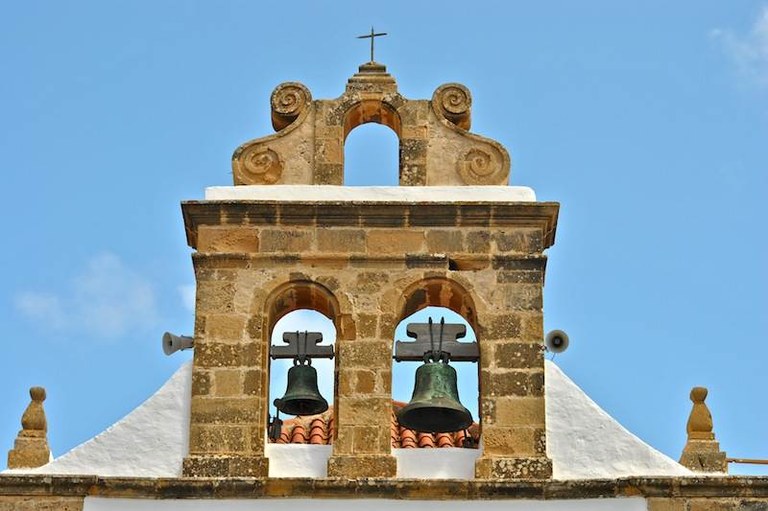
As the former capital of Fuerteventura, Betancuria has a colourful and turbulent history. The town itself and the indigenous people that once lived here have endured imperialist attacks from Europeans, and vengeful invasions at the hands of the Berbers. Today, Betancuria is quintessentially Fuerteventurian and protected as an area of geomorphological and ethnographic significance.
Betancuria was founded during the Castilian invasion in 1404 by the Norman Conqueror, Jean de Béthencourt; and named after him. The once thriving capital of Fuerteventura was home to numerous Castilian noblemen, renowned soldiers and the first church of the island, Iglesia de Santa María de Betancura. Its distance from the coast led the locals to believe that the town would be less vulnerable to attacks from pirates. However, many people from North Africa were captured and made to work as slaves on the island. This resulted in Betancuria being raided several times in retaliation by the Moors and the Berbers of northern Africa. During the raids endured by Betancuria, the Moroccans captured 600 prisoners and forced them to work as slaves for the aristocratic Berber families. In the mid 15th century after the wars between the Spanish and the Berbers had settled, the Majoreros led an uprising against the Spanish. However, they were unsuccessful in regaining their rights as the original inhabitants of the island. These tumultuous times were followed by the unsuccessful attempts of invasion by the British, who were defeated in the Battle of Tamasite in 1740. From the 19th century, Betancuria slowly lost its power to other towns due to economy development and as a result, people began to migrate towards the coast. Betancuria officially denounced its title as the capital of Fuerteventura in 1834, ceding the title to La Oliva, which itself later gave up the title, now held by Puerto del Rosario.
Culture
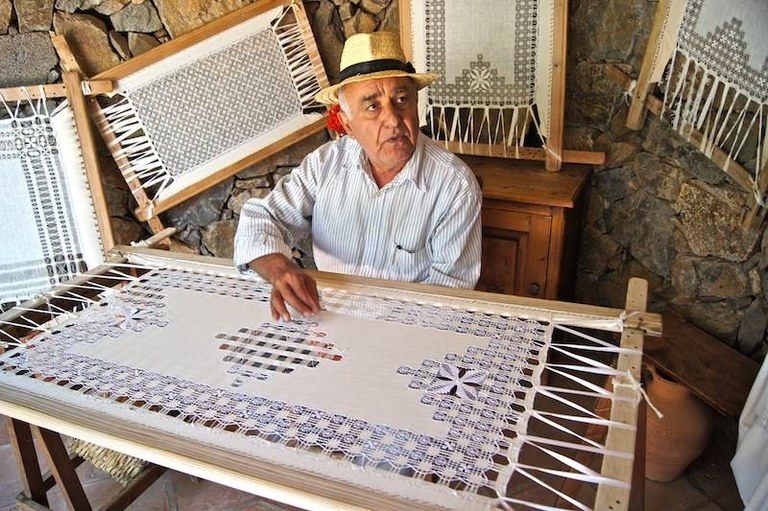
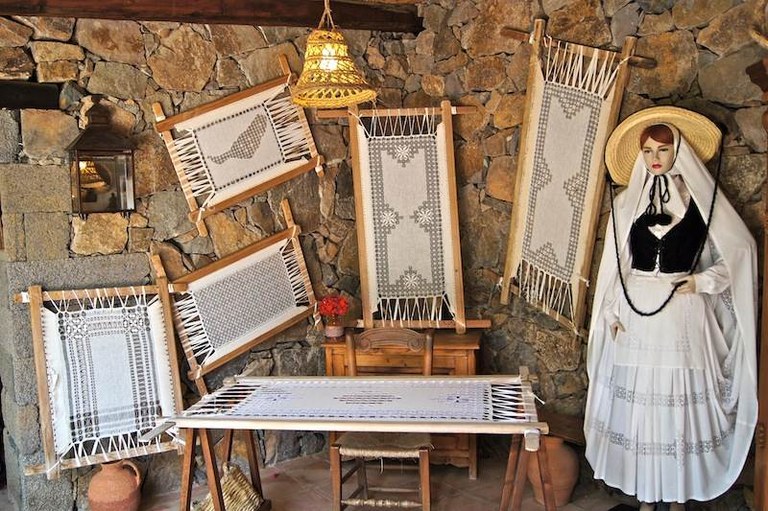
Betancuria is steeped in Majorero culture, which you can learn about in its the various museums. Furthermore, the culture of the descendants of the Spanish that now inhabit the islands is reflected in Betancuria's arts and crafts. During fiesta season, ensembles of local musicians fill the streets with the sounds of traditional music. Music is an integral part of Canarian culture and present at all occasions. Religion is very important in this small town due to it being home to the first convent in the Canaries, and most of the locals practice Catholicism.
Economy
The once affluent area of Betancuria built its economy through farming of cereals and livestock. Since the European colonialists won the battle against the indigenous people, little changed on the island until the 1980s. In the 1960s tourism was first permitted on the Canary Islands, but the boom did not hit Fuerteventura and Betancuria until two decades later. The cobbled streets that meander through the town imply that the place was once very prosperous, but due to lack of economy development, the locals began to migrate to the coast and La Oliva where the soil was more fertile. Today Betancuria relies mainly on tourism with its museums, restaurants and shops providing an income for the locals.
Sights
The Iglesia de Santa María church is an ideal starting point to explore the historical centre of Betancuria. Absorb the Canarian atmosphere while admiring the architectural and old buildings the former capital of Fuerteventura has to offer. There are also a couple of museums worth visiting (see Museums). If you have a car, it is worth venturing northward of Betancuria, where you can see the ruins of Convento de San Buenaventura as well as be rewarded with amazing views along FV-30.
Iglesia de Santa María (church)
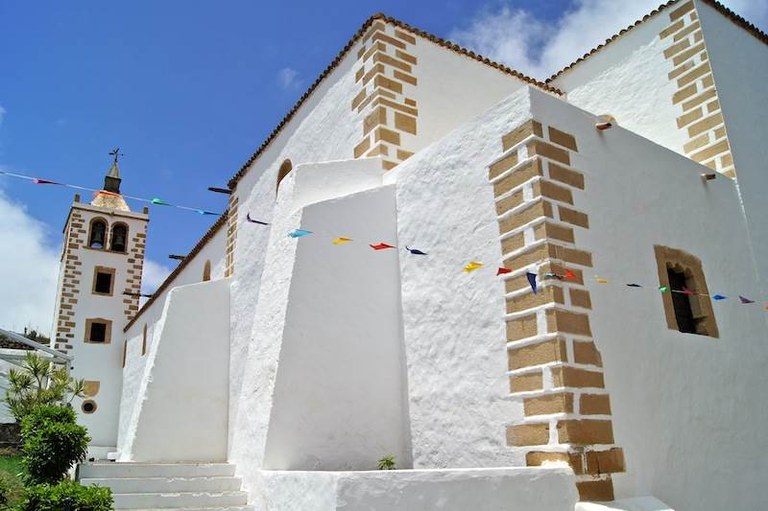
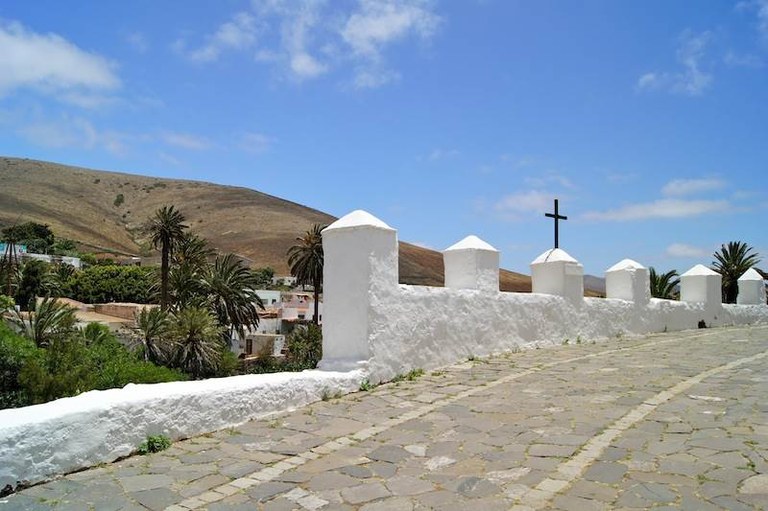
Iglesia de Santa María de Betancuria was the first church on the island of Fuertaventura, and was responsible for converting many Majoreros to Christianity. The church is a mixture of extremely interesting baroque, renaissance and gothic architecture. This is because it took over 100 years to build and was destroyed in a fire during an invasion of the Berbers in 1593. However, specific aspects of the church are original, such as the bell tower. The cathedral has a pretty courtyard and the white washed walls complement the mountainous topography that dominates the landscape. Unusually there a number of altars beautifully decorated with painted baroque designs. The church was consecrated as a cathedral in 1496 and appointed a bishop by Pope Martin V. The cathedral now also features museum, which is a short walk away.
Address: Calle del Alcalde Carmelo Silvera, 35637 Betancuria, Fuerteventura island.
Opening hours: Monday- Saturday 10:00 to 16:00
Admission fee: €1.50 (including entrance to the Museum of Sacred Art)
Casa de Santa María
Casa Santa María is a 17th century country house located within the beautiful surroundings of Betancuria historic centre. The building has been lovingly renovated in a traditional Canarian style by a German designer and photographer, Reiner Loos. There is a museum and craft centre with an impressive display of farming tools from the past century, as well as live demonstration of weave and craft work. There is a large audiovisual widescreen presentation on Fuerteventura, and for those wanting an extra dimension of the island's underwater world, a small 3D cinema is available. The building boasts a café, a restaurant, and a souvenir shop. A 4-star hotel of the same name is anticipated to open in 2013 within the same area.
Address: Casa Santa María, Plaza Santa María 1, 35637 Betancuria, Fuerteventura island (opposite the church)
Telephone: +34 928 878 036
Entrance fee: Adult €6, under 10 years €3
Ruins of Convento de San Buenaventura
Built in 1496, San Buenaventura was the first monastery in the whole of the Canary Islands. The convent now stands as a ruin as it was abandoned in 1937 following an order from Queen Isabella II of Spain. Next to the old ruin is a small church belonging to the convent called San Buenaventura. This lovely little church has undergone extensive restoration on the outside and is truly a magnificent sight. However, it is kept locked and completely empty. This site is of profound historical importance and is well worth a visit.
The convent and the church can be found on the northern outskirt of Betancuria.
Mirador Morro Velosa (vantage point)
On the FV-30 road towards Antigua, north of Betancuria, Mirador Morro Velosa is a vantage point giving panoramic views across the region. There is also a cafe/bar at the view point offering drinks and quick bite to eat. The vantage point opens only five days a week but do not be disappointed if you arrive outside the opening days/ hours, there are plenty of opportunity to witness the beautiful landscape along the scenic route between the two towns. Alternatively, stopped by the Mirador Corrales de Guize for equally breathtaking vantage point.
Direction: Roaf FV-30 between Betancuria and Antigua.
Opening hours: Tuesday to Saturday 10:00 to 18:00, Sunday and Monday closed.
Mirador Corrales de Guize (vantage point)
This vantage point at altitude of 600 metres offers beautiful scenery of Betancuria's landscape on FV-30. Adorned with two giant bronze statues of the island's natives - Guize and Ayoze, this view point is pretty difficult to miss. On the other side of the road is a signboard explaining the mountains and valley which are bounded within the protected Betancuria Rural Park, as well as flora and fauna contained within the park. On a clear day, one could witness the valley of El Rincón, the village of Betancuria and the peaks of Morro Velosa, La Atalaya and Morro de la Cruz.
Direction: Road FV-30 between Betancuria and Antigua.
Museums
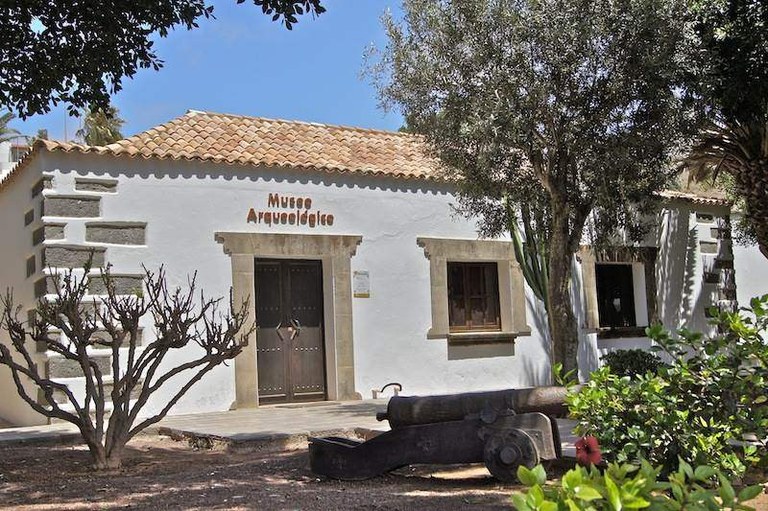
Museum of Sacred Art is worth a visit for those who are interested in the religious art. Alternatively, the Archaeological Museum housed within an antique house tell the stories of how the native inhabitants used to live.
Museo de Arte Sacro (Museum of Sacred Art)
The Museum of Sacred Art houses a number of important religious relics and artefacts that were once kept in the monastery and in the cathedral. Admission to this museum is included in the entrance fee to the Iglesia de Santa María, which is a short walk away.
Address: Calle Alcalde Carmelo Silvera s/n, 35637 Betancuria, Fuerteventura island.
Telephone: +34 928 878 003
Opening hours: Monday – Saturday 10:00 - 17:00
Casa Museo de Betancuria/ El Museo Arqueológico
A variety of architectural artefacts from various excavations in Fuertaventura are on display here, and one can learn about the Majoreros’ way of life. The museum includes five spacious halls and is categorised into three sections: archaeology, ethnography and palaeontology.
Address: Calle Roberto Roldán, 35637 Betancuria, Fuerteventura island.
Telephone: +34 928 878 241
Opening hours: Tuesday to Saturday 10:00 – 17:00, Sunday 11:00 – 14:00 on Sunday, Monday closed.
Admission fee: €2
Festivals
There are many festivals held in Betancuria, following are two of the celebrations typical to this former capital of Fuerteventura.
Día de San Buenaventura
Taking place on the 14th July this annual festival is in celebration of the patron saint of Betancuria. This festival which started in the middle of the 15th century features huge feasts, locals dressed in traditional costumes, street musicians and local artisans displaying their work.
Nuestra Señora de la Concepción
Held on the 8th of December is a fiesta celebrating the immaculate conception of Jesus Christ. Full of local characteristics, it is extremely important to the religious inhabitants of Betancuria, and a huge event in the town's calendar.
Restaurants
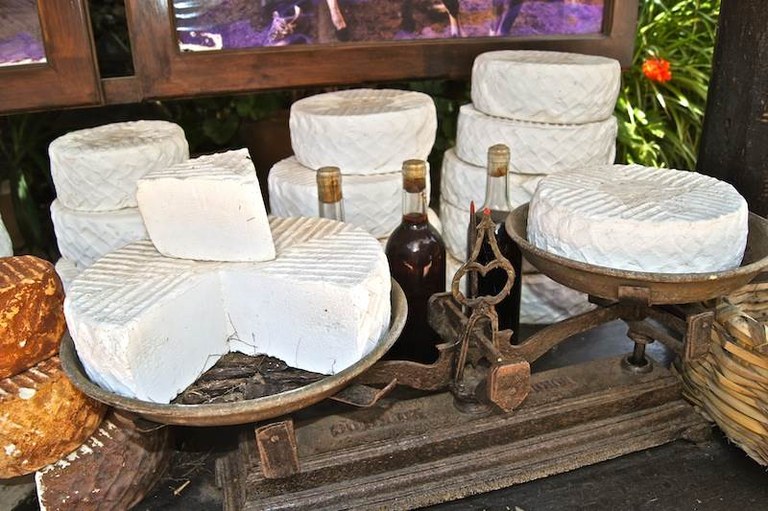
There are several restaurants located within the historical centre of Betancuria offering delicious Canarian dishes. A couple of them are housed within some of the oldest buildings around, offering visitor an unique dining atmosphere.
Casa Princess Arminda
Located behind the town's church in one of the oldest buildings in Fuerteventura is Casa Princess Arminda restaurant. It offers three different patios (one overlooking the tower of the church) where you can enjoy authentic reasonably priced Canarian dishes while soaking the sun and the beautiful scenery of the historical town centre. Among the specialties are goat stew, goat cheese, and home made desserts.
Address: Calle Juan de Bethancourt 2, 35637 Betancuria, Fuerteventura island (behind the church).
Telephone: +34 928 878 979/ 638 802 780
Casa Santa María Restaurant
Forming part of the Casa Santa María, this restaurant serves food and drinks of extraordinary quality within a beautiful 17th century building. On offer is an extensive menu of traditional yet creative cuisine and wine pairing. If you like goat meat, try the signature dish of oven-baked young goat meat served with rosemary sauce, vegetables and potatoes. House specialty dishes priced at €22.50.
Address: Casa Santa María, Plaza Santa María 1, 35637 Betancuria, Fuerteventura island (opposite the church)
Telephone: +34 928 878 282
Val Tarajal
This friendly restaurant serves a delicious array of Canarian cuisine such as soups, stews, and goat meats.
Adress: Calle Roberto Roldán s/n, 35637 Betancuria, Fuerteventura island.
Telephone: +34 928 878 007
Nightlife
Betancuria is not the best place to come to if you are looking for a night on the tiles. However, there are various pubs and restaurants serving alcohol if you would like to enjoy a drink whilst absorbing the historical ambience of this peaceful town.
Shopping
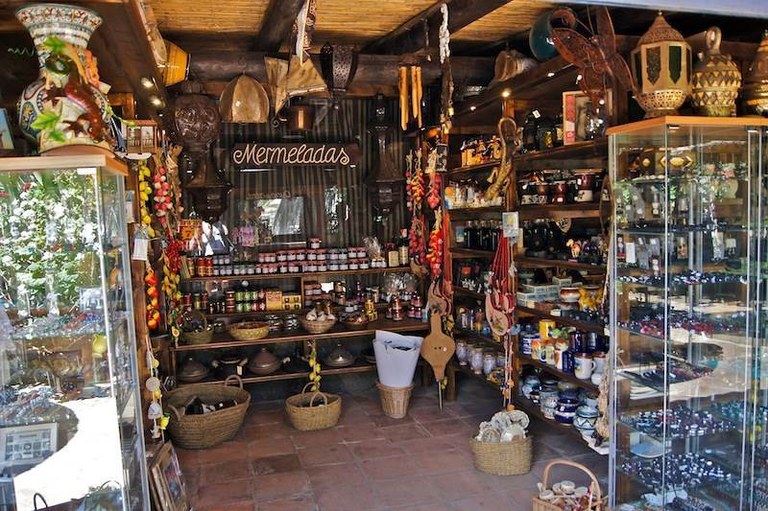
There are a few shops in Betancuria, selling mainly crafts and potteries of local artisans. Some of these shops are located inside the various museums and Casa Rurales of the area.