

- Hungary
- Ireland
- Italy
- Malta, Republic of
- Portugal
-
Spain
-
Canary Islands
- El Hierro
- La Palma
- La Gomera
- Tenerife
- Gran Canaria
- Lanzarote
- Fuerteventura
- Tarajalejo
- Caleta de Fuste
- Corralejo
- Costa Calma
- Las Palmas de Gran Canaria
- Lobos Island
- Maspalomas
- Caleta de Famara
- Morro Jable
- Costa Teguise
- Jandía
- San Cristóbal de La Laguna
- Playa Blanca
- Playa de las Americas
- Puerto Calero
- Teide National Park
- Playa del Inglés
- Puerto del Carmen
- Los Realejos
- Puerto de Mogán
- Las Galletas
- La Orotava
- Anaga
- San Agustín
- Adeje
- San Bartolomé de Tirajana
- Puerto de la Cruz
- Los Cristianos
- Arrecife
- El Médano
- Orzola
- Masca
- Taurito
- Los Gigantes
- Fañabé
- Santa Cruz de Tenerife
- Santiago del Teide
- Garachico
- Punta del Hidalgo
- La Caleta
- Balearic Islands
-
Barcelona
-
Benalmádena
-
Cádiz
-
Córdoba
-
Jerez de la Frontera
-
Lleida
-
Málaga
-
Santander
-
Seville
-
Toledo
-
Canary Islands
Overview of Porto Santo island
Known as the “Golden Island”, the tiny little rock with its year-round temperate climate, its nine kilometres of unspoilt beaches, its volcanic peaks and dramatic cliffs is the jewel of the north Atlantic. Located 40km off the island of Madeira and with just 42.17km2 of land area, the island is far more manageable and less touristy than it’s bigger sister Madeira. With its wild and rugged mountain peaks and landscapes, and 9km of virtually unbroken stretch of golden sand beaches, Porto Santo is the perfect place to relax and unwind.
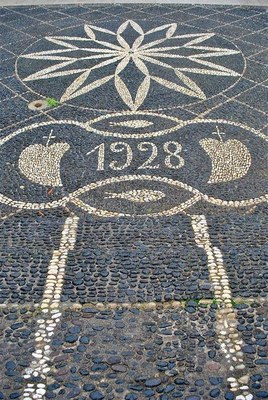 The town of Vila Baleira is the island’s capital. Here, between the shady plazas and whitewashed colonial houses, visitors can indulge in everything from local cuisine such as grilled goat, octopus and local wines produced from the island’s vineyards. Local gastronomy is of major importance to the island, and the locals take it very seriously. There are many restaurants located in Vila Baleira which can be found by simply taking a stroll through the town. If it’s history or culture that you are looking for, the island is steeped in it. The onetime residence of Christopher Columbus has been preserved for all to see, as well as many of his original maps, letters and diary entries before setting sail to Genoa and onto the New World. There are a number of adventure activities to experience, such as jeep safaris, kiteboarding, sailing, or game fishing for the world-famous blue marlin in the seas off Porto Santo. The island is also home to the most prestigious golf course in the region.
The north of the island will satisfy even the most hardened of wilderness hunters. Packed with jagged peaks and untamed rock formations, it offers a real chance to get away from it all, as civilisation gradually slips away from rural houses into wild scrubland and a vista of volcanic peaks. The island offers many different hikes – some signposted and easy, with well-maintained footpaths and picnic sites, some difficult scrambles over high ground that unfold out onto high mountainous landscapes.
The south of the island is where to find Porto Santo’s famous beaches. Over this beautiful 9 kilometre stretch, visitors can seek out beaches packed with every conceivable amenity such as refreshment bars, showers and locker rooms. They can also wander further along and come to beautiful, deserted sand dunes and virgin beaches that are hardly visited by the crowds. Whether it’s sunbathing and drinking cocktails, or watching a private sunset, Porto Santo has it all.
History and Culture
The island of Porto Santo was established as the first island in the Madeira archipelago. Colonised around 600 years ago after a group of sailors from the Barbary Coast washed ashore, they then set sail back to Portugal to report on the island they had discovered. Some time later, they were sent back officially on a vessel to colonise the island, and the ship’s commander Bartolomeu Perestrelo, was appointed “Captain of Porto Santo.”
During the second half of the 15th century, Christopher Columbus was given land to cultivate on Porto Santo after his marriage to Filipa Moniz Perestrelo. While on the island, she died, and Columbus (so the story goes) began to spent his hours sitting on the beach and wondering about the odd artefact that washed up on the ocean’s shores from the Caribbean. It was then that he decided to set out on his voyage to find a trade route to India or discover some new, unknown continent. And in 1480, Columbus presented his plan to set sail to the King or Portugal, and then to Isabella of Spain. In 1485 he set sail to the New World.
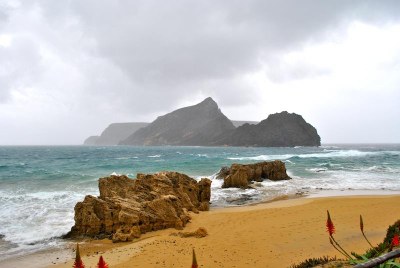 Columbus, as well as other patrons and figures of importance to the island are celebrated here with traditional Latin vigour. All through the summer months, the fiesta of Porto Santo set the island in motion with food, colour, music and dance.
Economy
During the early period of colonisation, the island’s colonists planted crops such as sugar cane, and grape vines. They also heavily exploited the island’s Drago forests, using the red dye and top leaves of the “Dragon Trees” to manufacture varnish, dye and medicine. Soon after that, the colonists set sail for the island of Madeira, which was itself much bigger and required more work to establish. The tiny island of Porto Santo was, in subsequent years, completely overshadowed by the task of maintaining and cultivating Madeira and begin to sink under the radar.
Today, the biggest industry on Porto Santo is tourism. The island’s beautiful beaches and temperate climate have seen a number of hotels, restaurants, bars and shops spring into being. The island’s golf course is also a major attraction. Built by Spanish champion Seve Ballesteros, the 18-hole course seamlessly merges the natural landscape with the artificial, and has been built in accordance with the highest environmental and ecological standards. A small percentage of the island’s income also comes from its vineyards, which export their local wine to Madeira and beyond.